“Korean royal cuisine grew from the belief that a meal should protect health, show good order, and please the eye. In the Joseon era, the royal table used color, season, texture, and careful manners to express balance. For travelers, it offers a clear way to understand why Korean meals are built from many small parts, not one large main dish.”
🍲 The Royal Hot Pot of Harmony — Sinseollo
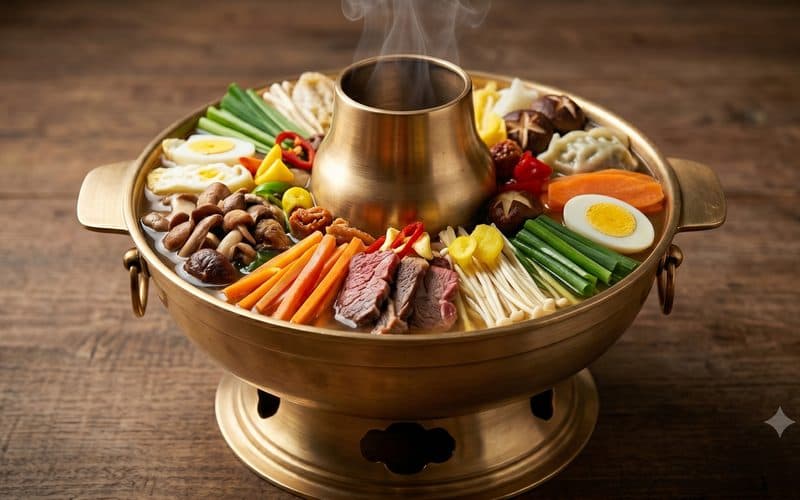
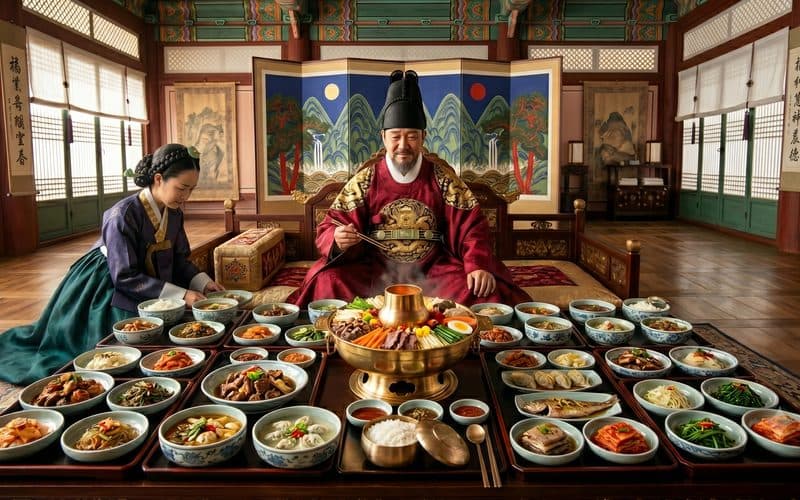
Sinseollo is a royal-style hot pot served in a round metal vessel with a chimney in the center. Hot charcoal was placed inside the chimney, so the broth stayed warm at the table. The name is more accurately translated as “brazier of the immortals,” while the dish’s original name, yeolgujatang, means “a soup that delights the mouth”; it is meant to look abundant before it is even tasted.
A classic sinseollo is arranged in neat layers: thin slices of beef, seafood, mushrooms, egg garnish, nuts, and seasonal vegetables. The broth is usually clear, not spicy. This is important for first-time visitors. Royal food often values clean flavor over strong heat. The pleasure comes from the way mild ingredients share one broth while keeping their own color and texture.
When eating it in Korea today, expect sinseollo to appear in traditional course meals rather than casual shops. It is usually shared. Take a small amount from the pot, taste the broth first, then try the ingredients. The dish explains a central idea of royal cuisine: luxury is not just expensive ingredients. It is order, warmth, and balance served in one vessel.
🍖 The King’s Favorite Beef — Neobiani
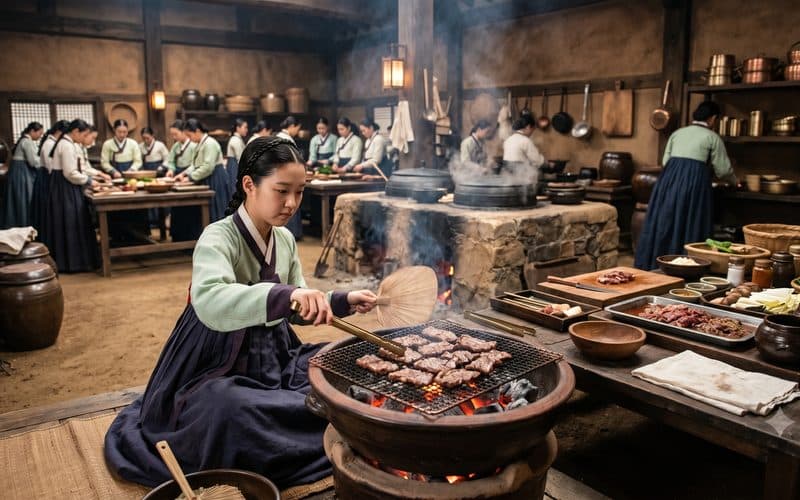
Neobiani means “wide slices.” It refers to thin, broad pieces of beef that are marinated, then grilled until tender. The seasoning is gentle, usually based on Korean soy sauce, sesame oil, garlic, pear or other fruit, and a little sweetness. The goal is not a smoky barbecue feast. It is soft meat that can be eaten neatly with rice and side dishes.
Neobiani is often described as an older court-style form connected to modern bulgogi. The link is easy to understand when tasting it. Both use marinated beef, but neobiani is usually more restrained. The slices may be larger and flatter. The sauce should support the beef, not cover it.
For travelers, this dish helps explain why Korean grilled beef can taste sweet, savory, and fragrant at once. Fruit in the marinade is not just for sweetness. It helps soften the meat and gives a round finish. If neobiani is served as part of a course meal, eat it while warm, before the fat cools and the texture becomes firmer.
🍢 Royal Courtesy on a Plate — Tteokgalbi
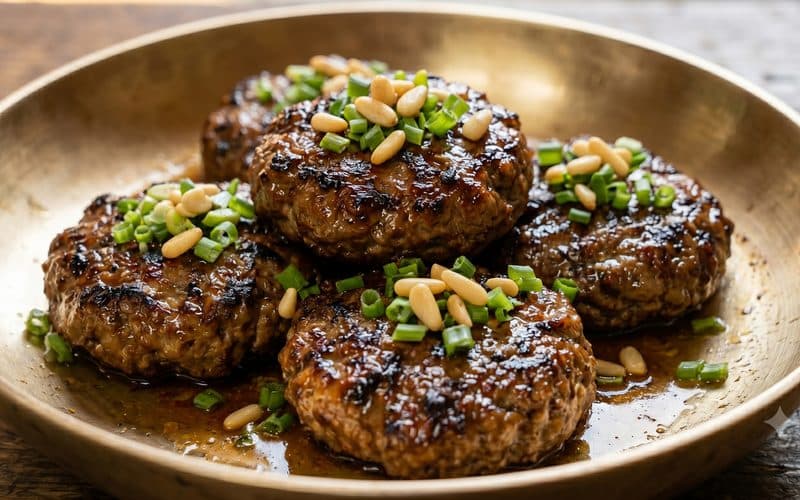
Tteokgalbi is made from rib meat that is minced, seasoned, shaped, and grilled. The name includes galbi, meaning ribs, and tteok, meaning rice cake, because the minced meat is kneaded and pounded in a process compared to making rice cake. Rather than a firmly documented royal-court food, it is better understood as a regional dish linked to Damyang in Jeolla-do and parts of Gyeonggi-do, with stories about dignified boneless ribs best treated as later folklore.
The texture is the key. Good tteokgalbi is not a loose hamburger patty. It should be springy, juicy, and finely seasoned. The flavor often combines beef or a mix of meats with soy-based seasoning, sesame, garlic, and a mild sweetness. It is easier to eat with chopsticks than bone-in ribs, which also suits formal dining.
Today, travelers often meet it as tteokgalbi jeongsik, a set meal with rice, soup, and many side dishes. This is a useful format because the meat can be rich. Eat it with plain rice, then alternate with fresh or pickled vegetables. That rhythm keeps the dish from feeling heavy.
🥗 A Dish of Peace — [[tangpyeongchae-f8e9a17c-f486-4c49-8a3d-d84991fe9cc2|Tangpyeongchae]]
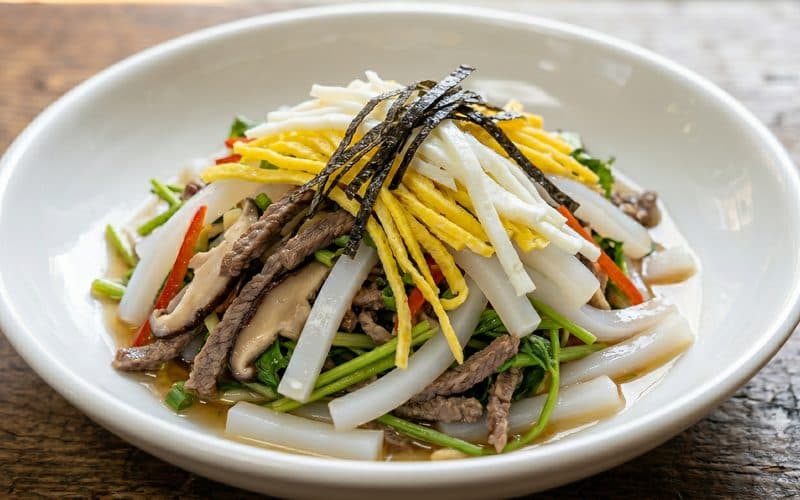
Tangpyeongchae is a cold or room-temperature salad made with cheongpomuk, a pale mung bean jelly, plus vegetables, egg garnish, seaweed, and sometimes beef. The jelly is smooth and mild. It carries seasoning well but does not dominate the dish.
The dish is linked to a Joseon-era idea of political balance. A popular account says its mixed colors represented different groups brought into harmony. Whether read as politics or food design, the message is clear: contrast should not become conflict. White jelly, yellow egg, dark seaweed, green vegetables, and red garnish are arranged to be seen before they are mixed.
For visitors, tangpyeongchae is a good introduction to Korean texture. Cheongpomuk can feel unusual at first because it is soft, cool, and slippery. It is not sweet. It is seasoned lightly with soy-based sauce, sesame oil, and vinegar or other bright notes. Try a bite that includes jelly, garnish, and seaweed together. The dish makes more sense when the textures are combined.
🍱 The Royal Table — [[sura-sang-5458807d-2deb-4db6-8217-35553a97f358|Surasang]]
Surasang means the royal meal table. It was not a single dish but a complete arrangement built around rice, soup, sauces, kimchi, and many small side dishes. The number and type of dishes changed with season, occasion, health, and available ingredients. What stayed constant was the idea that nothing on the table was random.
A royal table balanced warm and cool, soft and crisp, mild and salty, meat and vegetables. It also used color as a guide. The five-color idea, often linked with traditional East Asian thought, appears in white, black, red, green or blue-green, and yellow ingredients. This was not decoration alone. It helped cooks build variety in nutrition and taste.
Travelers can experience a modern version through hanjeongsik, a traditional full-course Korean meal. It is not the same as an actual palace table, but it follows a related structure: rice, soup or stew, grilled or braised dishes, vegetables, pickles, and sauces. Do not try to finish every side dish first. Korean meals are meant to be eaten in small turns with rice.
🍯 Sweetness of the Palace — [[yakgwa-3591c45b-af6c-44ad-8864-4ce0fc90123d|Yakgwa]] & [[sikhye-73e30d13-681b-464f-afeb-69da27aedd8e|Sikhye]]
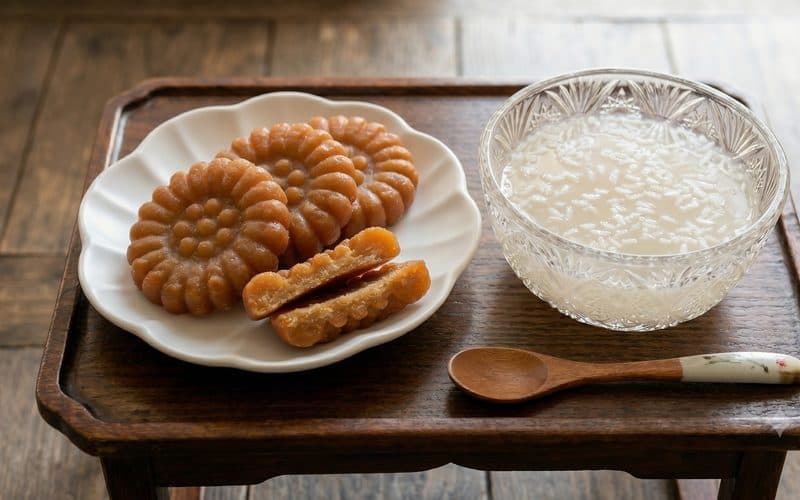
Royal sweets were usually measured and calm, not huge desserts served after a heavy meal. Yakgwa is a deep-fried wheat-and-honey confection. It is pressed into decorative shapes, fried, then soaked in a syrup often scented with ginger or other aromatics. Its texture can be dense, soft, and slightly chewy.
Sikhye is a sweet rice drink made with malted grain and cooked rice. It is served cold in many places today. The flavor is gentle and grain-like, with floating rice grains that show how simple ingredients can become a finishing drink. It often appears after meals because it feels refreshing rather than creamy.
For first-time visitors, these two show the palace idea of a quiet ending. Yakgwa is best in small bites with tea. Sikhye is sipped slowly, not gulped like soda. Other traditional sweets may appear with them, such as yugwa, a light fried rice snack, or dasik, small pressed tea sweets. Their purpose is to close the meal without erasing the flavors that came before.
🥢 How Balance Works: Color, Season, and Texture
Royal cuisine is often explained through balance, but the word becomes more useful when broken down. Color helped cooks check variety at a glance. Red might come from jujube, pepper threads, or carrot. Yellow from egg yolk. White from rice, radish, or mung bean jelly. Dark color from mushrooms or seaweed. Green from herbs and vegetables.
Season mattered because fresh ingredients were signs of care. Spring greens, summer cucumbers, autumn mushrooms, and winter roots each gave a table its timing. This is why many traditional Korean dishes change slightly by season even when the name stays the same.
Texture was also planned. A meal could include something crisp, something soft, something chewy, something brothy, and something grilled. This helps explain why Korean side dishes are not random extras. A small plate of baekkimchi, a white non-spicy kimchi, can cool the mouth. Nabak kimchi, a mild water kimchi, can refresh the palate between richer bites.
🍚 From Palace Food to Everyday Korean Meals
Many ideas from royal cuisine moved into wider Korean food culture, though in simpler forms. The palace had access to skilled labor and carefully selected ingredients. Ordinary homes adapted the same principles with local vegetables, grains, fermented sauces, and seasonal preservation.
This is why a common Korean meal may still feel “royal” in structure. Rice is the center. Soup or stew gives warmth. Side dishes add salt, acid, crunch, and freshness. A braised dish such as galbijjim may appear for family gatherings or holidays, while japchae, glass noodles stir-fried with vegetables, is common at celebrations. Both fit the older preference for harmony among ingredients.
The connection does not mean every modern dish came directly from the palace. It means the royal table made visible a pattern that is now familiar across Korea: many small tastes working together. For travelers, this helps reduce confusion. The meal is not asking you to choose one “main.” It is asking you to move between dishes.
🍽️ How to Eat a Royal-Style Meal Today
A royal-style meal can look overwhelming because many dishes arrive at once or in courses. Start with soup or a mild bite of rice to understand the seasoning level. Then taste small amounts from different plates. Avoid mixing everything unless the dish is meant to be mixed. Arrangement is part of the experience.
Use chopsticks for side dishes and a spoon for rice and soup. It is fine to return to the same dish many times, but take small portions. Shared dishes are common, though some formal places provide serving utensils. If there are sauces, taste the food first before adding them. Royal-style cooking often uses subtle seasoning.
Pace matters. These meals are not designed for speed. Hot dishes should be eaten while warm, but pickles, salads, and sweets can wait. If a server explains an order, follow it. If not, move from mild to rich, from clear broth to grilled or braised dishes, and finish with tea or a sweet drink.
🌿 What to Notice Beyond Luxury
Royal Korean cuisine can be misunderstood as expensive food with many plates. The deeper point is discipline. Ingredients are cut to similar sizes so they cook evenly. Garnishes are not random decoration; they show color, season, and care. Mild dishes are placed beside stronger ones so the mouth does not tire.
It also shows respect for the diner. Bones may be removed, meat may be sliced thinly, and hot foods may be served in vessels that keep temperature. These details make eating easier and more graceful. This is why etiquette and cooking cannot be separated in royal cuisine.
For travelers, the most useful way to enjoy it is to slow down and compare. Notice which dishes are warm or cool. Notice which tastes are salty, sweet, sour, or nutty. Notice how rice makes strong flavors softer. The royal table is not a museum piece. It is a guide to reading Korean meals with more attention.
- Balance of health, taste, color, and season
- Respect shown through careful preparation and table manners
- Harmony among many small dishes, not one main plate
- Royal ideas preserved in modern Korean set meals
- Beauty used to organize flavor, not just decorate it