“Long before refrigerators or global supply chains, Koreans learned to eat with nature's rhythm. Each season brings its own ingredients, its own flavors, and its own reasons for eating — rooted in both wisdom and survival.”
🌸 Spring — Nature's First Gift
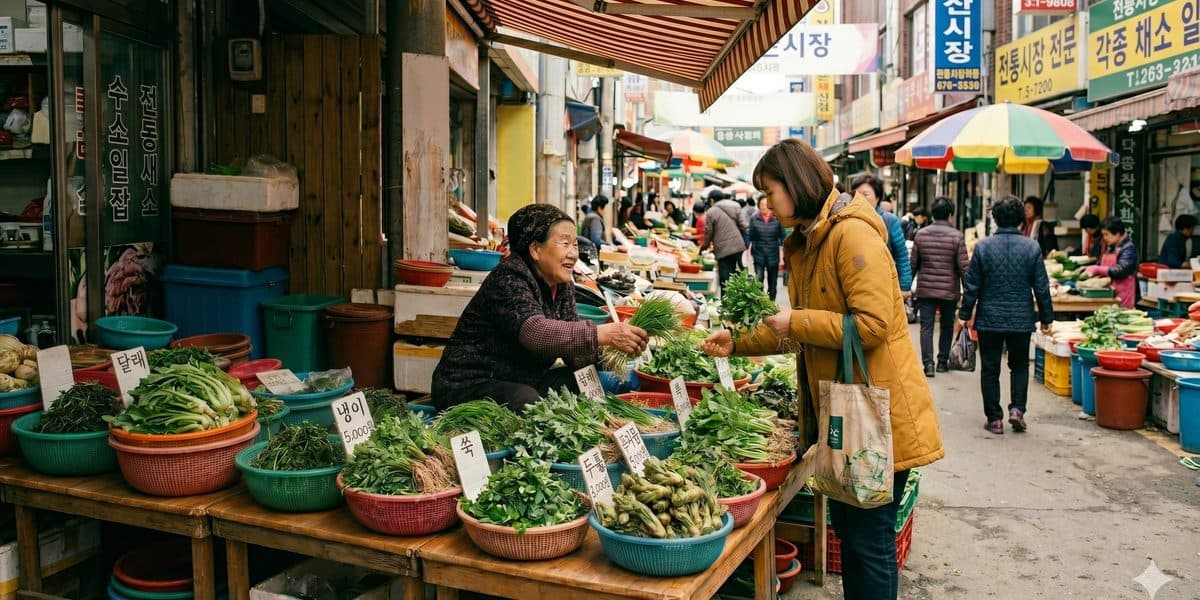
Korea's winters were long and harsh. After surviving on kimchi and stored foods, the first thing people did when spring arrived was go into the mountains and fields to pick spring greens. This was not simply a food culture — it was a survival instinct.
Mugwort (ssuk), shepherd's purse (naengi), wild garlic (dallae), and fatsia shoots (dureup) — these greens store energy underground all winter and burst out in spring. That life force is passed directly to the person who eats them.
Why are they so delicious and healthy? Spring greens concentrate nutrients deep in the soil all winter long. Their bitter taste comes from compounds like alkaloids and polyphenols that support liver function and flush toxins. Korean traditional medicine said: "Eat bitter things in spring and you will stay healthy through summer." The aroma and bitterness also awakens taste buds numbed by a long winter.
☀️ Summer — Cool Down, Stay Strong
Korean summers are hot and humid. The intense heat of July and August drains the body rapidly. At this time, Koreans used a counterintuitive wisdom called "Iyeolchiyeol (이열치열)" — fight heat with heat.
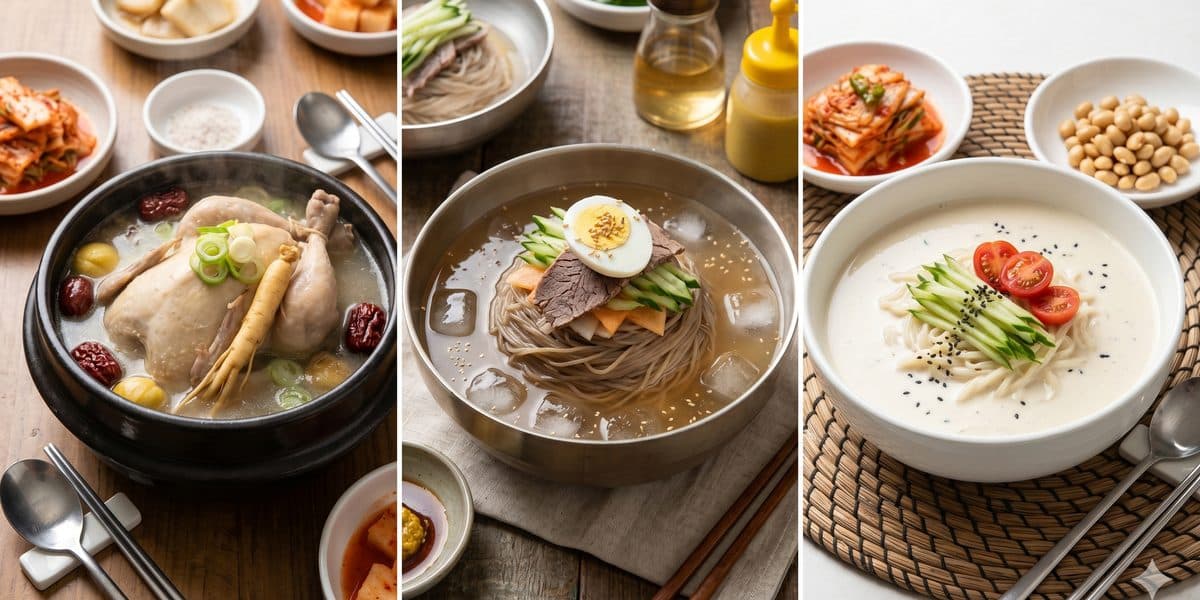
Samgyetang (ginseng chicken soup) was intentionally consumed hot on the hottest days of summer. By inducing sweat and circulating body temperature, it paradoxically cools the body. Cold naengmyeon noodles in chilled dongchimi broth, on the other hand, directly cooled the summer heat.
Why are they so delicious and healthy? Samgyetang's chicken replenishes protein and collagen depleted by summer heat. Ginseng and astragalus boost immunity and stamina. Naengmyeon's buckwheat is excellent for vascular health and aids digestion. Kongguksu's soybeans are rich in isoflavones that balance hormones. All are nutritionally perfect for restoring what summer drains from the body.
🍂 Autumn — Sea's Greatest Gift
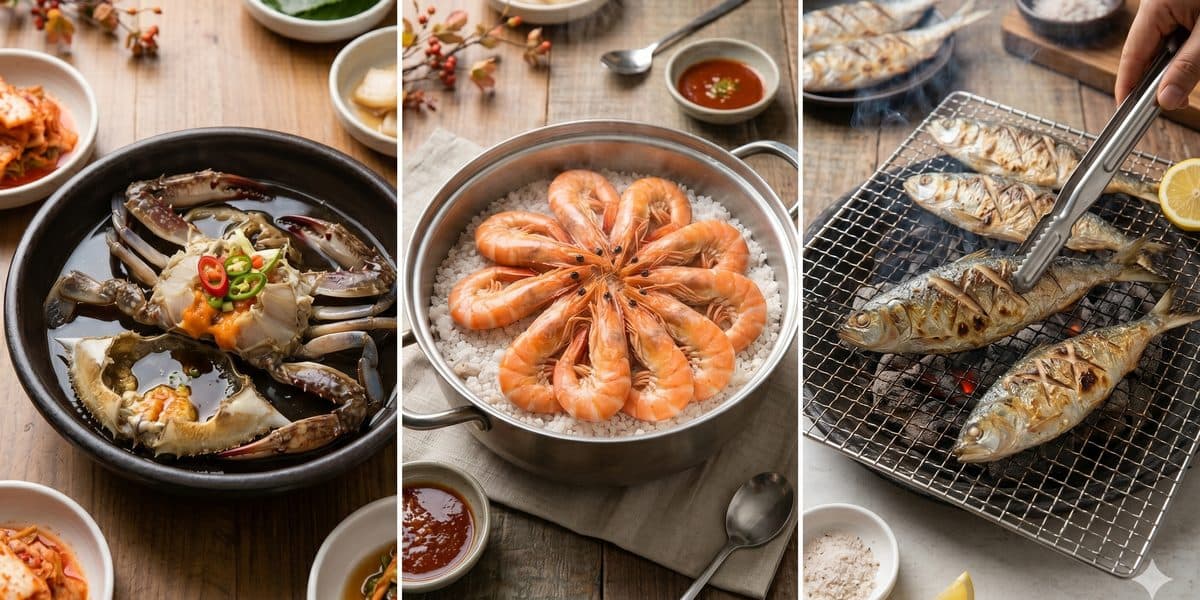
Autumn is when Korea's coastal waters offer their finest gifts. From the West and South Sea, blue crab (꽃게), gizzard shad (전어), and large prawns (대하) reach the peak of their flavor — making autumn a seafood paradise for Koreans.
Blue crab season runs from September to November. Plump with meat and roe, they shine as ganjang gejang (soy-marinated raw crab), gejang stew, or steamed whole. Ganjang gejang is famously called "the rice thief" — one bite and a full bowl of rice disappears before you notice.
Large prawns from the West Sea are a signature autumn delicacy. Grilled with coarse salt or lightly steamed, their sweet, springy flesh is a taste of the season that Koreans look forward to all year.
Gizzard shad earns its legendary status in autumn. Koreans say: "Even a daughter-in-law who ran away comes home when she smells autumn gizzard shad grilling." In September and October, fat-rich and intensely flavored, it is simply grilled or served raw — and utterly unforgettable.
❄️ Winter — Cold That Creates Flavor
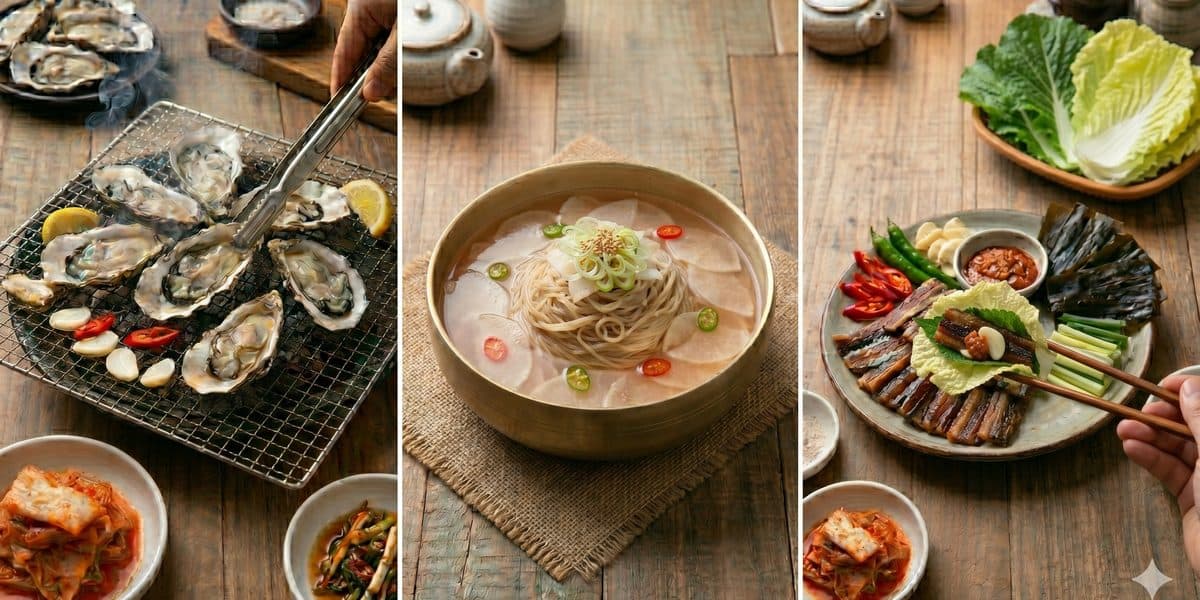
Korean winters are cold — but that cold creates its own unique flavors. The sea yields its plumpest oysters, the sea wind cures gwamegi to perfection, and dongchimi noodles offer a clean, refreshing depth that is unmistakably winter.
Oysters are called 'the milk of the sea' and peak from November to February. Nourished by cold waters, winter oysters are enjoyed raw, in gukbap (rice soup), or as savory pancakes — packed with zinc and protein, they are winter's most nourishing gift from the sea.
Dongchimi noodles are winter's soul food. When autumn-made dongchimi radish kimchi matures into a cold, clean depth of flavor, thin noodles are served in that clear icy broth. The refreshing lightness is like nothing else — a taste that cannot be replicated in any other season.
Gwamegi is the winter specialty of Pohang on the East Sea coast. Herring or Pacific saury is dried by repeatedly freezing and thawing in the cold coastal wind, developing a chewy, intensely savory character. Traditionally wrapped in seaweed or cabbage with garlic, chili, and doenjang — a winter ritual for the senses.
Hot broth dishes — seolleongtang, gomtang, galbijang — were meals that warmed the body in the cold wind. Simmered for many hours, all the nutrition from bones and meat dissolved into the broth.
- Seasonal eating was survival wisdom, not a lifestyle trend
- Each season's food perfectly matches the body's needs at that time
- Seasonal ingredients are at their peak of both flavor and nutrition
- Korean seasonal food is a 5,000-year dialogue between humans and nature