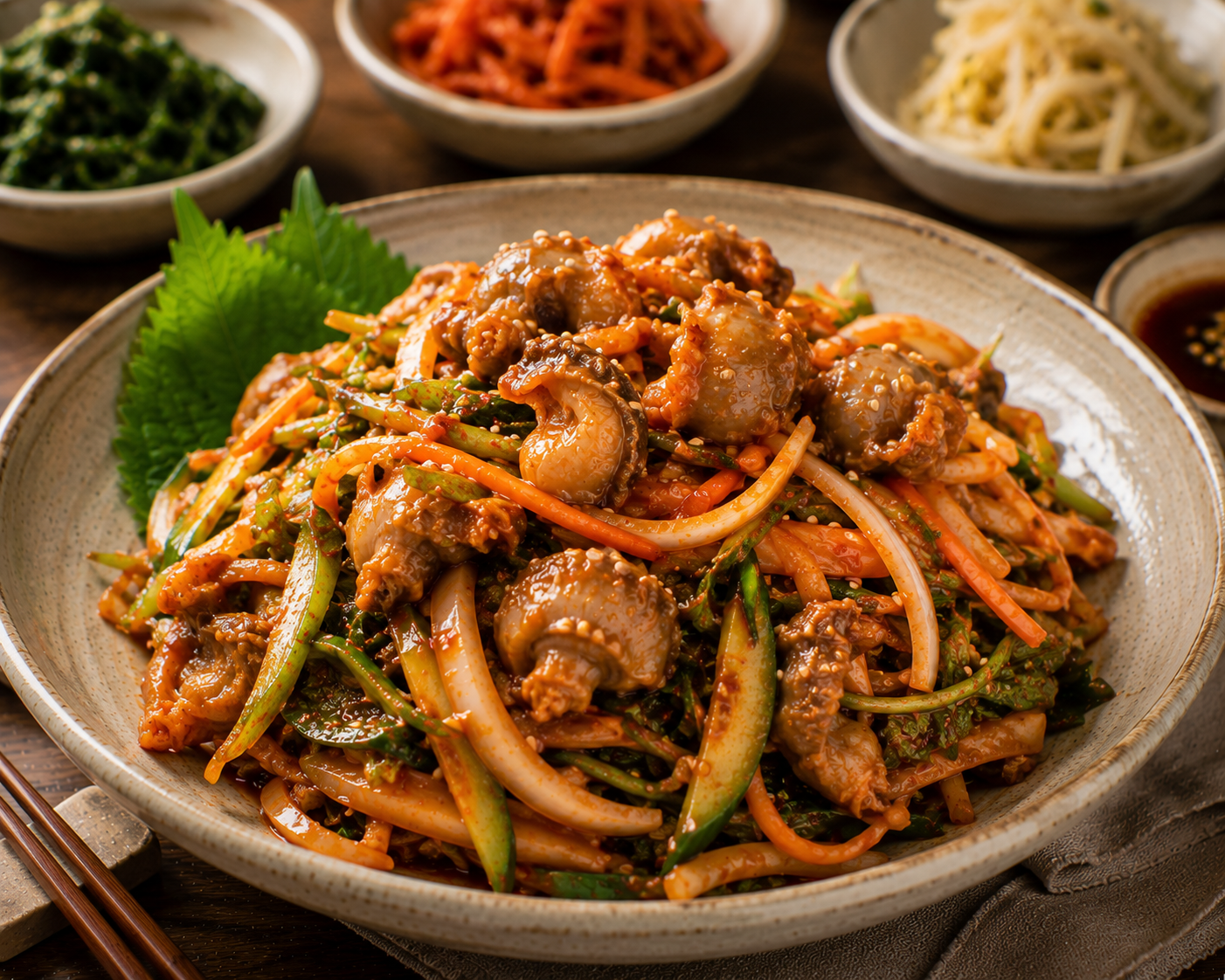
Drinking Companions (Anju)
Perfect with soju & Korean beer
The dishes Koreans reach for alongside a glass of soju or cold beer.
At a Korean drinking gathering, choosing the food to eat together often takes longer than ordering the drinks. This group is especially useful when you step into a street tent, pub, or small restaurant late in the evening. Many of the dishes are meant to be placed in the center and shared, so they are easier to order for two or more people than alone.
These foods generally have clear seasoning and distinct textures. Rich flavors, spicy sauces, and hot broths take turns keeping the appetite going. Bossam is tender pork eaten one wrap at a time with kimchi and leafy vegetables. Kimchi Jeon is appealing for its tangy kimchi and crisp edges. Eomuk-tang has a clear, warm broth, making it a good pause between spicy foods.
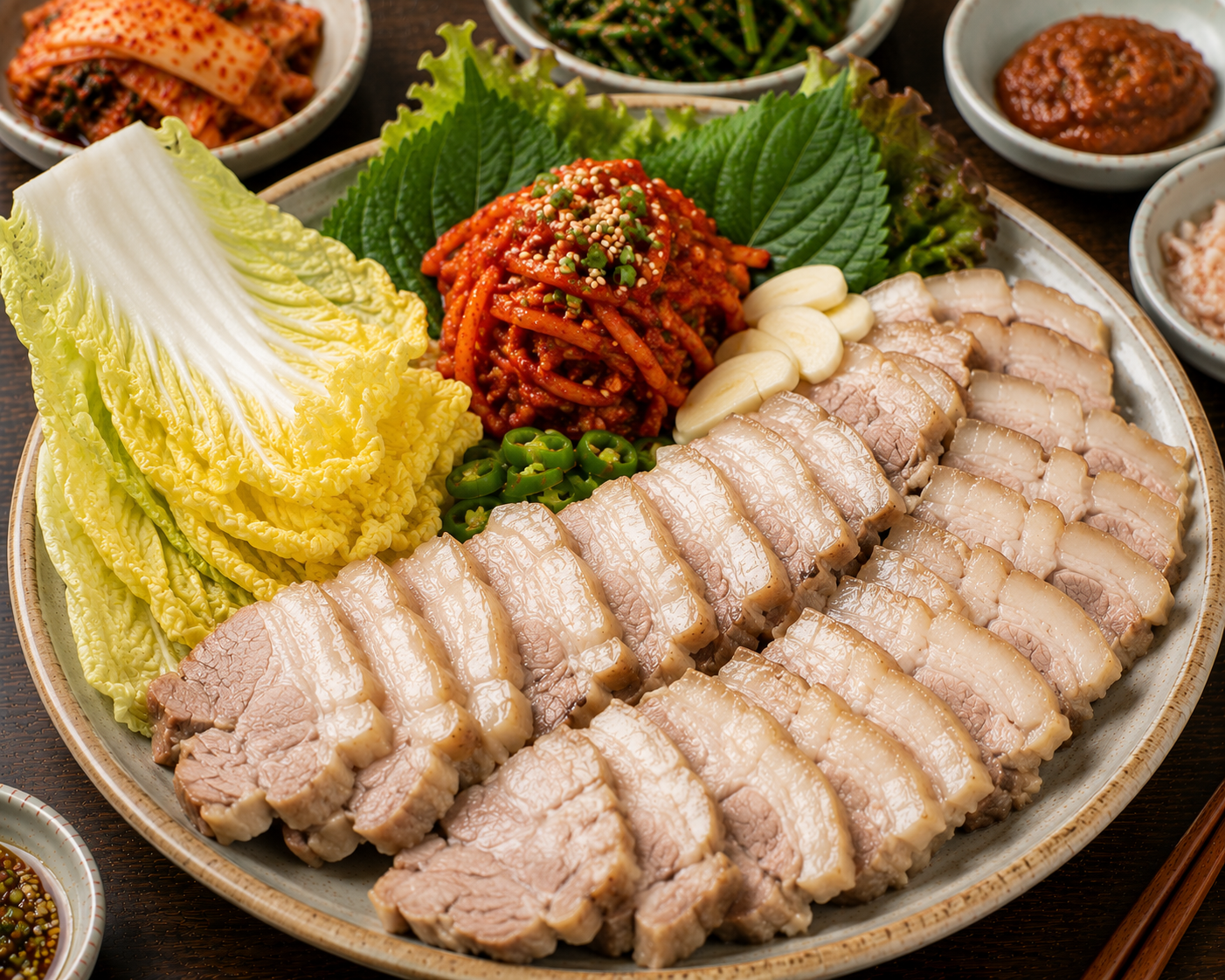
Bossam
보쌈 · bossam
A Korean dish made by wrapping thin slices of boiled pork in kimchi and leafy vegetables.
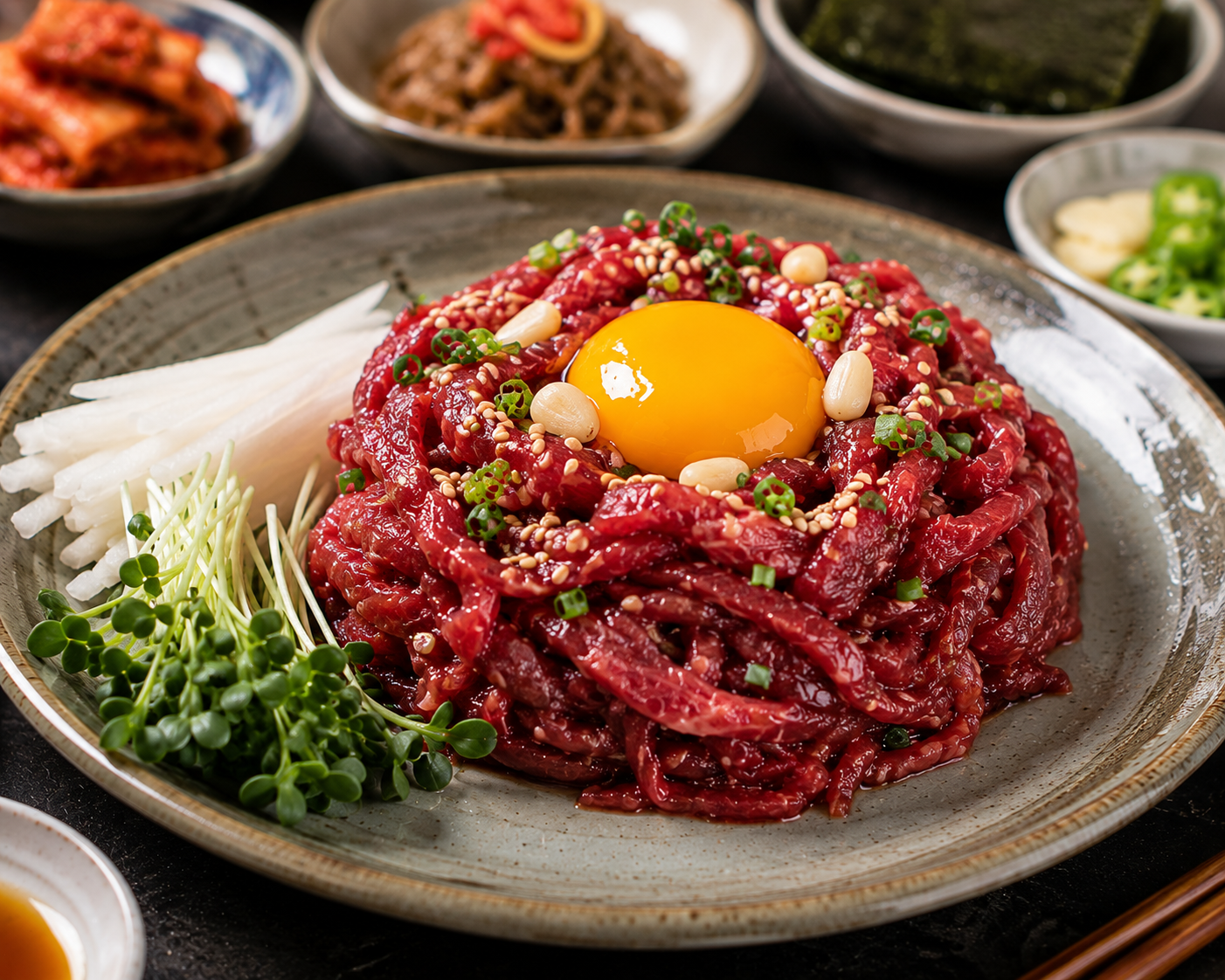
Yukhoe
육회 · yukhoe
A Korean raw beef dish made by slicing fresh beef thinly and seasoning it with soy sauce, sesame oil, garlic, and other ingredients. It is characterized by its chewy texture and savory taste, often served with pear.
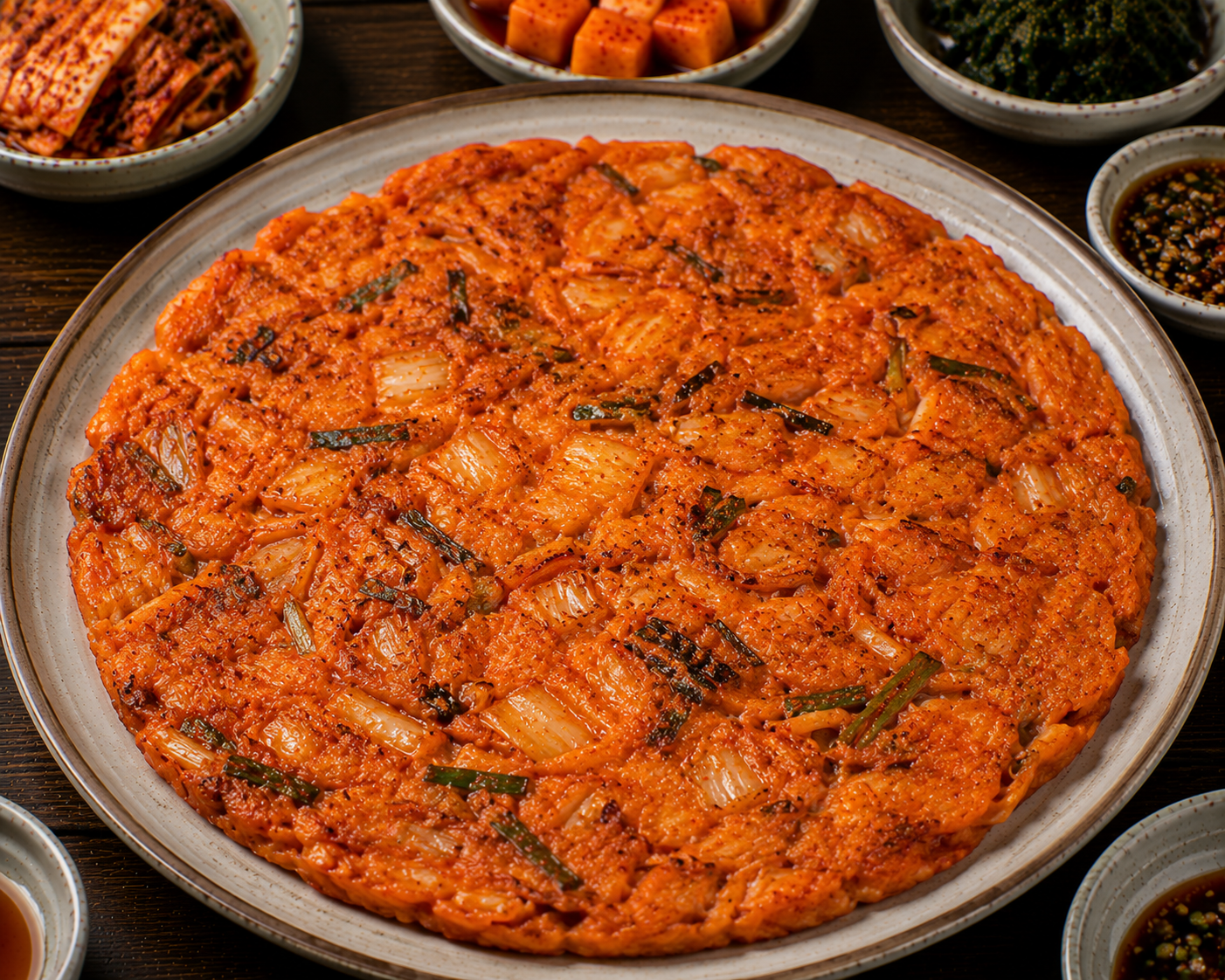
Kimchi Jeon
김치전 · kimchi-jeon
A savory pancake made by mixing well-fermented kimchi with flour batter and pan-frying it wide. The sourness and nuttiness of the kimchi blend together to create a crispy and moist texture. It is enjoyed by dipping in a simple vinegared soy sauce and is perfect as a light snack or paired with makgeolli (rice wine).
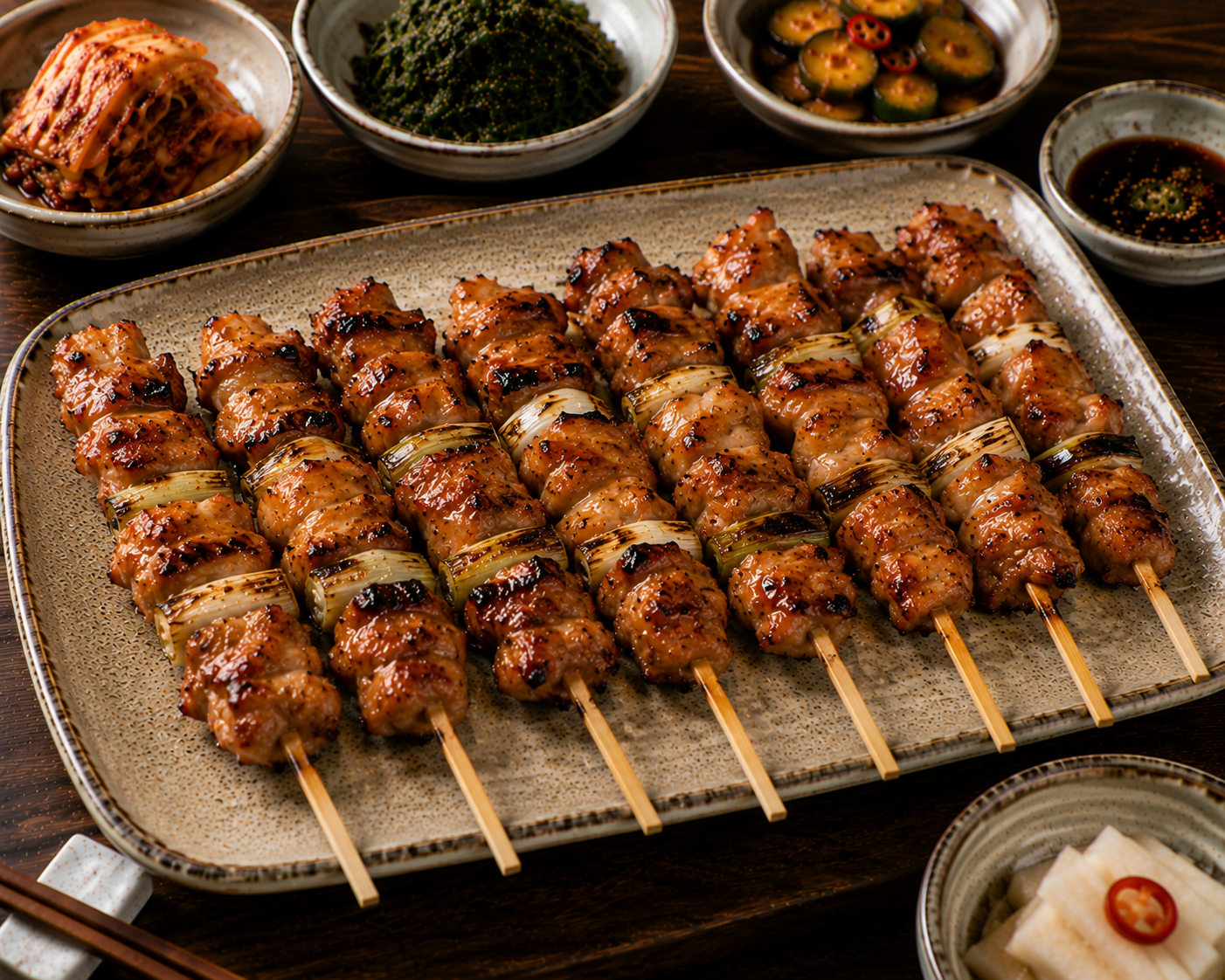
Chicken Skewers
닭꼬치 · dak-kko-chi
A Korean-style skewer dish made by threading chicken onto sticks, seasoned with soy sauce or salt, and grilled over an open fire.
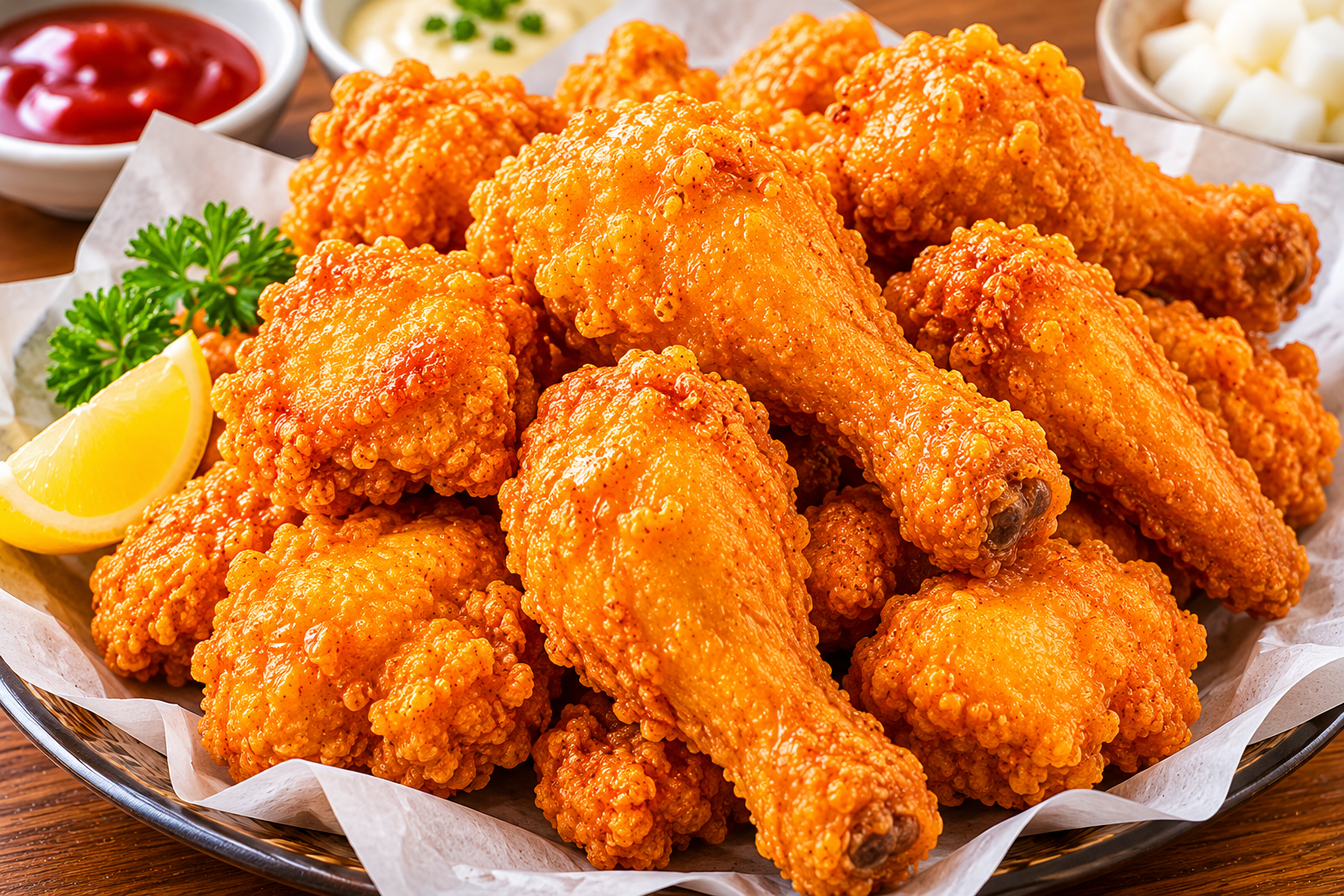
Fried Chicken
닭튀김 · dak-twigim
A dish where chicken is coated and deep-fried until crispy, often enjoyed with soy sauce or spicy sauce.
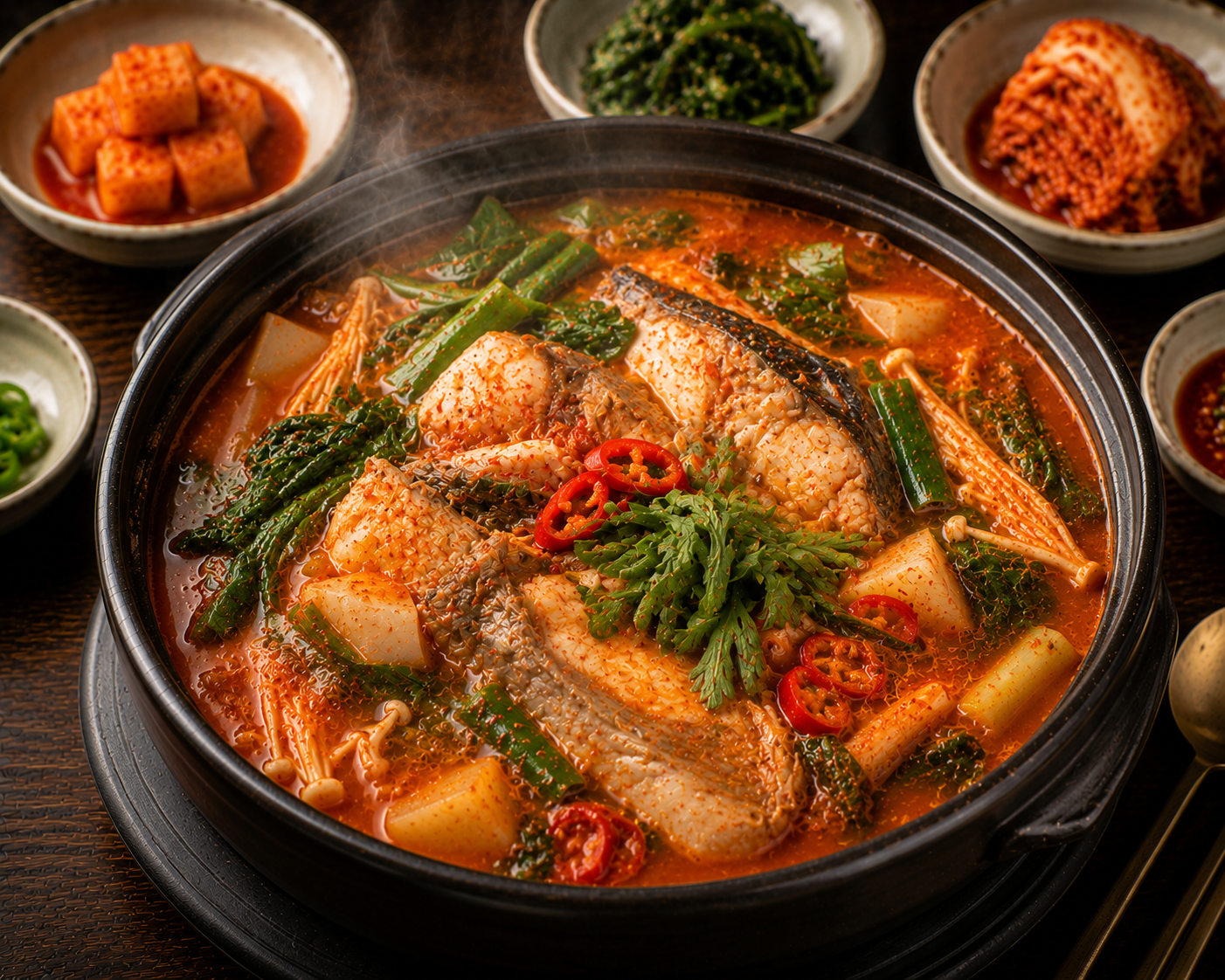
Spicy Fish Soup
매운탕 · mae-un-tang
A soup dish made by boiling fish and seafood with red pepper powder, typically shared among several people. The broth is plentiful and has a strong spicy flavor, making it great to eat with rice.
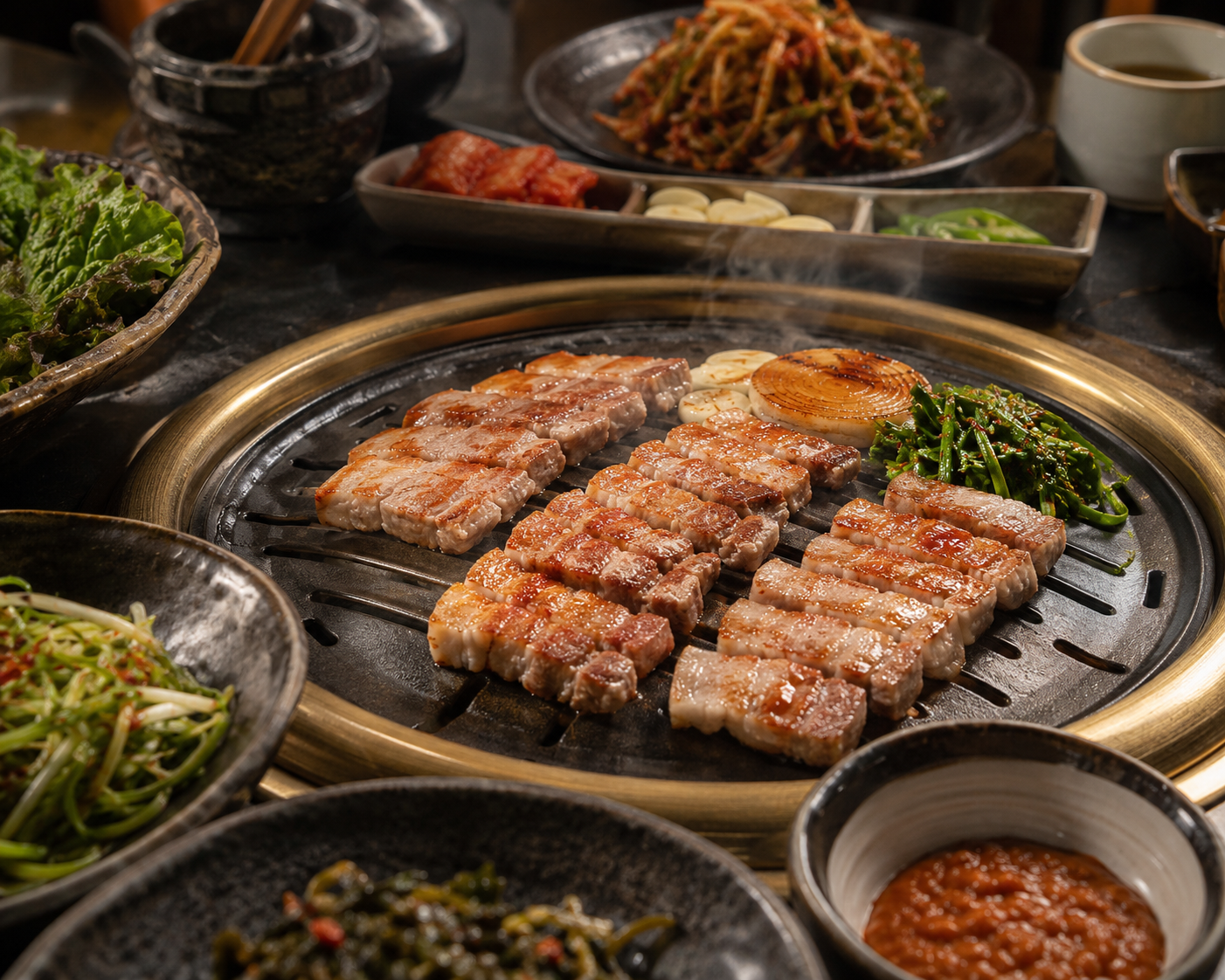
Samgyeopsal
삼겹살 · samgyeopsal
A representative Korean grilled dish made by grilling pork belly without seasoning, typically dipped in salt or oil sauce. The layers of fat melt, creating a rich flavor while the outside is grilled to a golden color, boasting a chewy texture. It is common to wrap it in lettuce or perilla leaves with ssamjang and garlic.
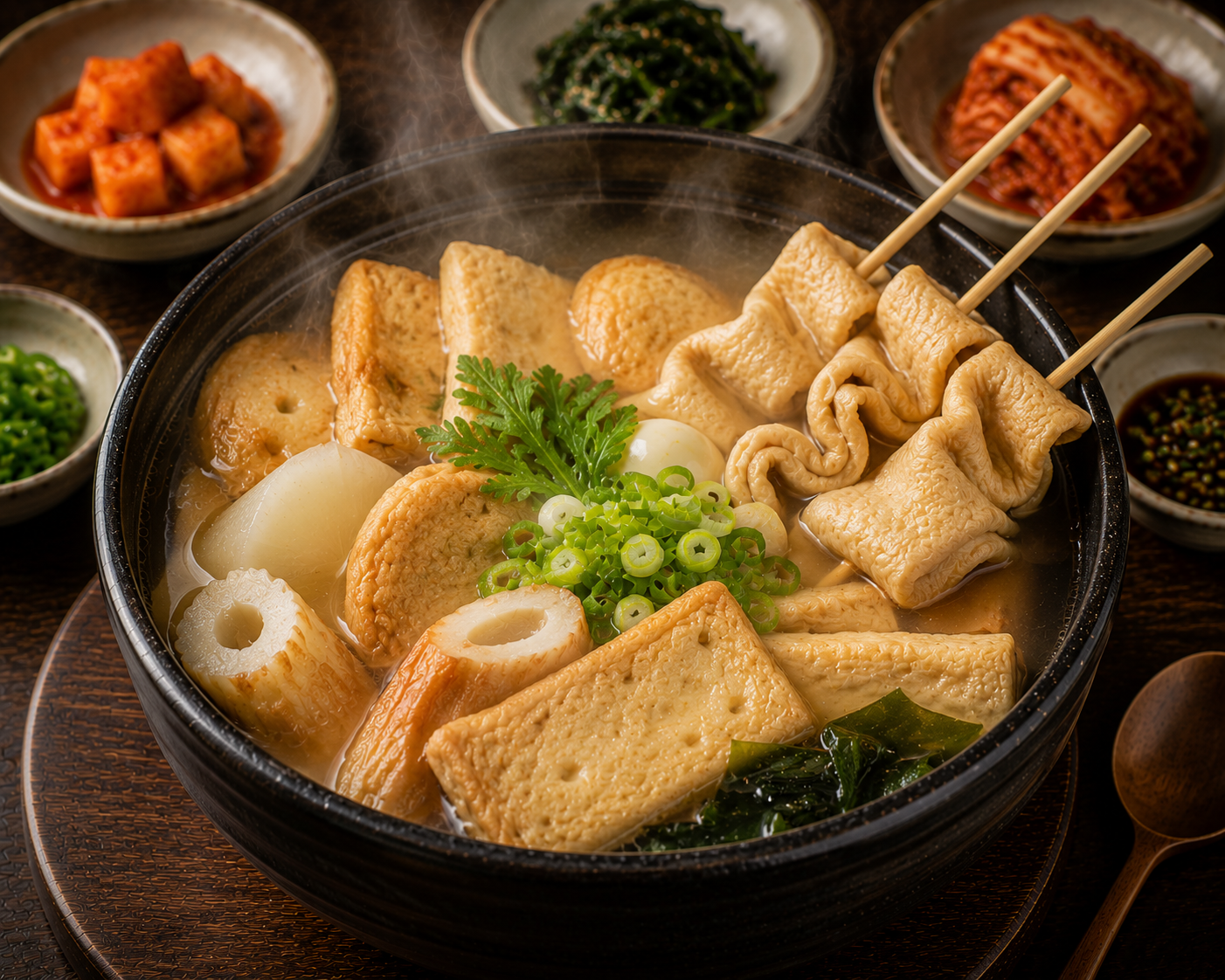
Eomuk-tang
어묵탕 · eomuk-tang
Eomuk-tang is a soup dish made by boiling fish cakes in anchovy broth, characterized by its light and warm flavor. It is usually seasoned with soy sauce, green onions, and garlic, and additional seasoning can be added at the table with soy sauce or salt, as it may be lightly seasoned.
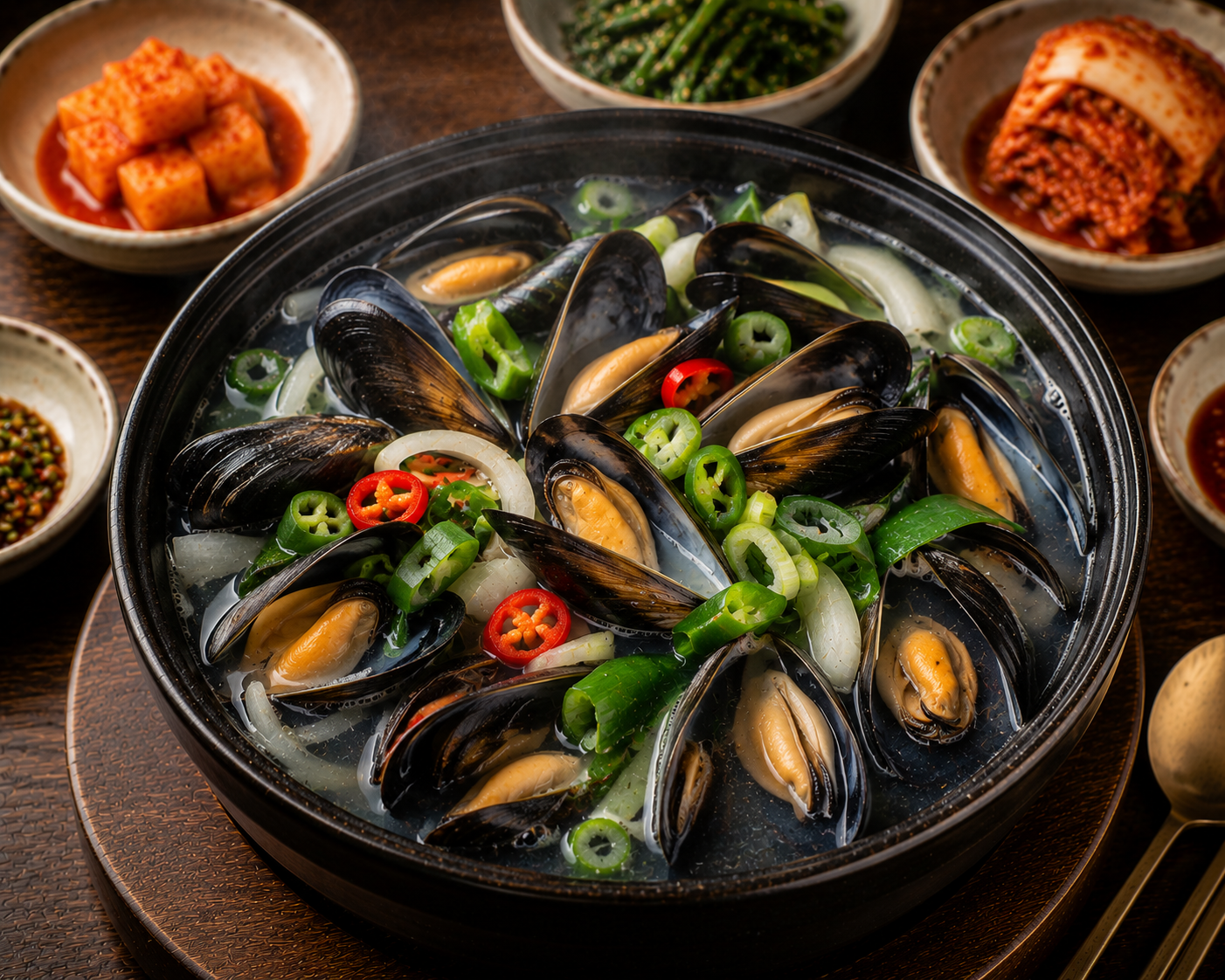
Mussels Soup
홍합탕 · honghap-tang
A Korean soup dish made primarily with mussels, featuring a clear and refreshing broth. The umami of the mussels infuses into the broth, typically seasoned with salt for flavor.
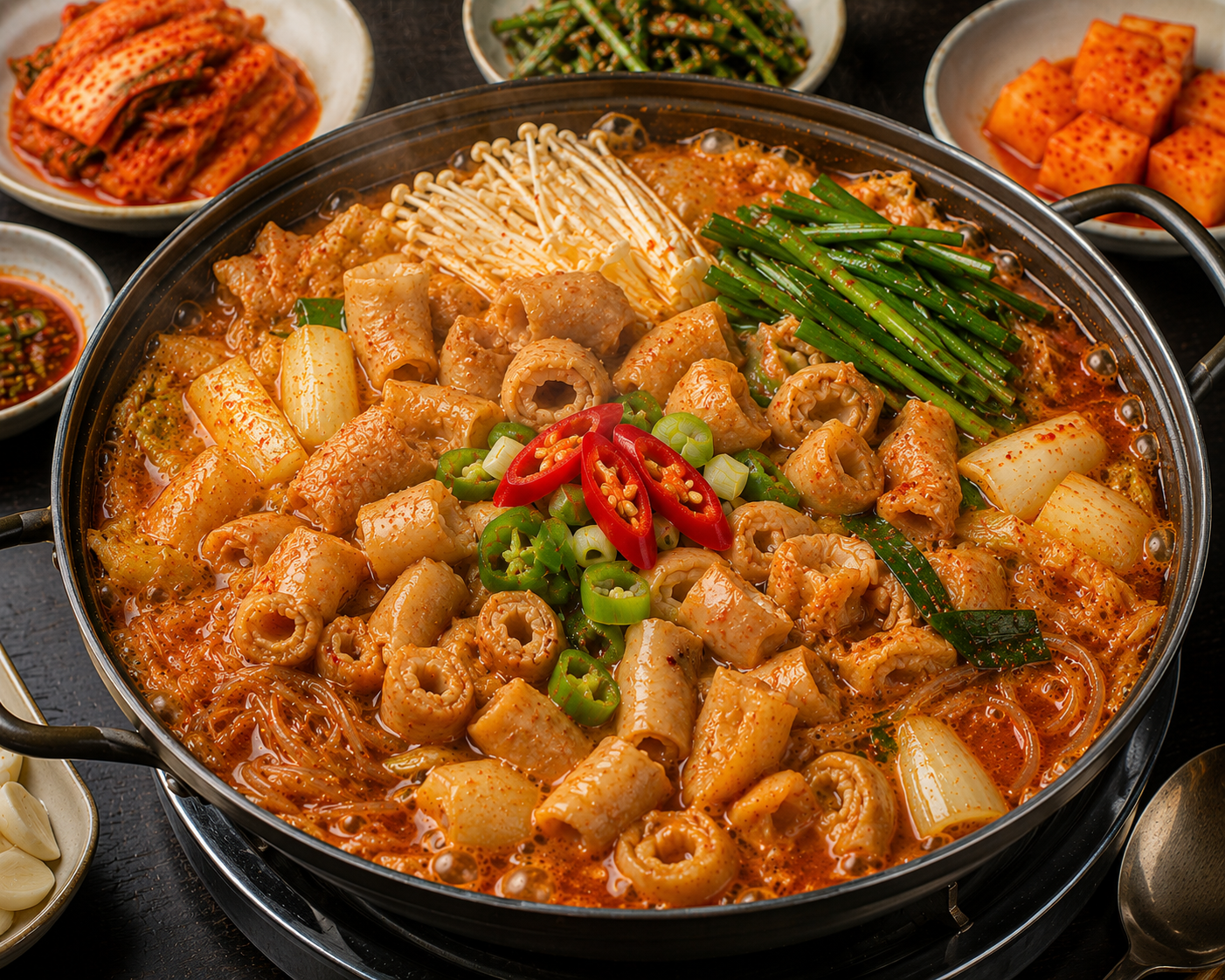
Gopchang Jeongol
곱창전골 · gopchang-jeongol
A Korean hot pot dish made by placing beef small intestines, vegetables, mushrooms, etc. in a large pot and pouring broth over it to cook directly at the table. The chewy texture of the intestines combines with various ingredients to create a deep flavor.
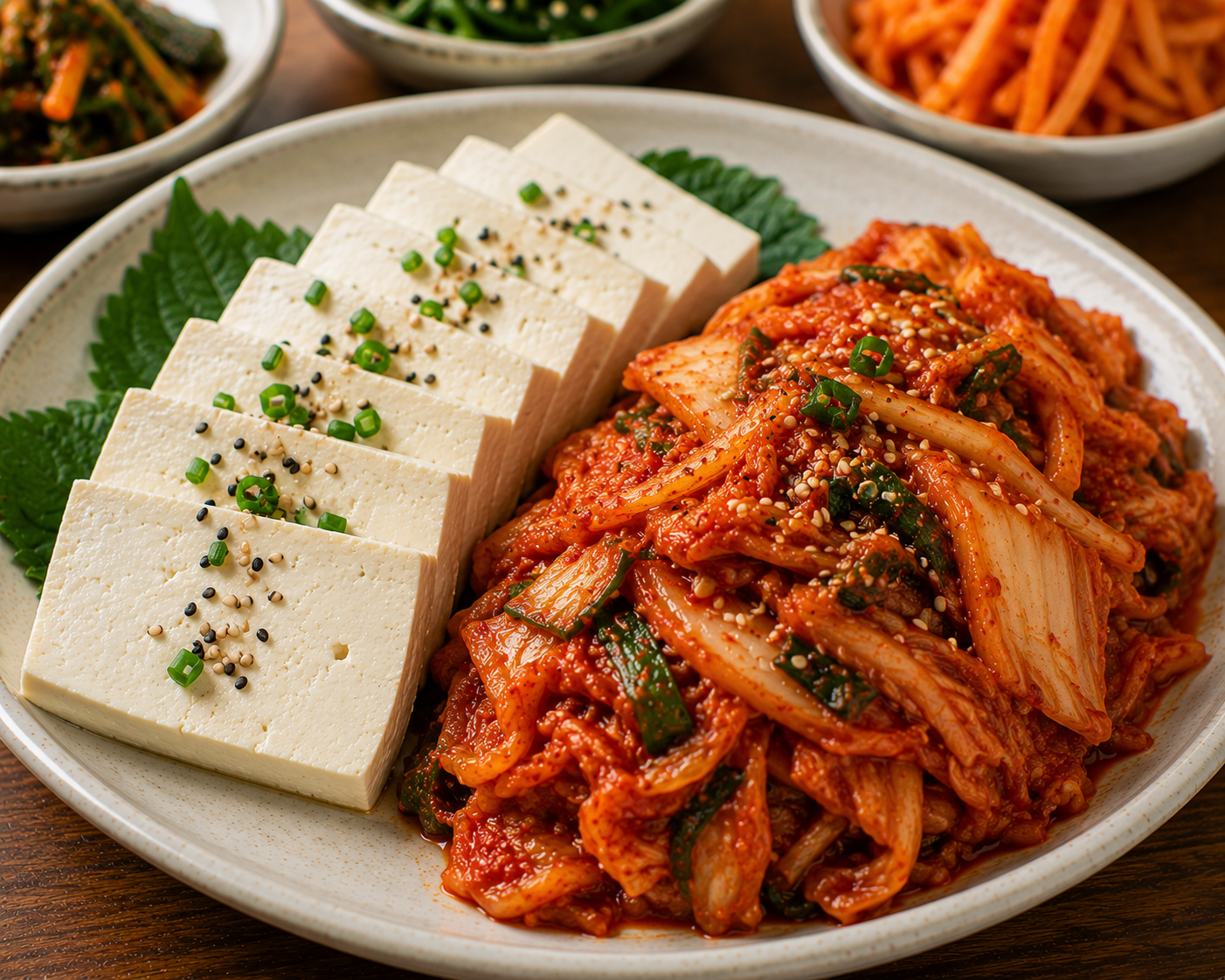
Tofu Kimchi
두부김치 · dubu-gimchi
A traditional Korean side dish enjoyed with boiled tofu and well-fermented kimchi.
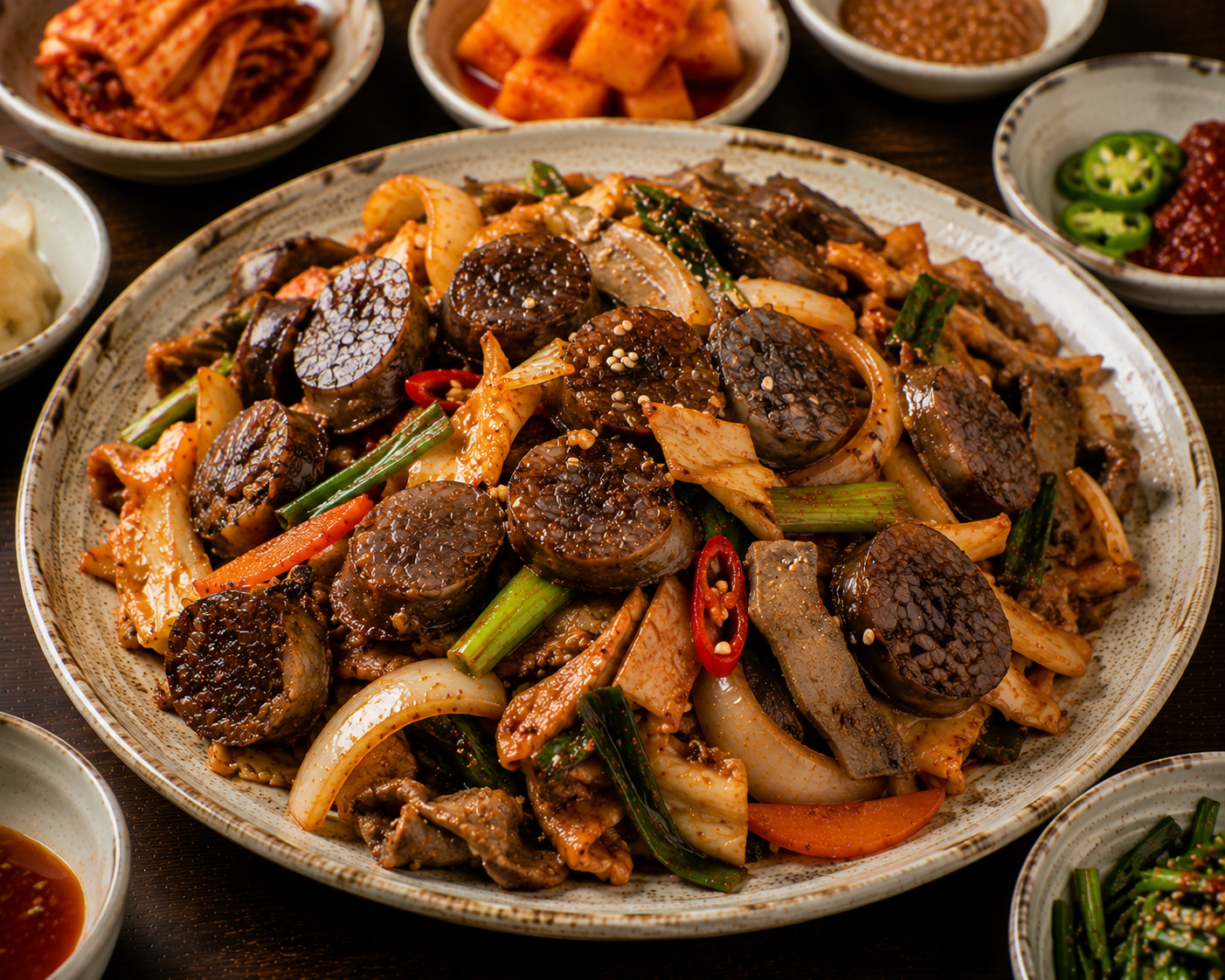
Sundae-bokkeum (Stir-fried Blood Sausage)
순대볶음 · sundae-bokkeum
A spicy dish made by stir-frying sundae with gochujang seasoning and vegetables over high heat.
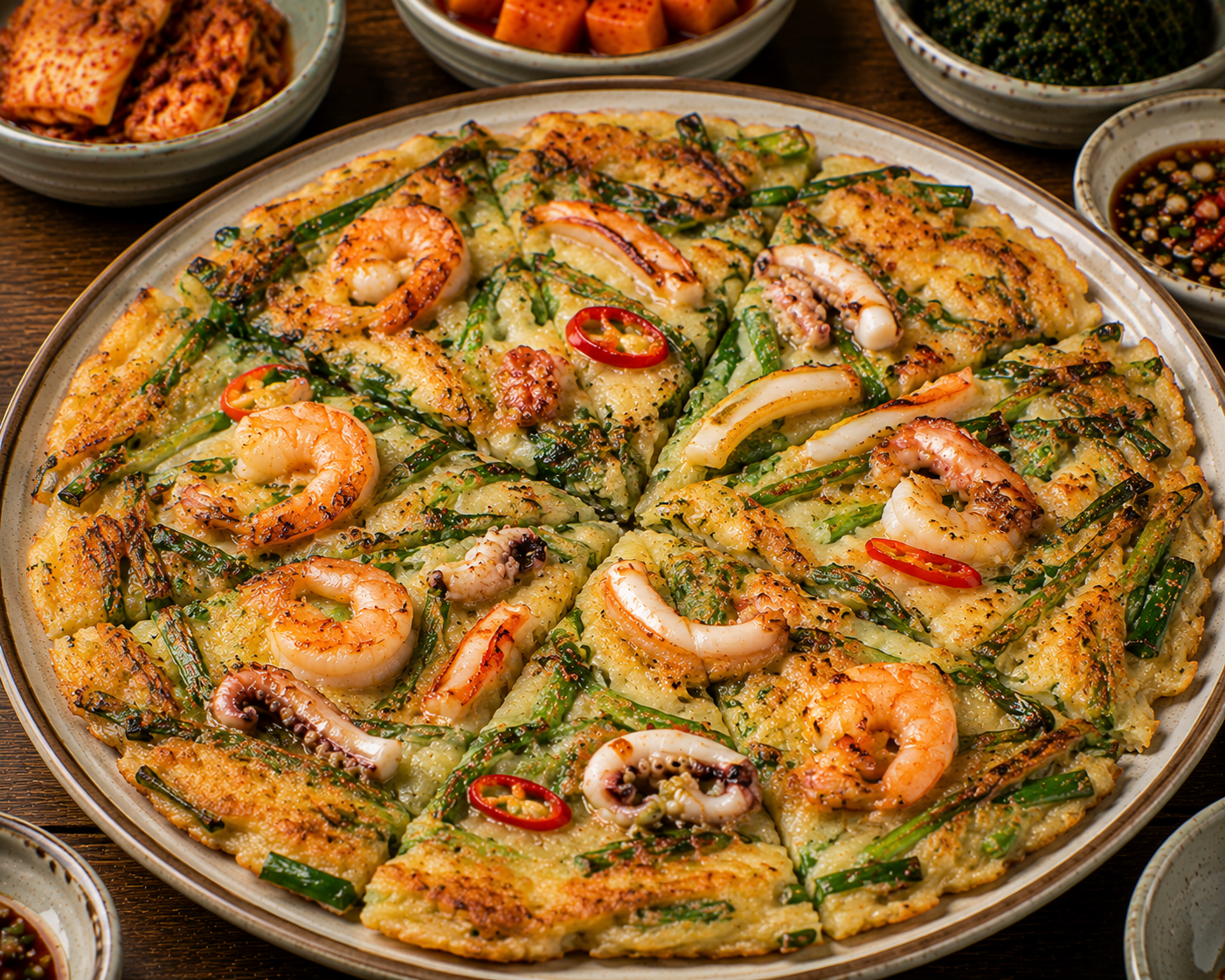
Seafood Pancake
해물파전 · hae-mul-pa-jeon
A pancake made by pouring a flour batter over scallions and topped with seafood such as squid and shrimp. It's crispy on the outside and moist on the inside with the scallions and seafood blending together. It's typically enjoyed cut up and shared with dipping sauce on rainy days as a side dish for Makgeolli.