“Hardship creates flavor — the hidden story behind some of Korea's most beloved dishes. From foraged spring greens to army-base stew, Korean cuisine was forged in scarcity and ingenuity.”
1. Food Born from Nature and Environment
Korea is a land of mountains and distinct four seasons. Winters were long and harsh, and the farming period was very short.
After the autumn harvest, there was almost nothing to eat from winter through spring. To survive this period, people had to search for what they could eat in nature.
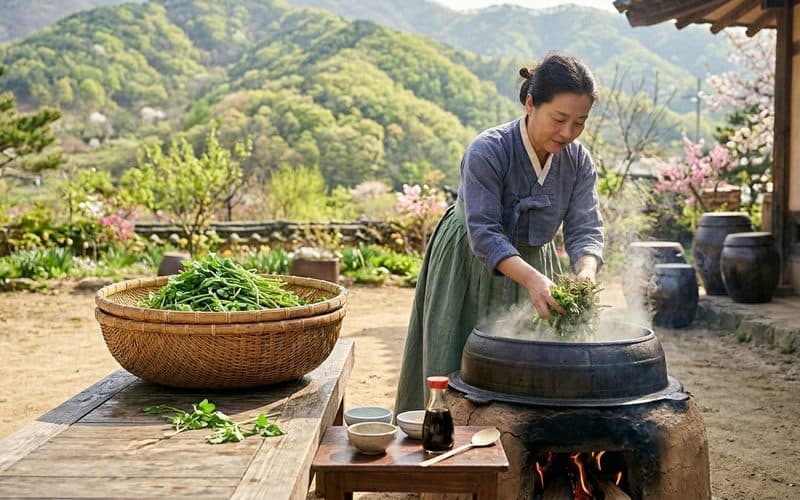
When spring came, people went out into nature to gather edible plants themselves. Greens like naengi, dalrae, and ssuk (shepherd's purse, wild garlic, and mugwort) appeared on the table. This foraging culture was not just a way of surviving — it was a way of living with nature.
This was not simply seasonal food — it was the first survival food for those who had endured winter. That is why Korean spring food still remains as food that eats from nature.
2. Food Born from War and Poverty
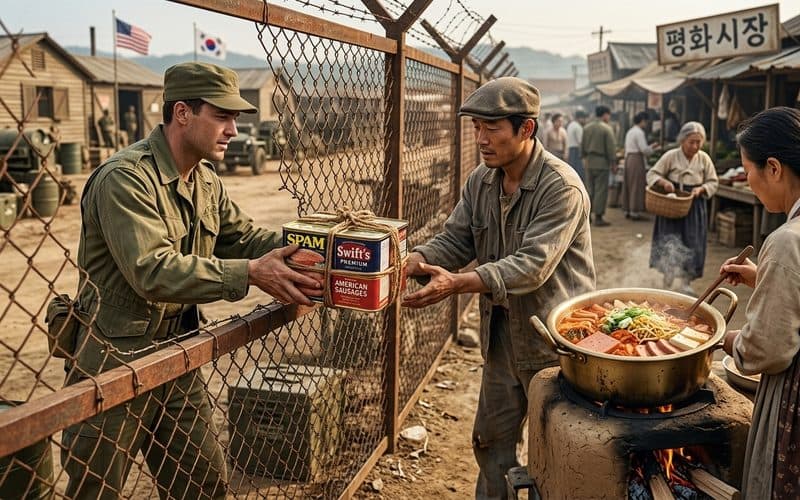
The biggest change in modern Korean history came after the Korean War. After the war ended, food was extremely scarce. People had to find new ways to survive.
Around US military bases, unfamiliar ingredients like ham and sausages entered Korean life — and the dish born from this was budae-jjigae (army base stew).
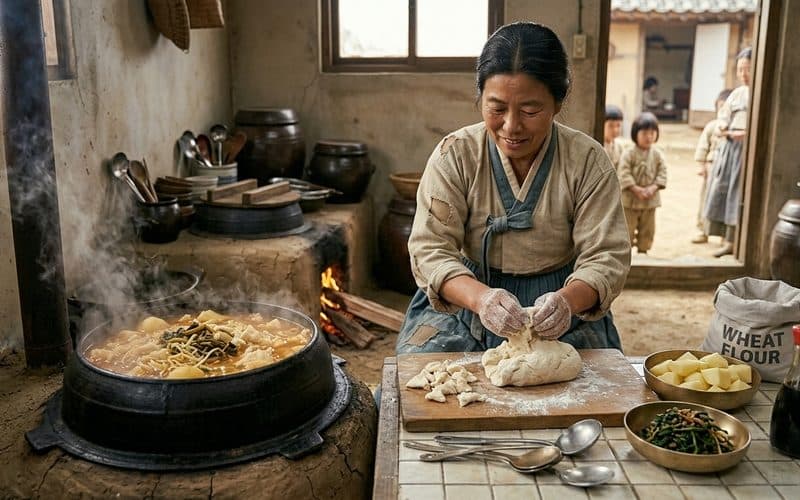
As rice production fell short, wheat flour began to be imported, and foods like ramyeon, kalguksu, and sujebi spread widely. These foods were not just cuisine — they were practical choices made to fill empty stomachs.
3. Substitute Foods to Fill the Gap
Rice was never plentiful enough in Korea. So people mixed in barley, beans, and other grains to fill what was lacking with different ingredients.
Wheat flour also became an important substitute ingredient, and sujebi (hand-torn noodle soup) and kalguksu became representative survival foods. These dishes were "food made to fill the gap of what wasn't there."
4. A Food Culture That Wastes Nothing
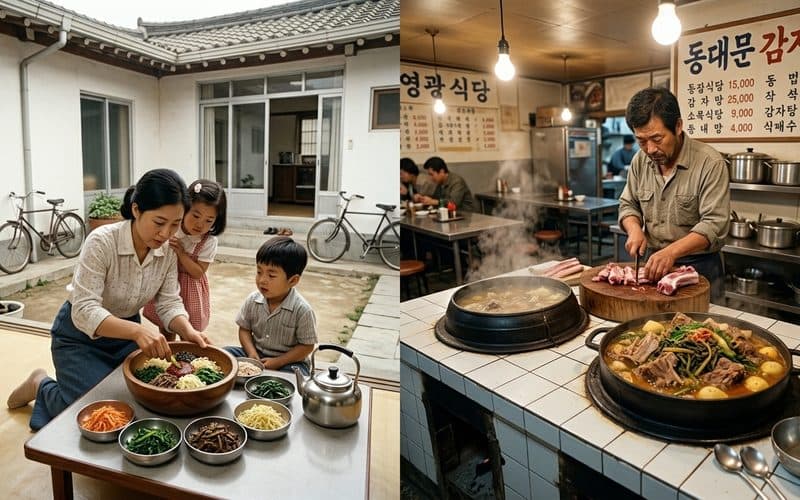
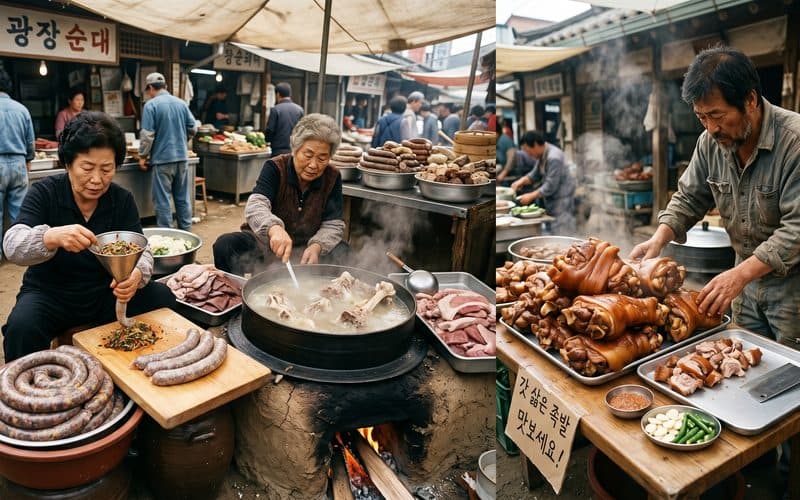
In times of food scarcity, nothing could be easily discarded. Sundae (Korean sausage) that used even the animal's intestines, and broth dishes simmered down to the bone — these were the results of survival where everything had to be used.
This was not simply frugality — it was an attitude of using resources to the very end.
5. Turning Leftovers into Completion
Korean food did not stop at simply filling what was lacking. It evolved into a culture that turns leftover ingredients into new, complete dishes.
The most iconic example is bibimbap. Gathering various side dishes, greens, and meat into one bowl and mixing them together was a wisdom for efficiently using ingredients. Bibimbap begins not from "what is missing" but from "what is still here."
Another great example is gamjatang. Made from inexpensive cuts like pork backbone, long simmering creates a deep, rich broth. What could have been discarded is reborn as one complete dish.
- Living in adaptation with nature
- Turning scarcity into creativity
- Using resources to the very end