
🔍 Discover Food
29 foods found
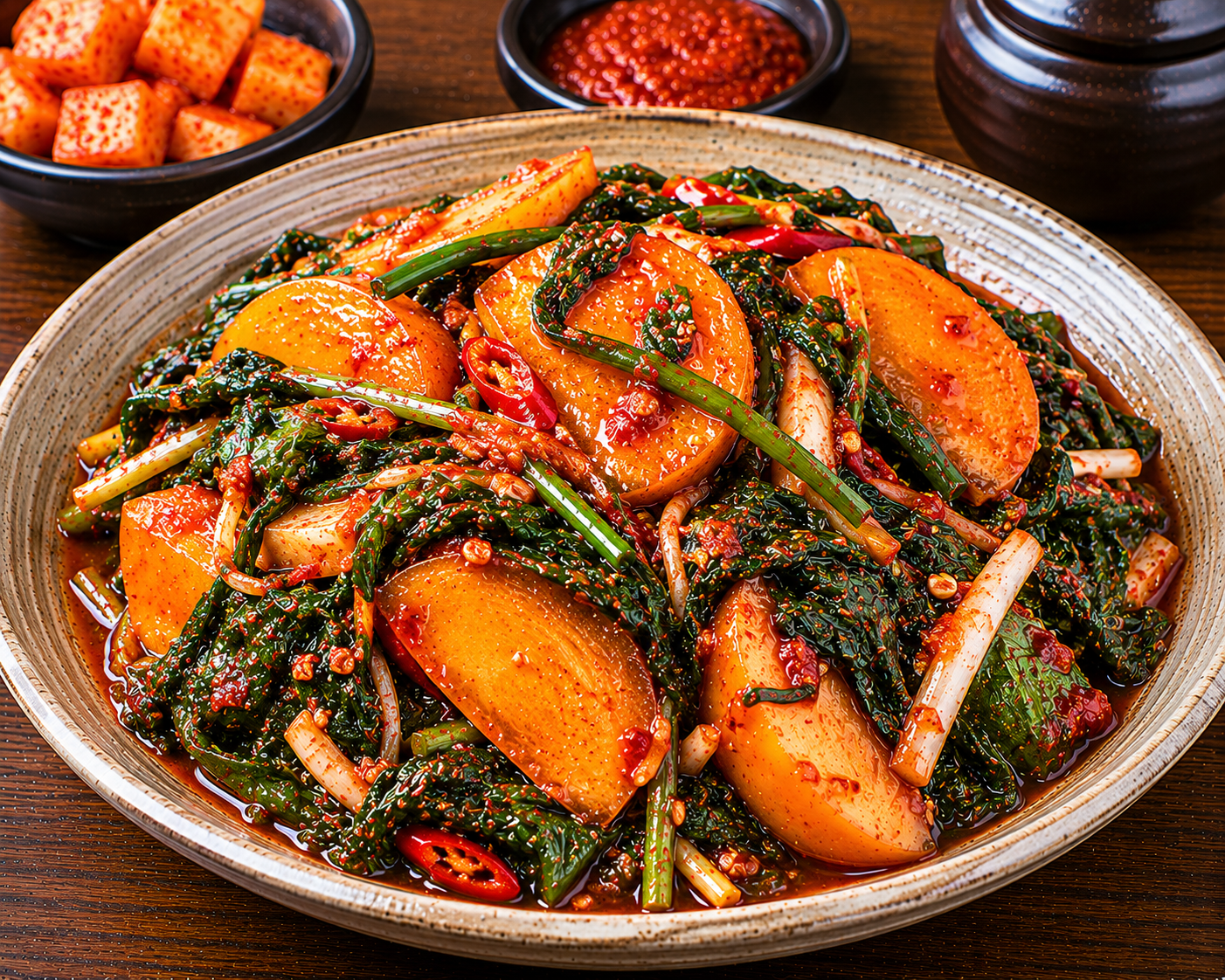
Ggamkimchi
감김치 · gam-gimchi
A type of kimchi made primarily with potatoes, seasoned with red pepper powder and garlic, and fermented. It features a crunchy texture and a spicy flavor, which becomes more sour as fermentation progresses.
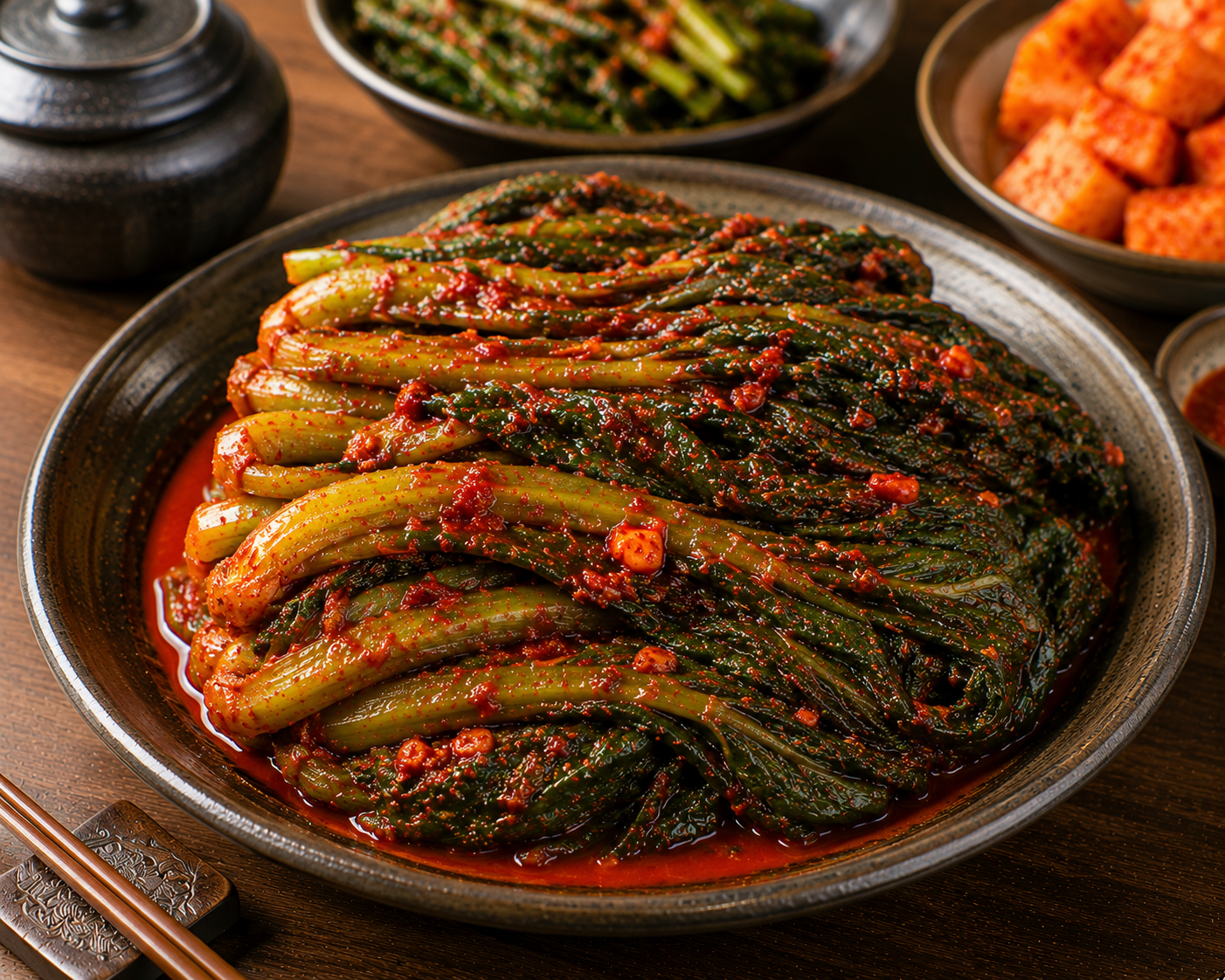
Gatkimchi
갓김치 · gat-gimchi
Gatkimchi is a type of kimchi made by seasoning gat (a type of leaf mustard) with red pepper powder, garlic, and fermented seafood, then fermenting it. It is characterized by its unique spicy and tangy flavor. As fermentation progresses, it develops a sour and deep taste. It can be eaten as a side dish or, when well-fermented, used as an ingredient in stews or stir-fries.
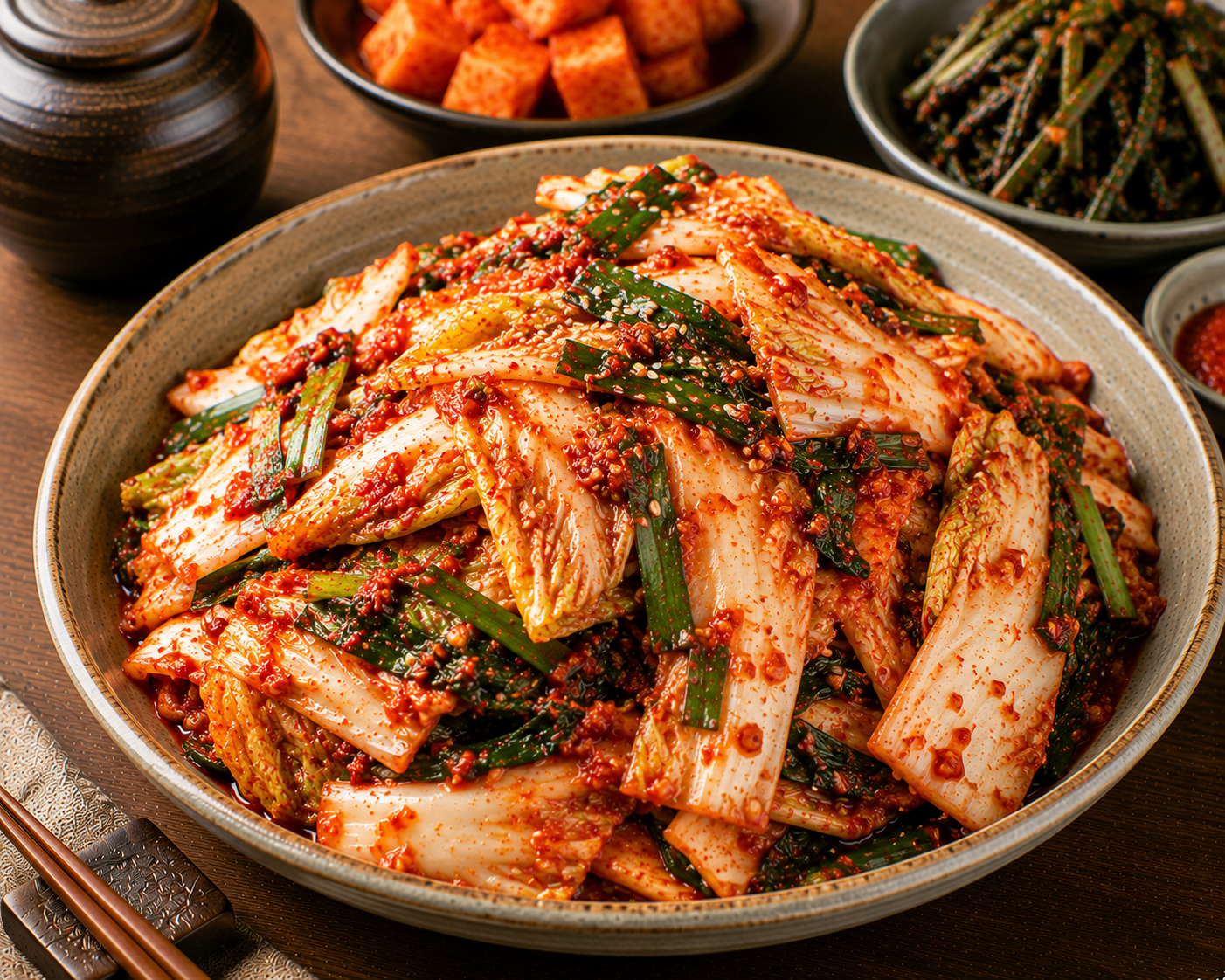
Geotjeori
겉절이 · Geot-jeo-ri
A type of kimchi made with napa cabbage tossed with gochugaru, garlic, and salted seafood, characterized by its crunchy and fresh taste as it is not fermented.
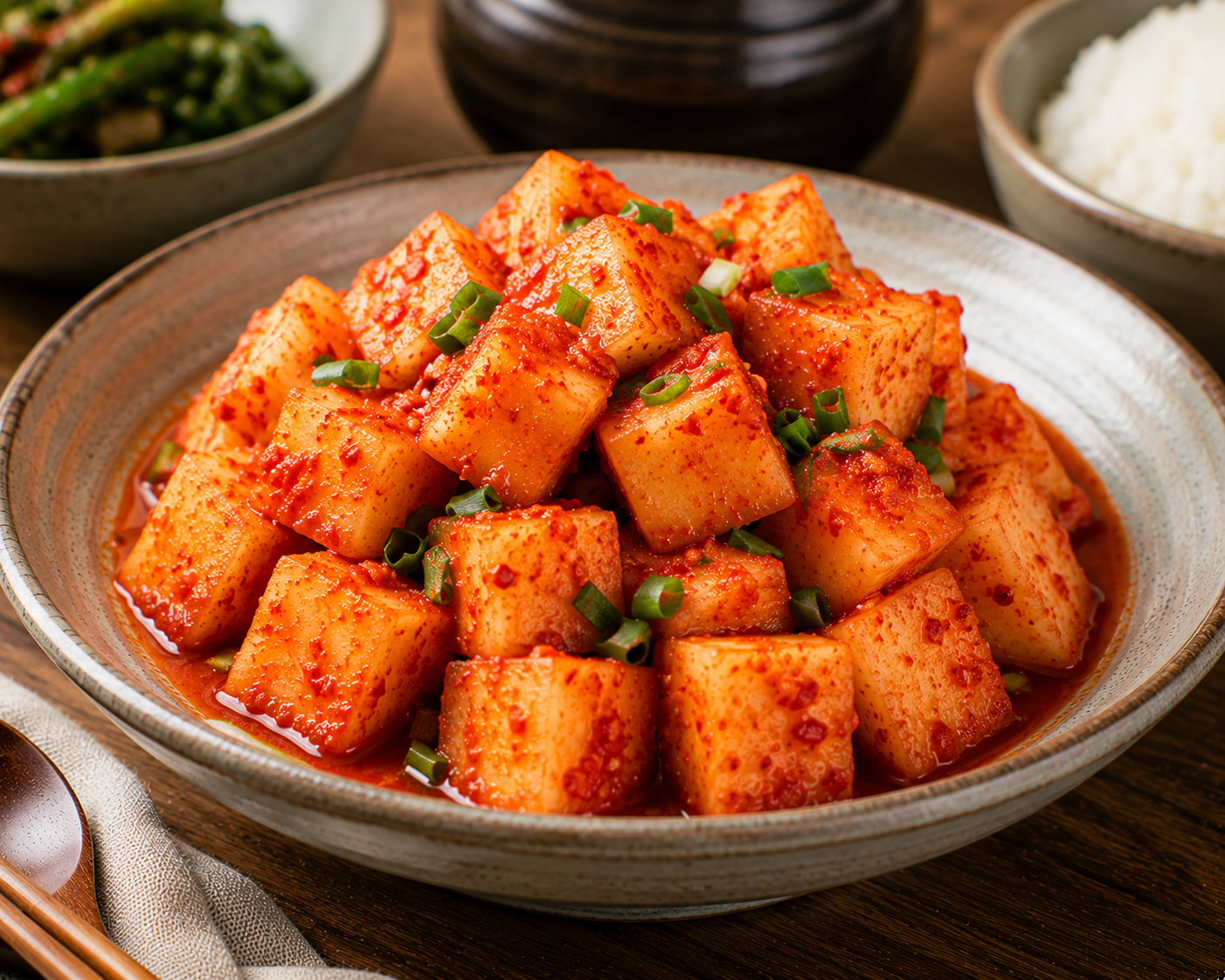
Kkakdugi
깍두기 · kkakdugi
Kimchi made by cutting radish into large cubes and mixing it with red pepper powder, garlic, and fermented shrimp. It has more moisture and a crunchier texture than Napa cabbage kimchi, and the longer it ferments, the more sour and effervescent the broth becomes.
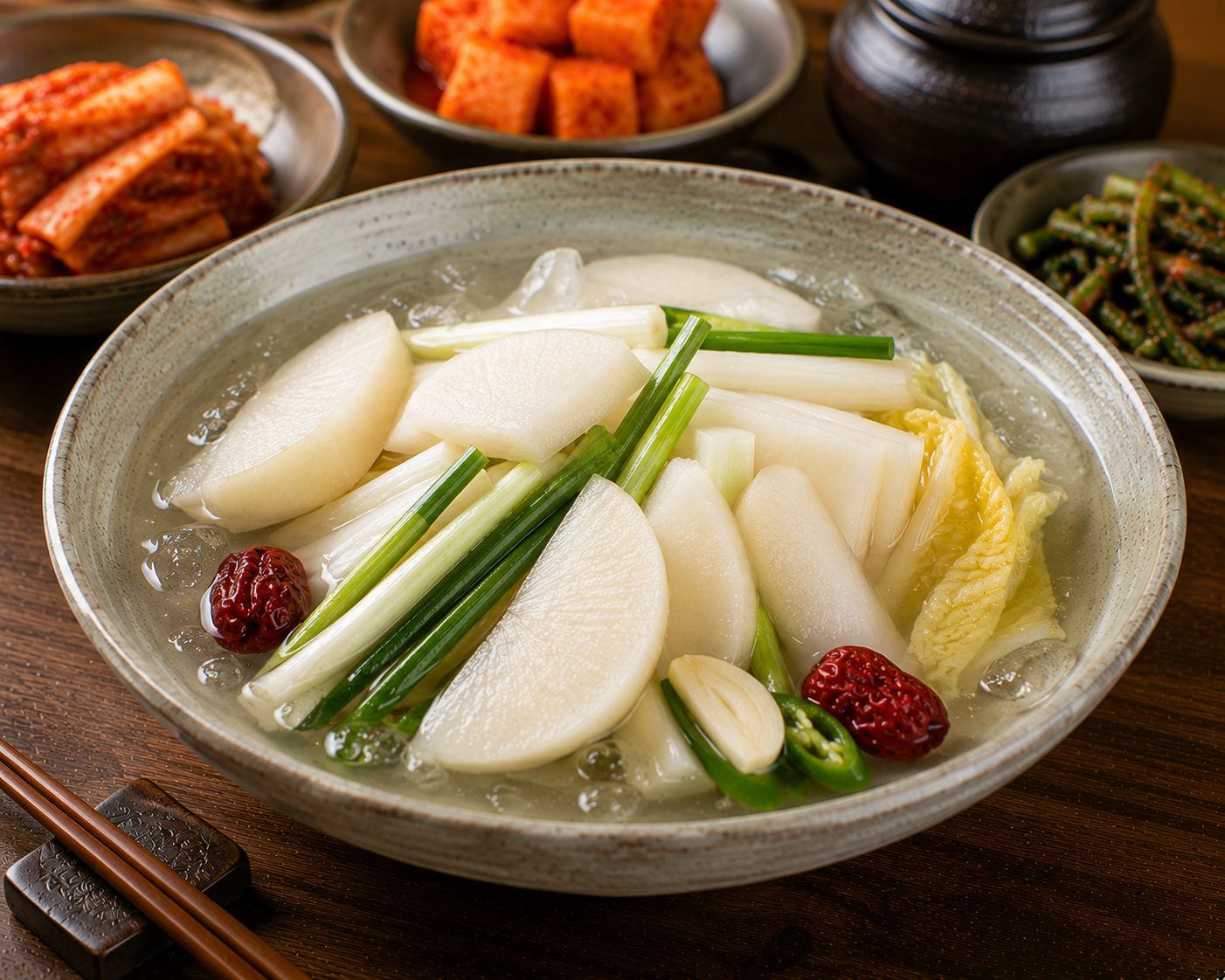
Dongchimi
동치미 · dongchimi
A clear and refreshing kimchi made by salting radishes, it becomes more sour and umami as fermentation progresses. It is mainly consumed as a side dish in winter and is also good for hangover relief due to its refreshing broth.
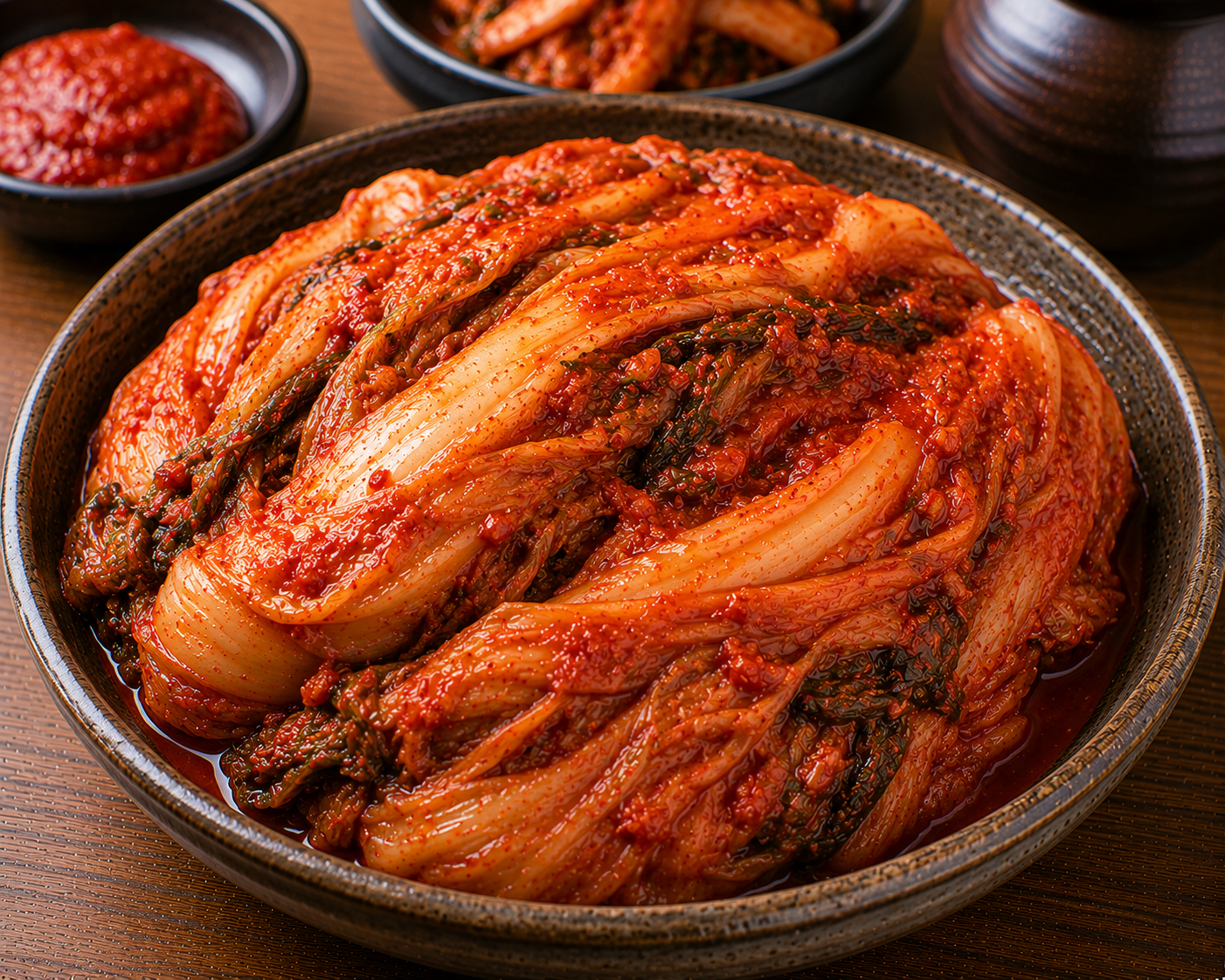
Mukeunji
묵은지 · mukeunji
Mukeunji is a type of kimchi made by fermenting napa cabbage seasoned with gochugaru, garlic, and fermented seafood for a long time, characterized by its deep and tangy flavor. Well-fermented mukeunji is primarily used in stews or stir-fried dishes, and the longer it ferments, the more effervescence it develops.
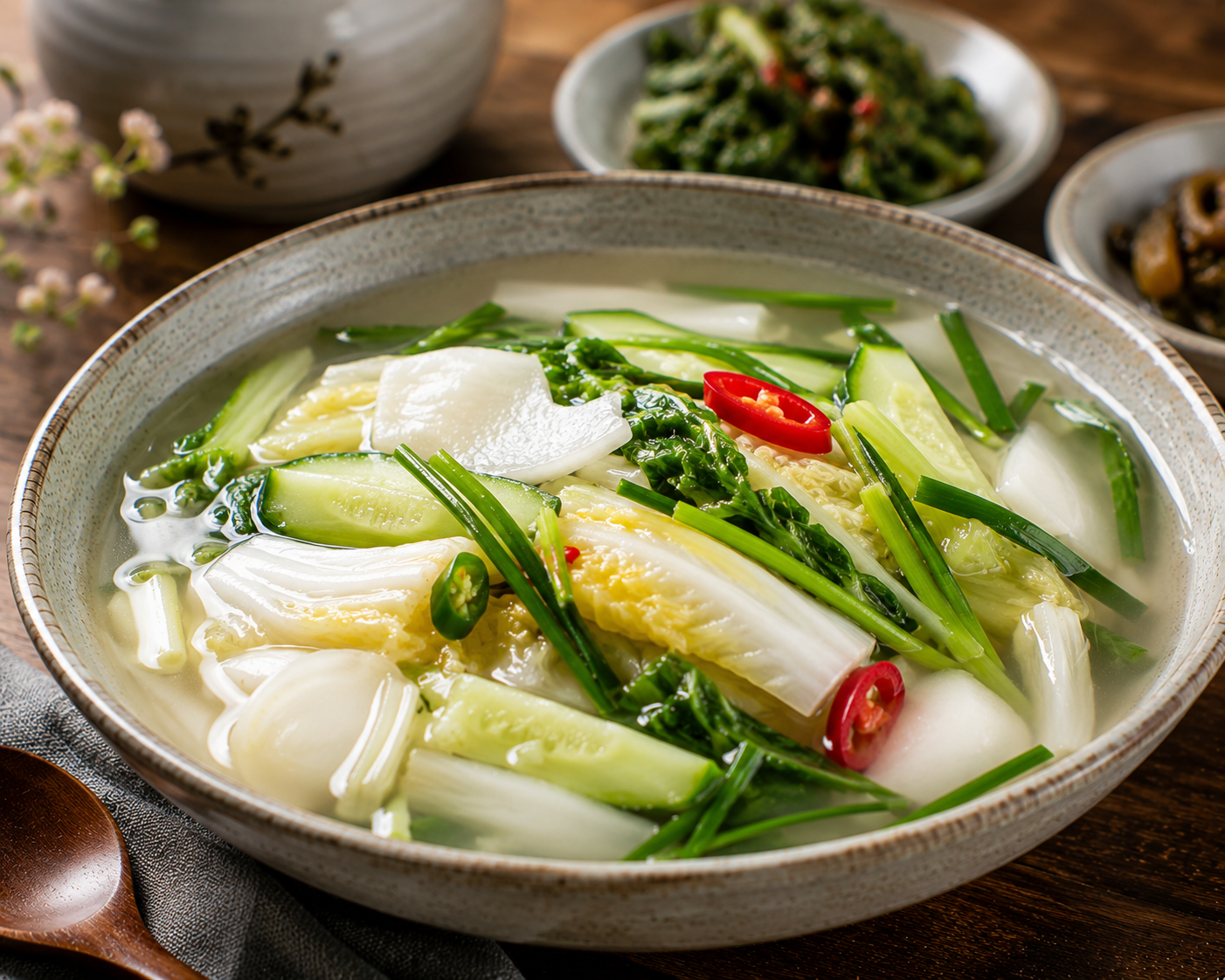
Mul Kimchi
물김치 · mul-gimchi
This kimchi is made by soaking radish and napa cabbage in salted water, characterized by its abundant broth, coolness, and sour taste. As fermentation progresses, the broth becomes more sour and tangy. It is mainly eaten as a side dish and is kept cool in the refrigerator during summer.
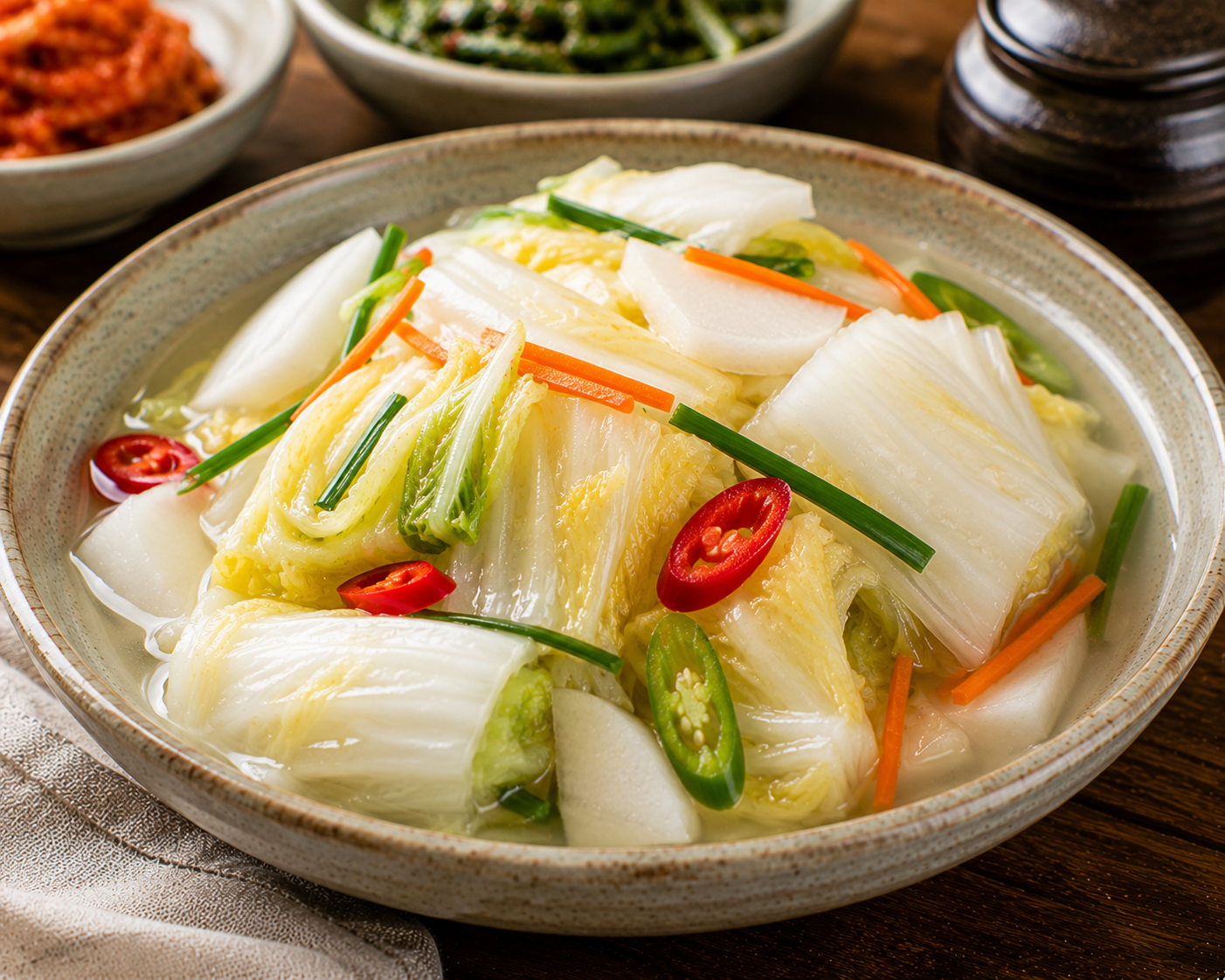
Baekkimchi
백김치 · baek-kimchi
Baekkimchi is a type of kimchi made by salting napa cabbage and seasoning it without red pepper powder, characterized by a mild and refreshing taste. As fermentation progresses, it becomes more sour and is primarily eaten as a side dish.
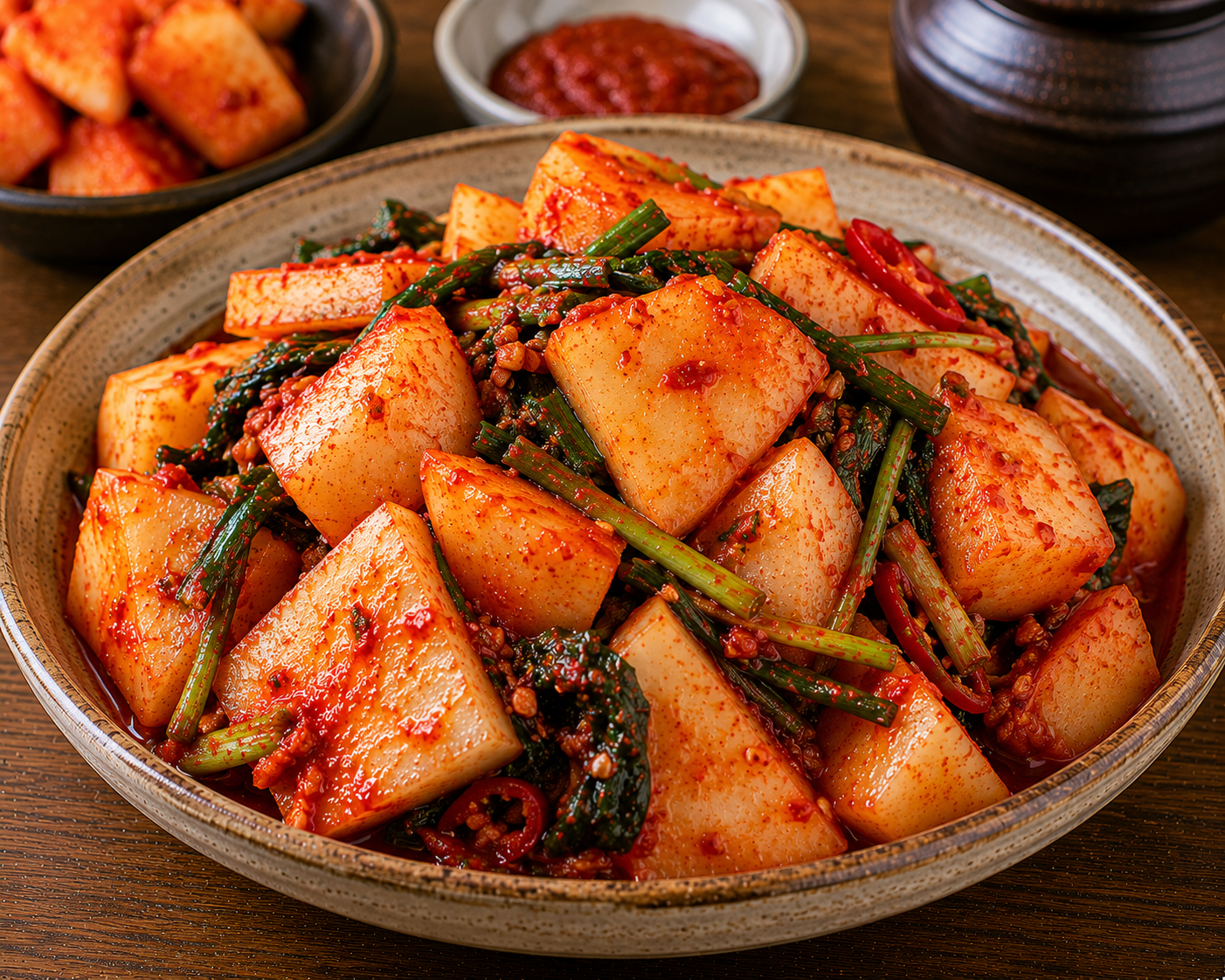
Seokbakji
섞박지 · Seokbakji
A kimchi made by fermenting radish and napa cabbage with red pepper powder, garlic, and salted seafood, characterized by a crunchy texture and spicy taste. The sour taste becomes stronger as fermentation progresses and is enjoyed as a side dish or used as an ingredient in stews.
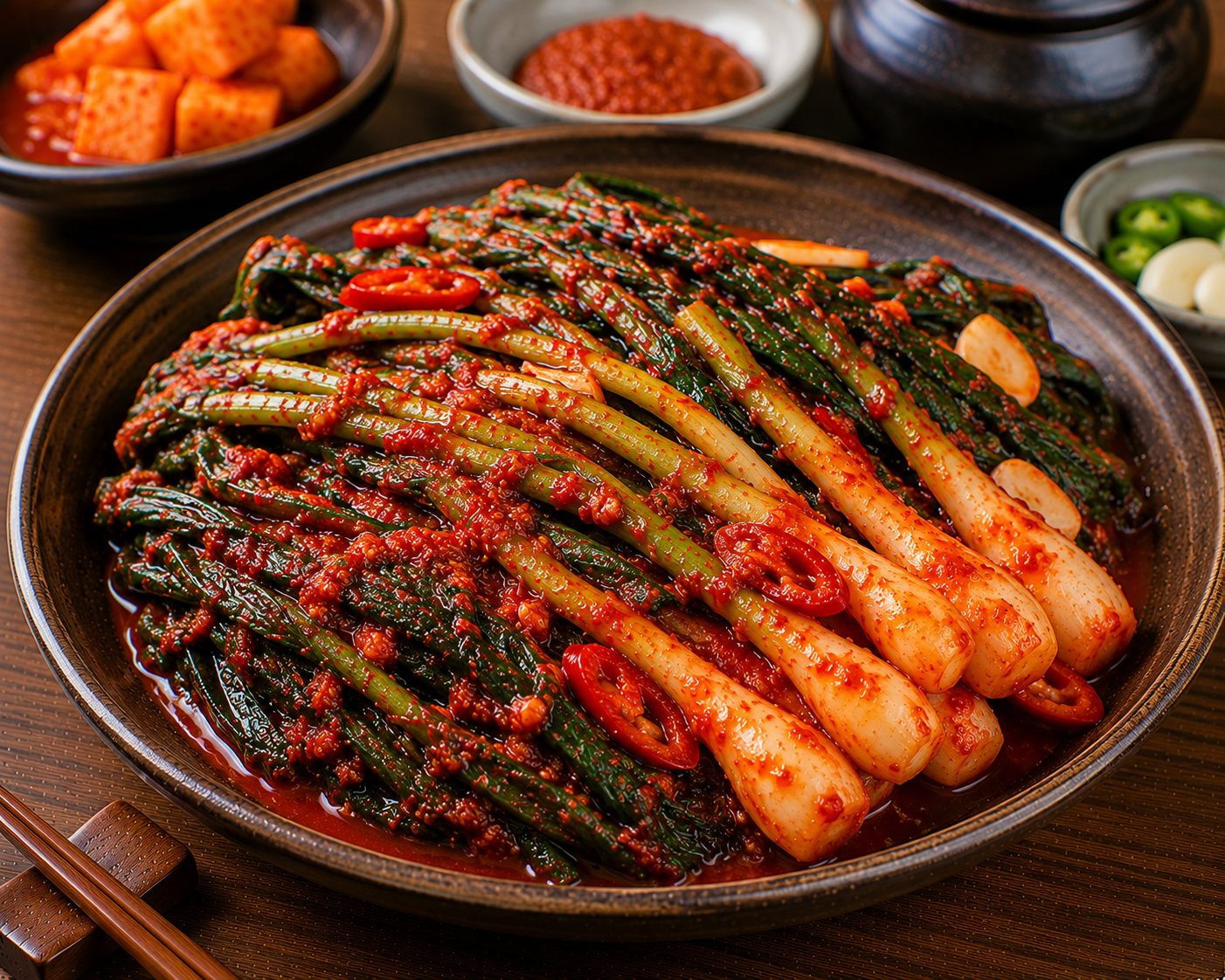
Jang Kimchi
장김치 · jang-gimchi
Kimchi made by salting napa cabbage or radish with soy sauce, characterized by a less spicy and salty flavor compared to regular kimchi. As fermentation progresses, umami is enhanced.
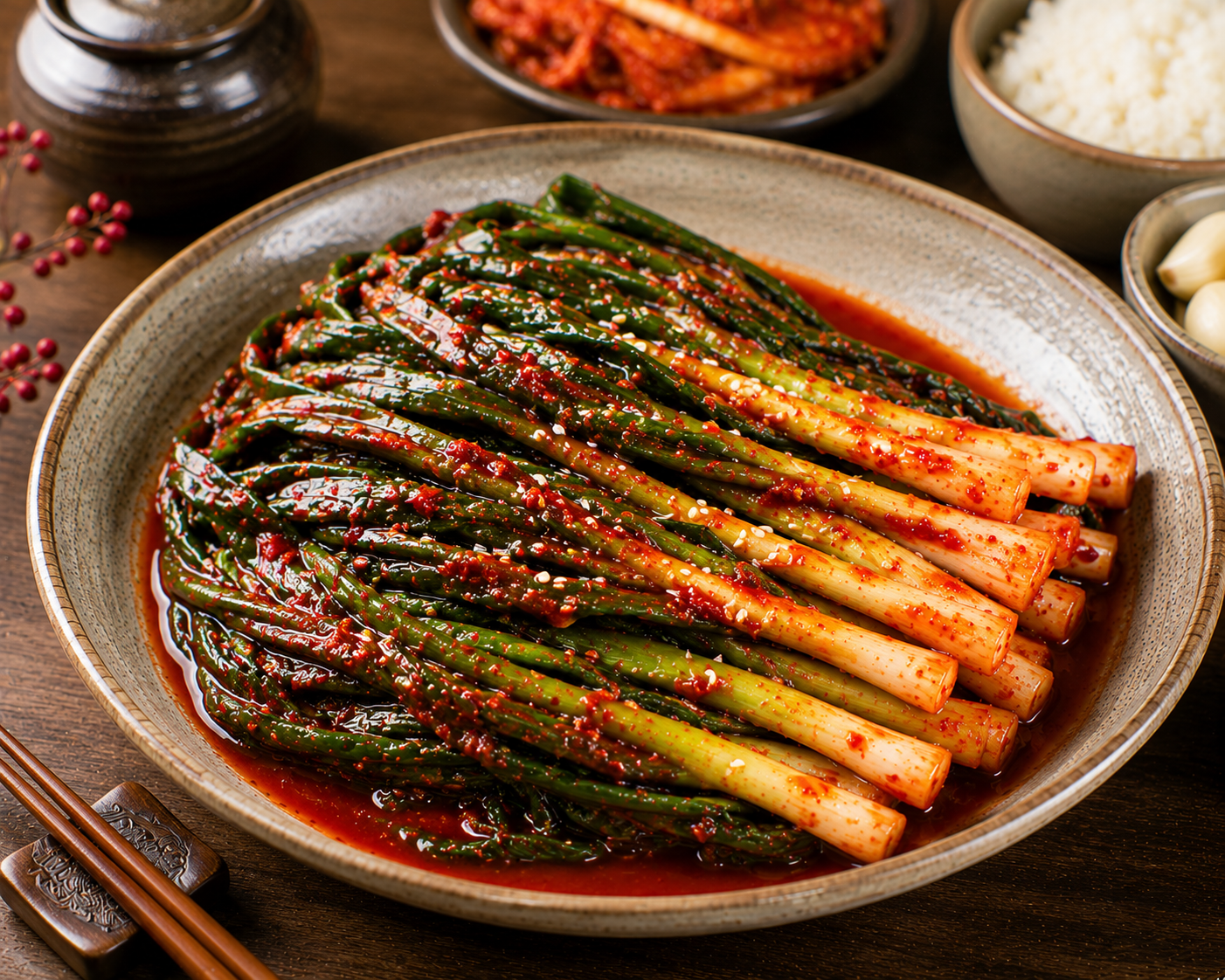
Scallion Kimchi
파김치 · pa-gimchi
Scallion kimchi is made by seasoning scallions with red pepper powder and salted seafood, then fermenting them, characterized by a crunchy texture and spicy flavor. As fermentation progresses, it develops a sour taste and umami. It is typically served as a side dish with meat dishes.
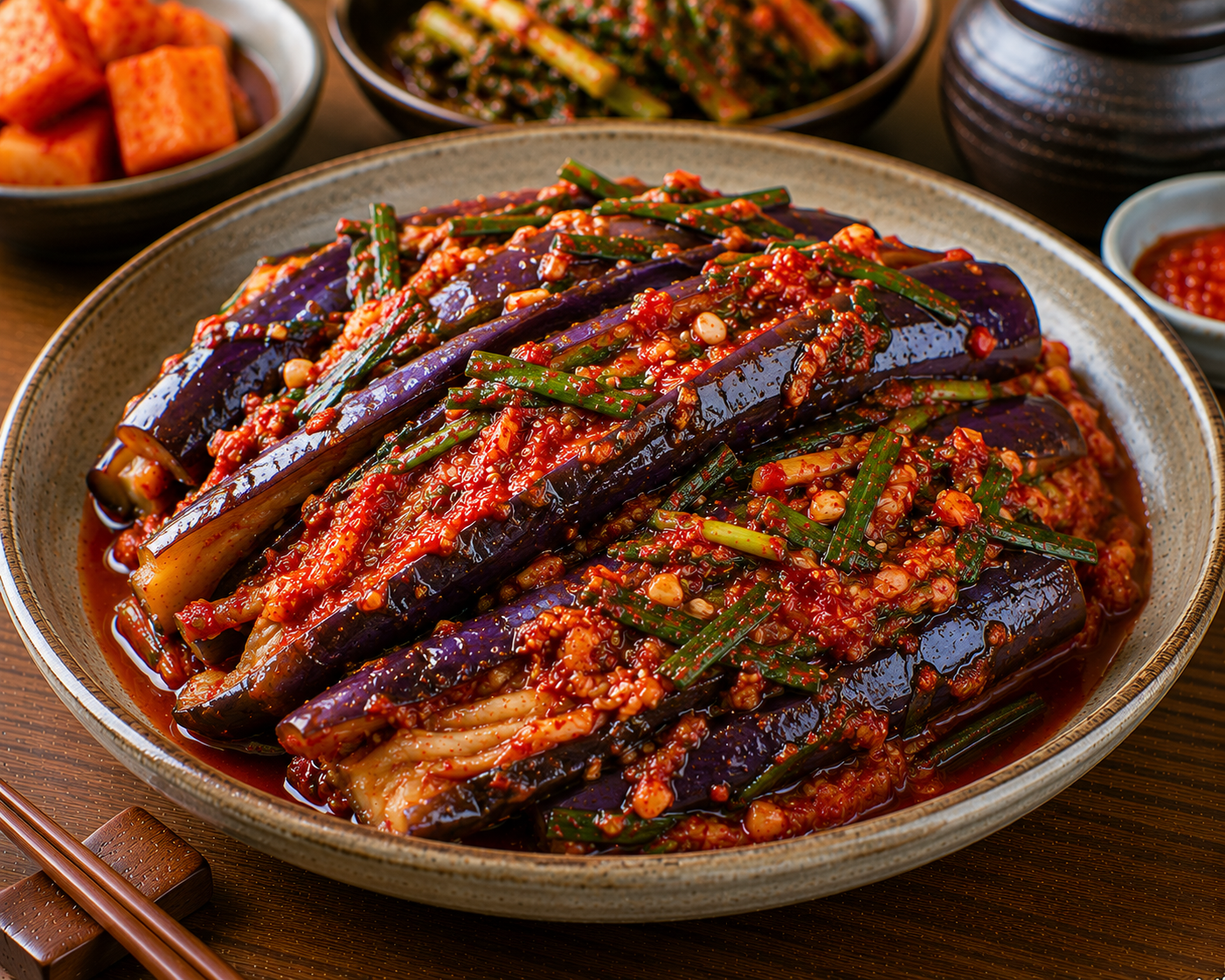
Eggplant Kimchi
가지김치 · gaji-gimchi
Kimchi made by seasoning eggplant with red pepper powder, garlic, and salted seafood, then fermenting it. It features a crunchy texture and a spicy taste, and the sour flavor intensifies as fermentation progresses.
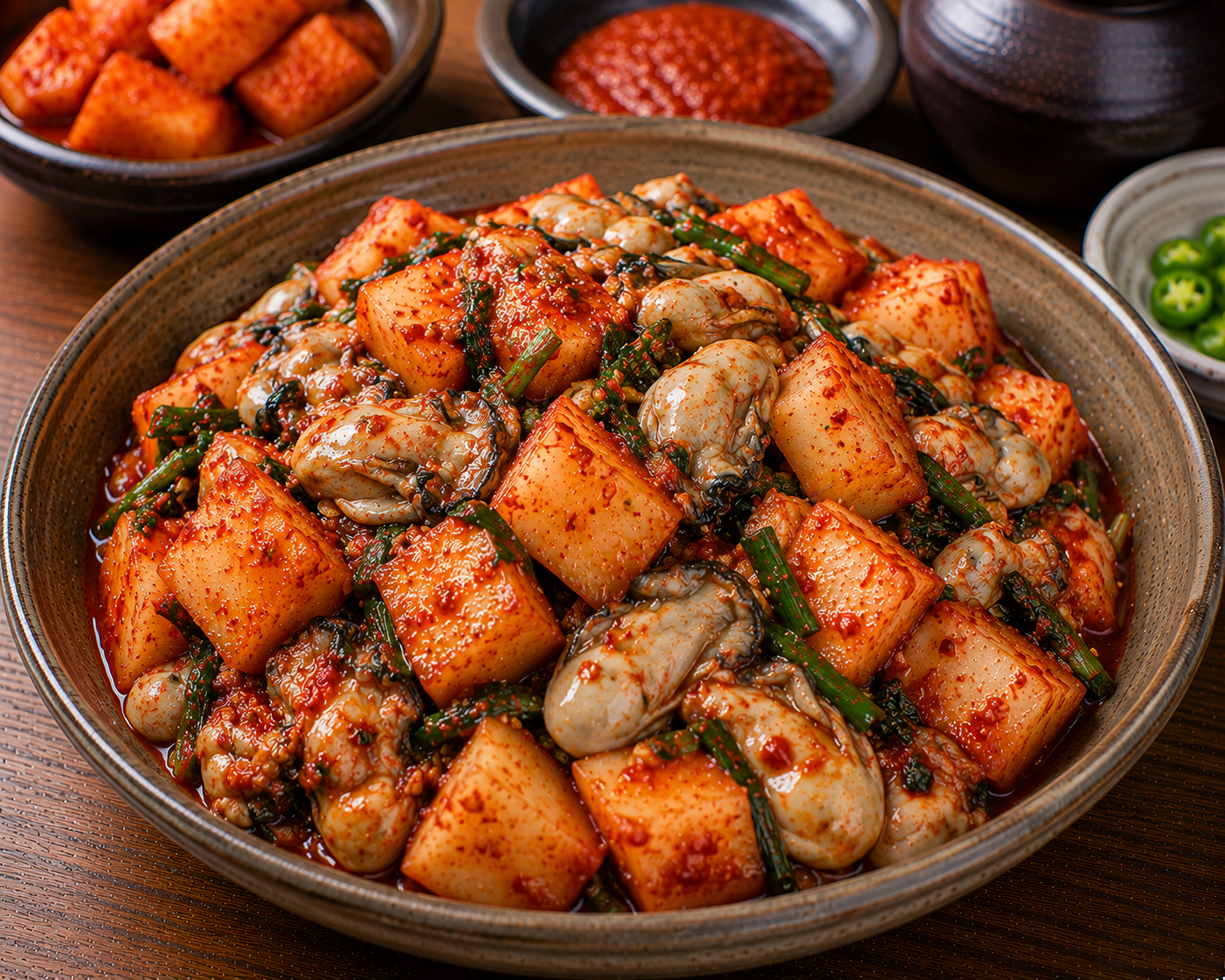
Oyster Cubed Radish Kimchi
굴깍두기 · gul-kkakdugi
Kimchi made by cutting radishes into cubes and seasoning them with red pepper powder, garlic, and salted seafood, then adding oysters to ferment. It features a harmony of crunchy radish and soft oysters, and the flavors deepen and sourness increases as fermentation progresses.
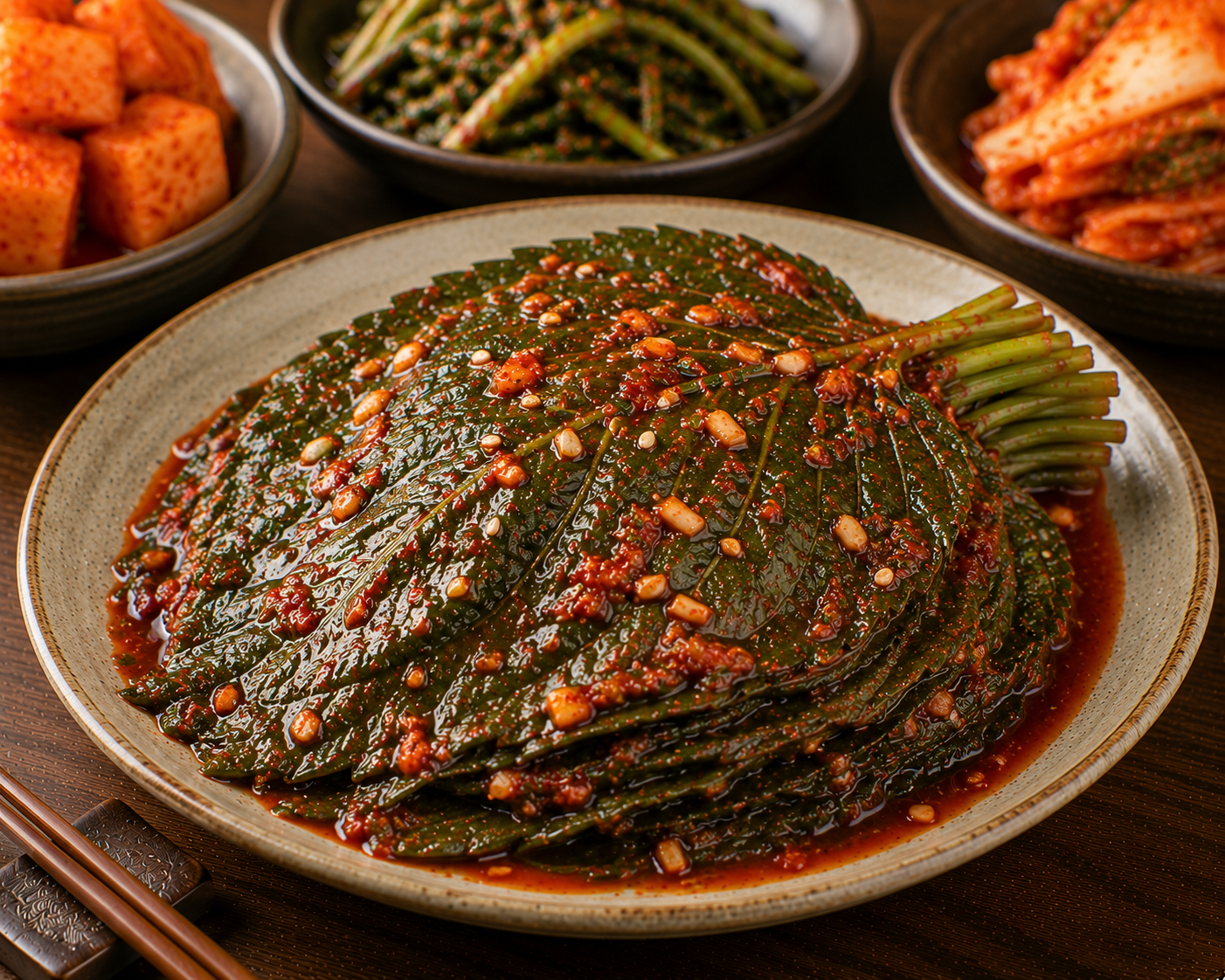
Perilla Leaf Kimchi
깻잎김치 · kkaet-ip-gimchi
Kimchi made by seasoning perilla leaves with red pepper powder, garlic, fermented seafood, and other ingredients, and allowing it to ferment. It is characterized by its crunchy texture and the fragrant flavor of perilla leaves, with a deeper taste as fermentation progresses.
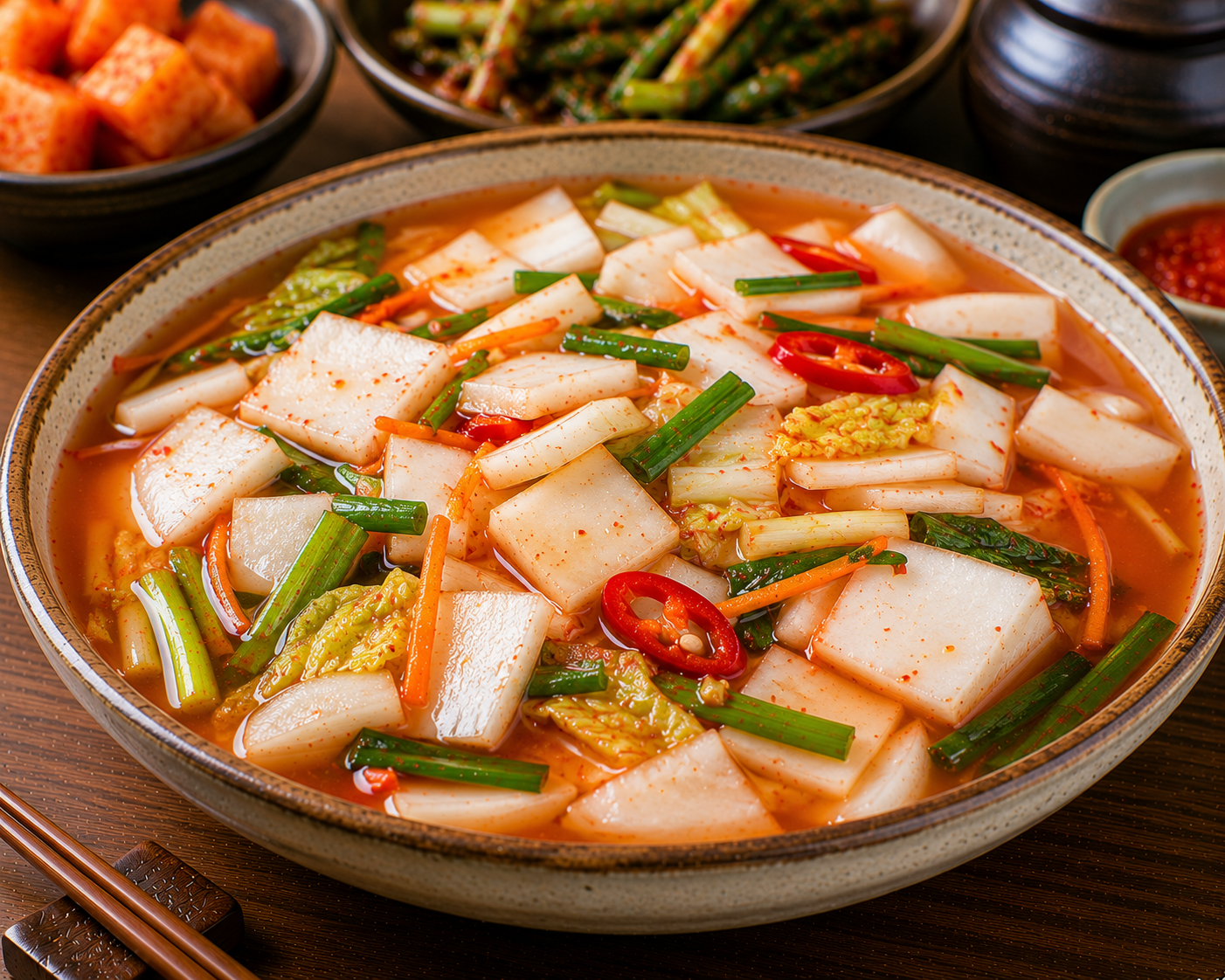
Nabak Kimchi
나박김치 · nabak-kimchi
Kimchi made by thinly slicing radish and napa cabbage, seasoning them with red pepper powder and garlic, and then fermenting them with added water. It is characterized by its abundant broth, refreshing taste, and sour flavor.
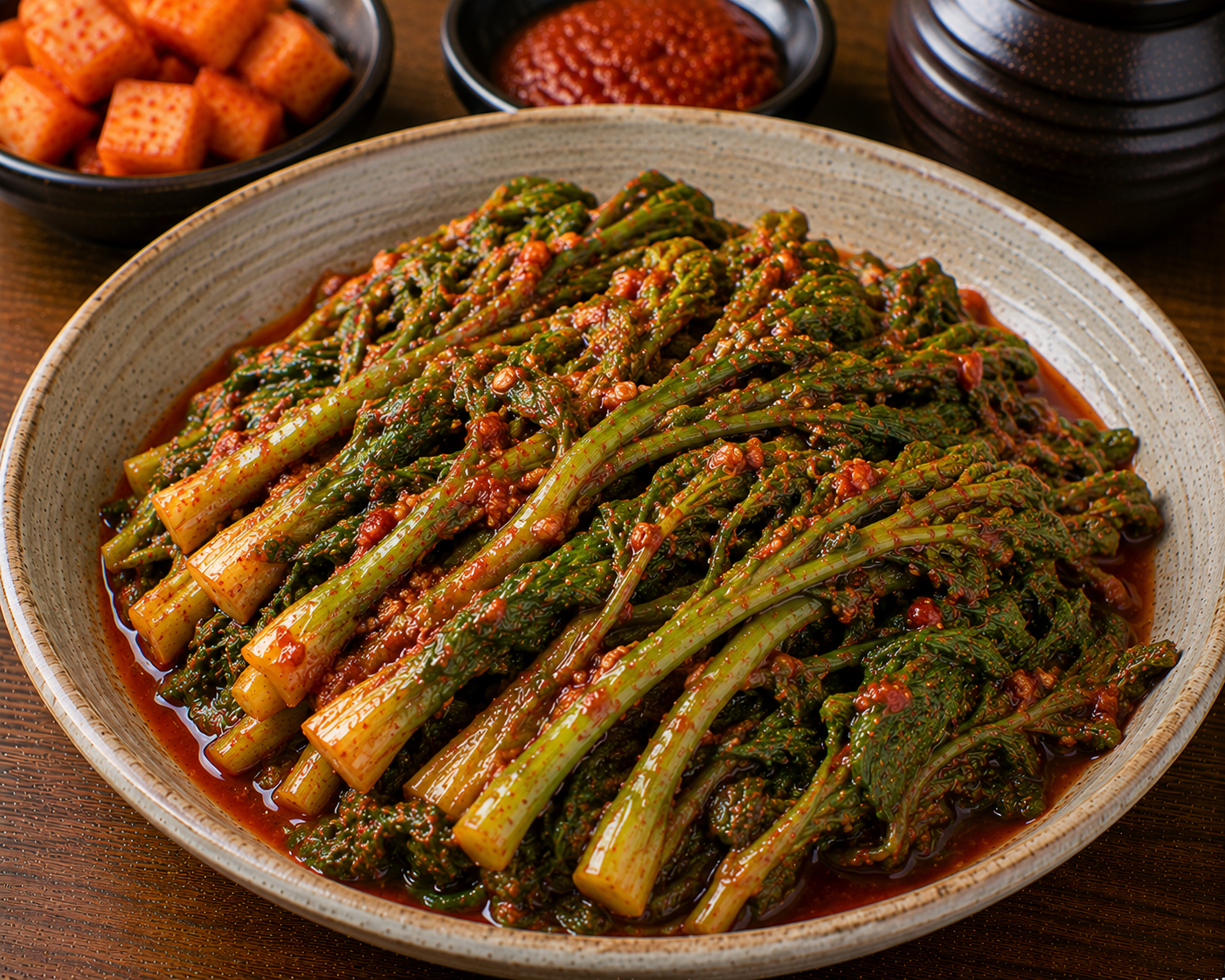
Dureup Kimchi
두릅김치 · du-reup-gim-chi
Kimchi made by seasoning dureup with red pepper powder and fermented; it is characterized by its crisp texture and unique aroma. The more fermentation progresses, the more sour it becomes, and it can be eaten as a side dish or used in cooking.
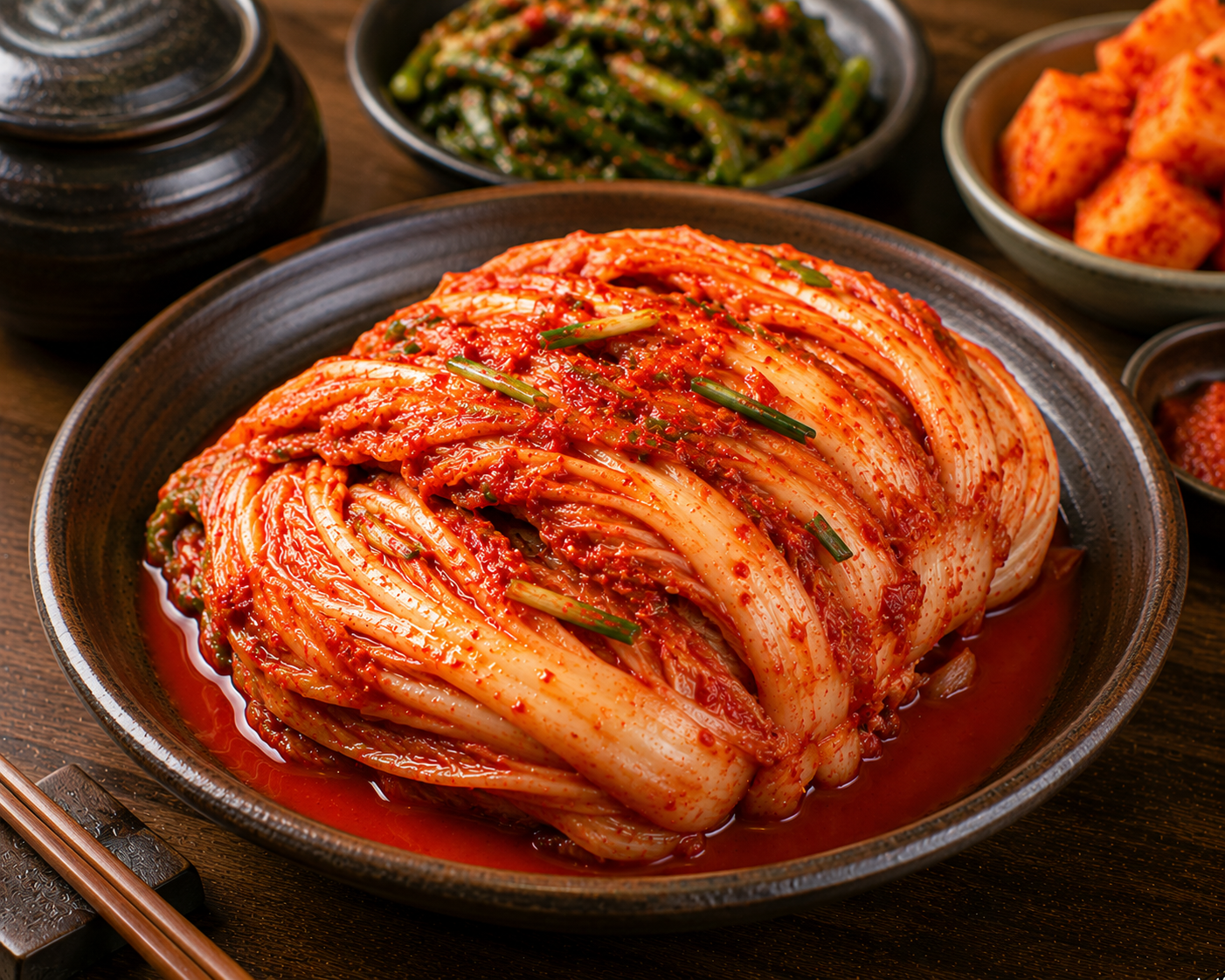
Napa Cabbage Kimchi
배추김치 · baechu-gimchi
Kimchi made by fermenting salted napa cabbage with ingredients such as chili powder, garlic, and seafood sauce. As fermentation progresses, it becomes more sour and umami-rich, changing from a crunchy texture to a softer one. It can be eaten as a side dish or used as an ingredient in stews and stir-fries.
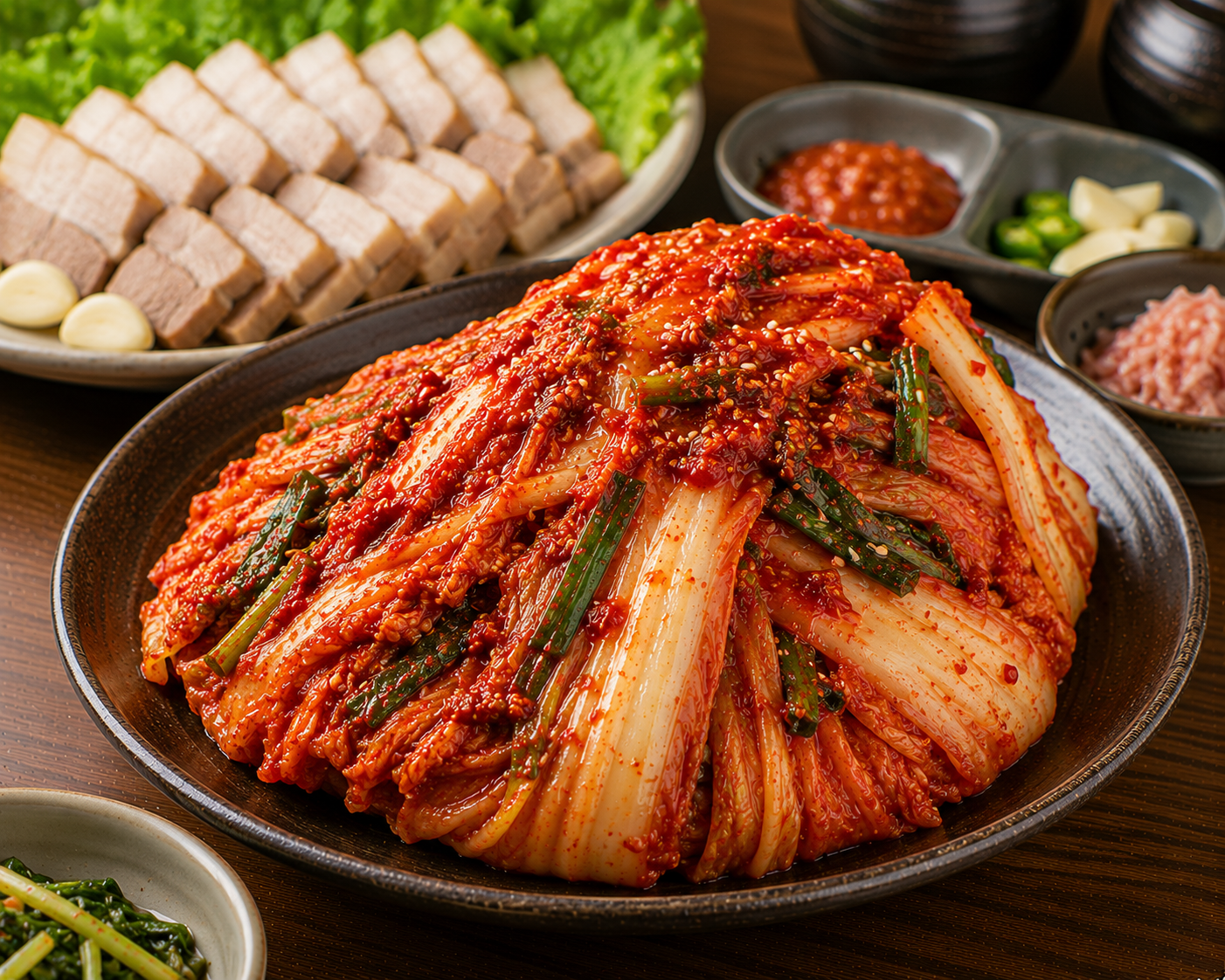
Bossam Kimchi
보쌈김치 · bossam-gimchi
A type of kimchi made by fermenting Napa cabbage seasoned with gochugaru, garlic, ginger, and salted seafood, commonly served with bossam. The longer it ferments, the more sour and rich the flavor becomes, featuring a crunchy texture.
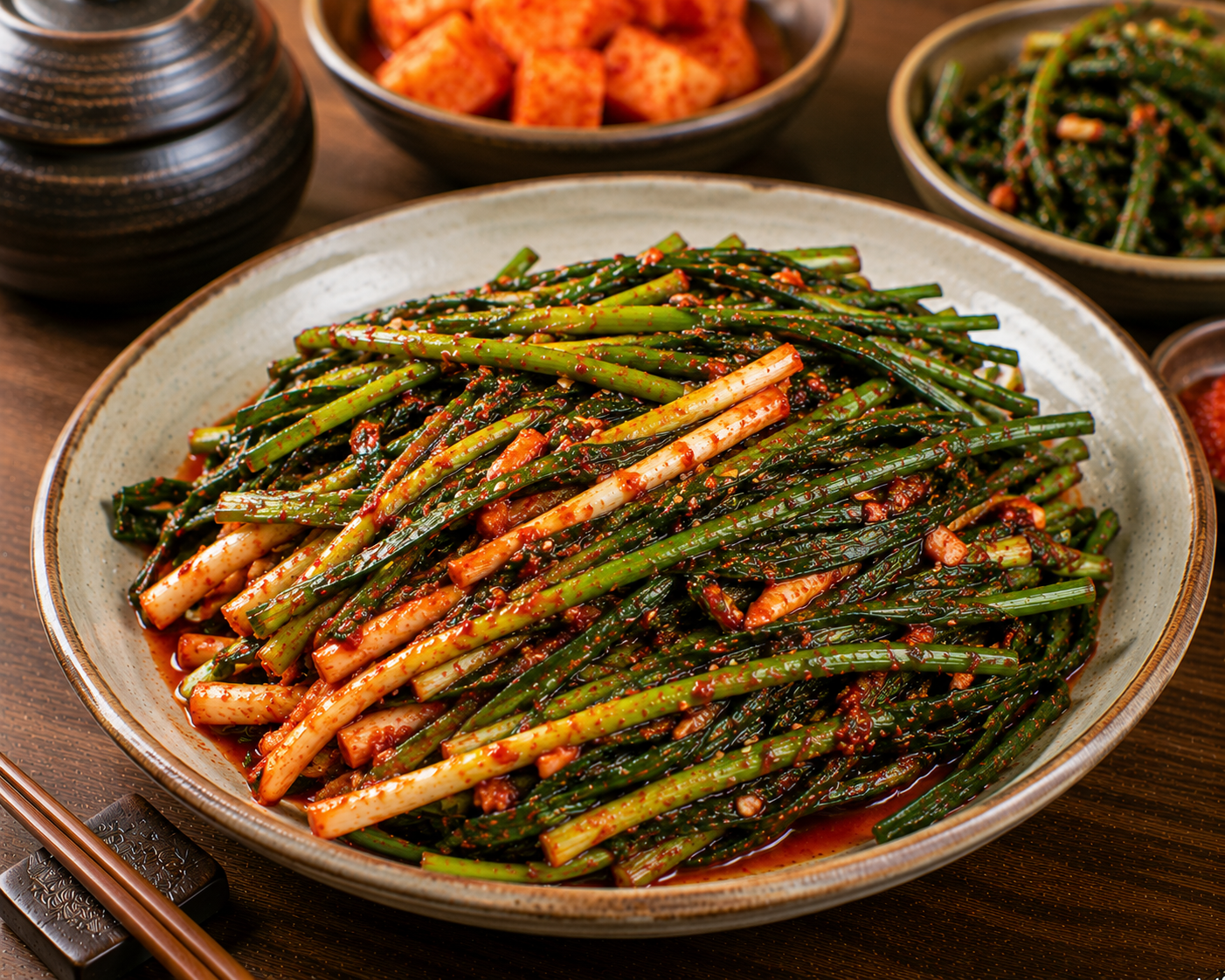
Chive Kimchi
부추김치 · buchu-kimchi
Kimchi made by mixing chives with red pepper powder, garlic, and fermented seafood, then fermenting. It is crunchy, spicy, and rich in umami.
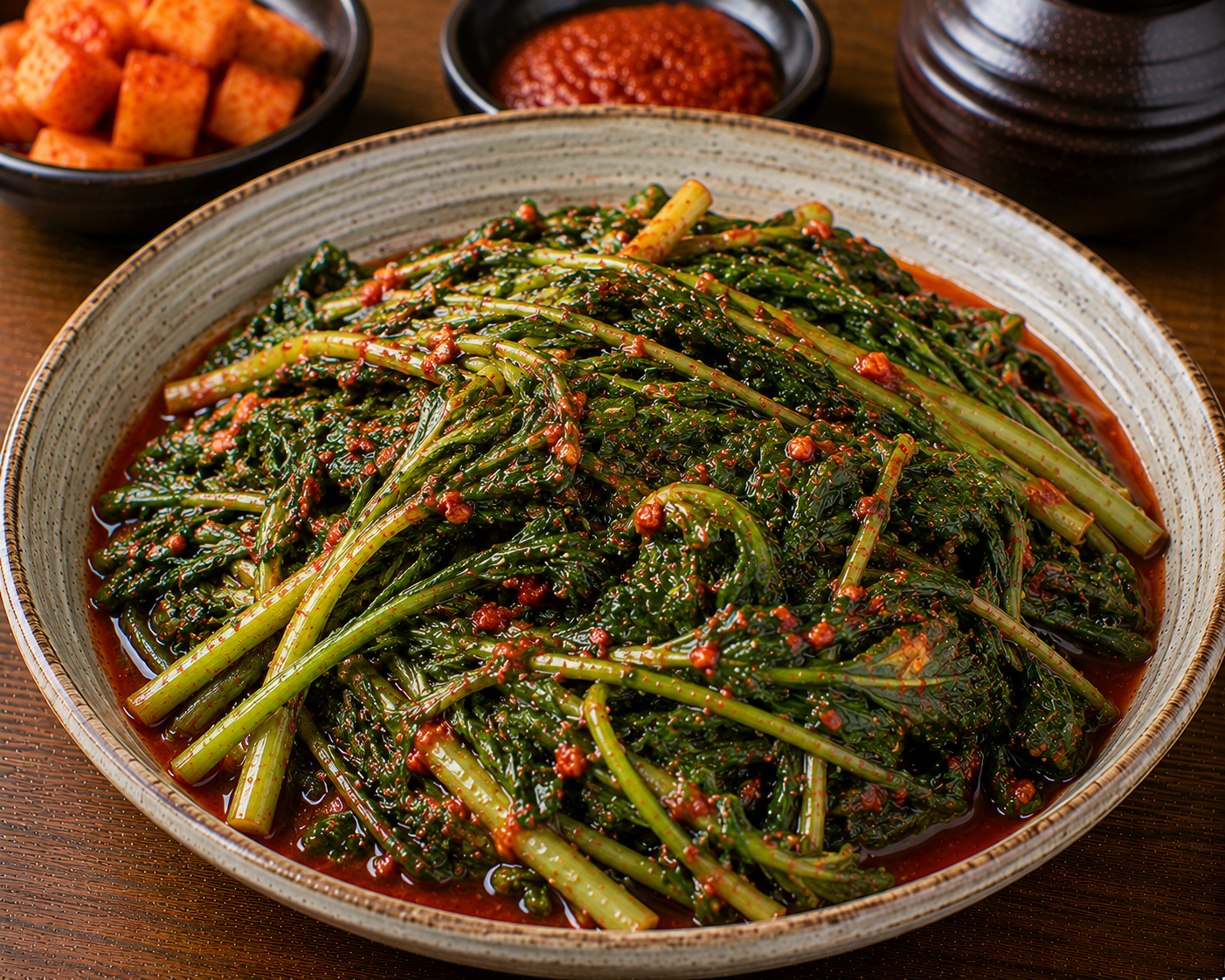
Ssukgat Kimchi
쑥갓김치 · Ssukgat-kimchi
Ssukgat Kimchi is a type of kimchi made by seasoning ssukgat with gochugaru, garlic, and jeotgal, then fermenting it. It is characterized by its crisp and refreshing taste. As fermentation progresses, it becomes tangy and umami-rich. It can be served as a side dish or used as an ingredient in cooking.