

Discover the World
of Korean Food
From royal court cuisine to street food, explore authentic Korean dishes with ordering phrases, cultural tips, and traveler’s guides.
Discover Korean Food →16 themes for every type of traveler
Where to Start
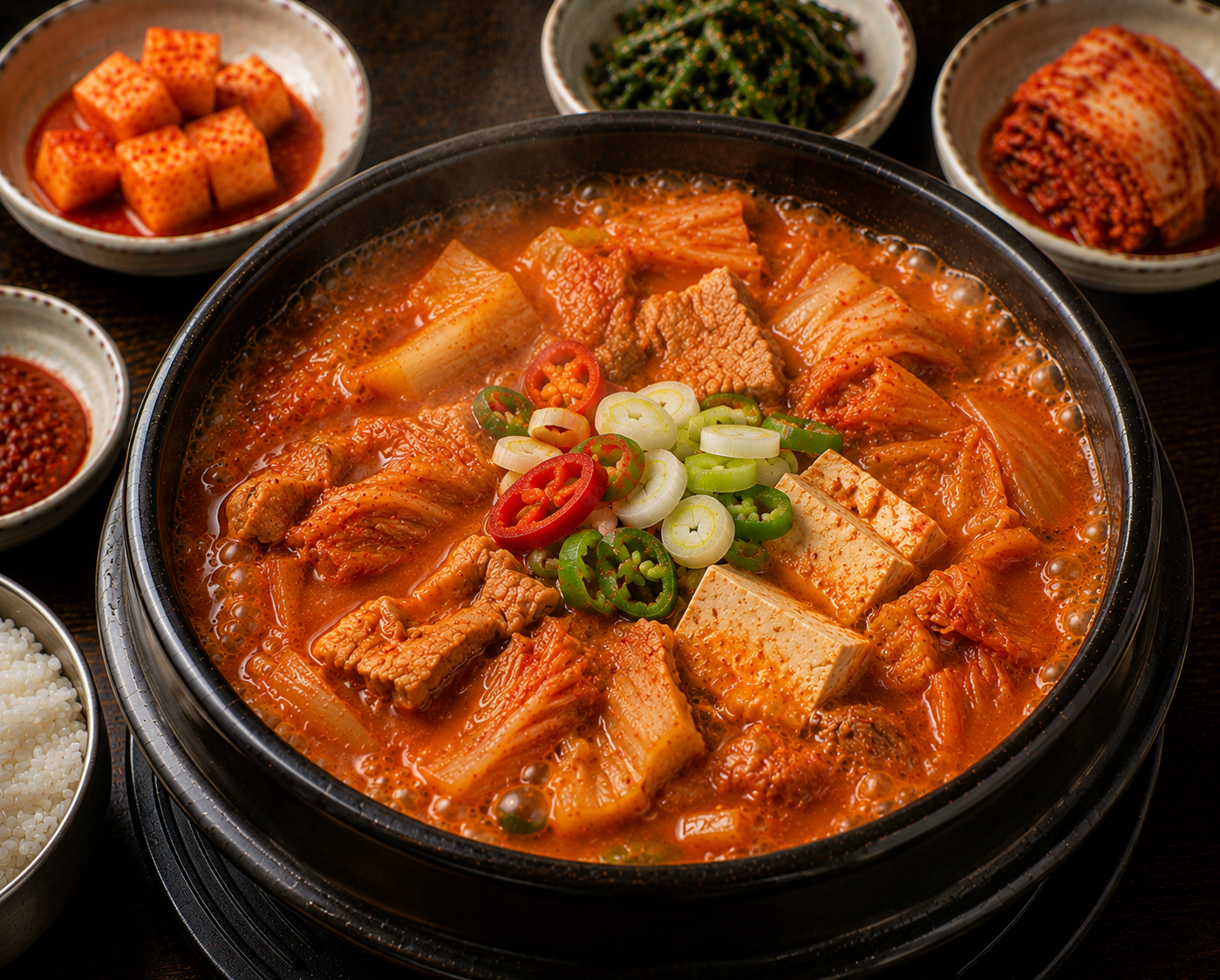
Kimchi Jjigae
김치찌개 · kimchi-jjigae
A communal stew made with well-fermented kimchi and pork simmered in a rich broth, seasoned to perfection, salty and spicy. Unlike soup, it is served bubbling in an earthenware pot and enjoyed by ladling the broth and ingredients over rice, shared among many. The fermented sourness of the kimchi combines with the pork fat to create a deep flavor that complements the rice.
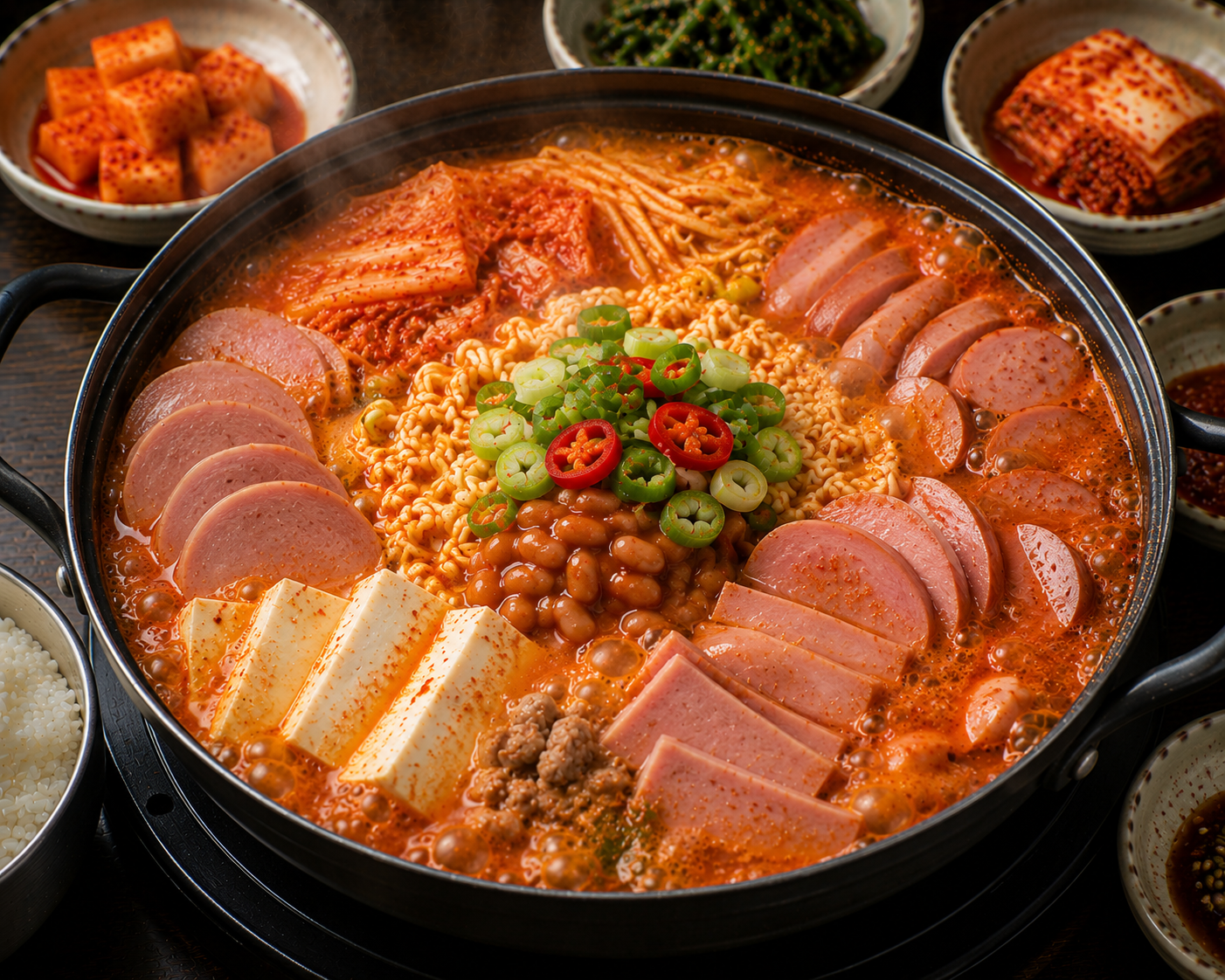
Budae Jjigae
부대찌개 · bu-dae-jji-gae
A stew where ham, sausages, and ramen noodles are boiled directly at the table in a broth. Various ingredients blend to create a rich flavor, and the broth reduces to offer a deep taste experience.
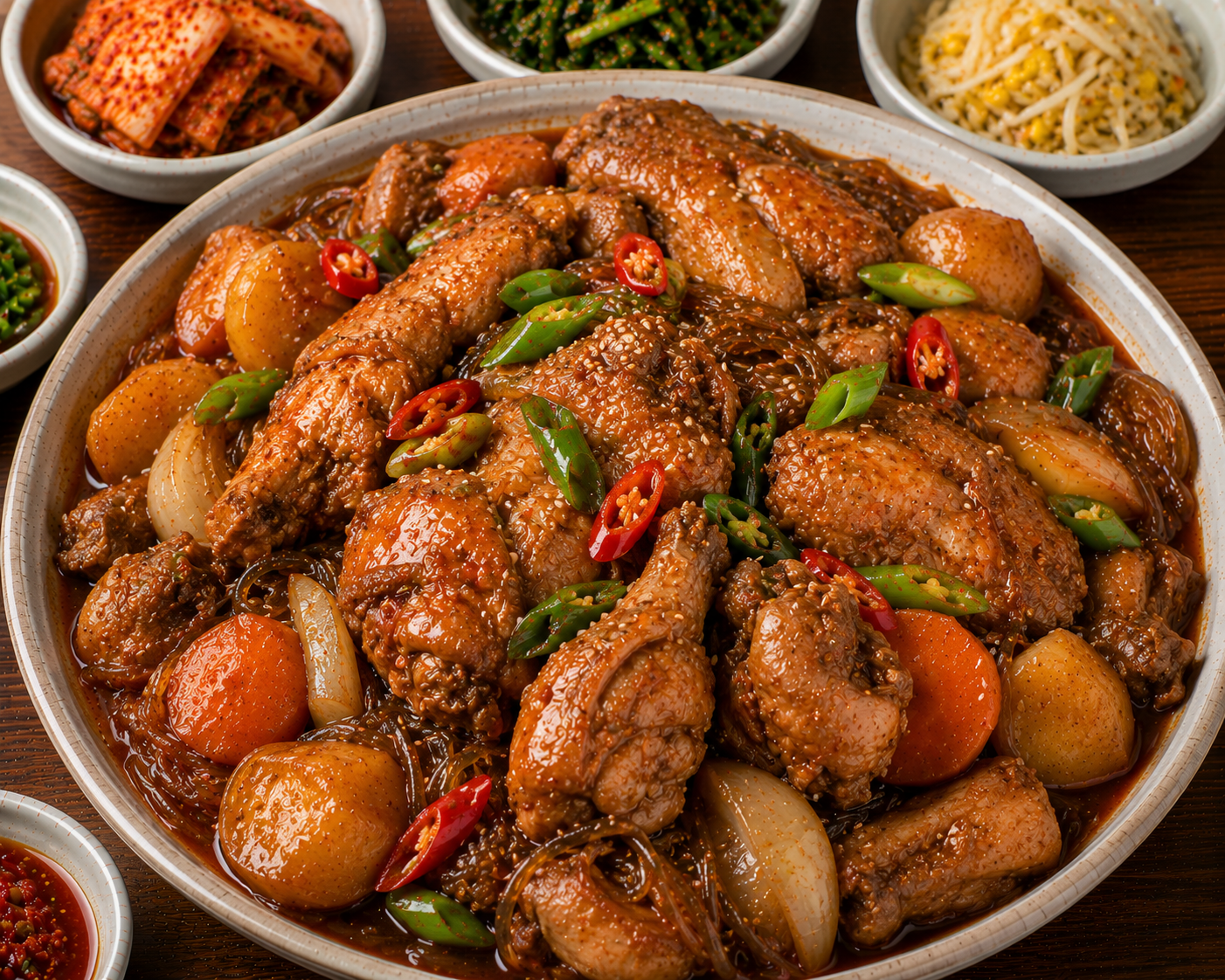
Jjimdak (Braised Chicken)
찜닭 · jjimdak
This dish is made by steaming chicken in a soy sauce marinade, characterized by its tenderness and deep flavor. There is very little broth, and the seasoning is well absorbed by the chicken, making it great to eat with rice.
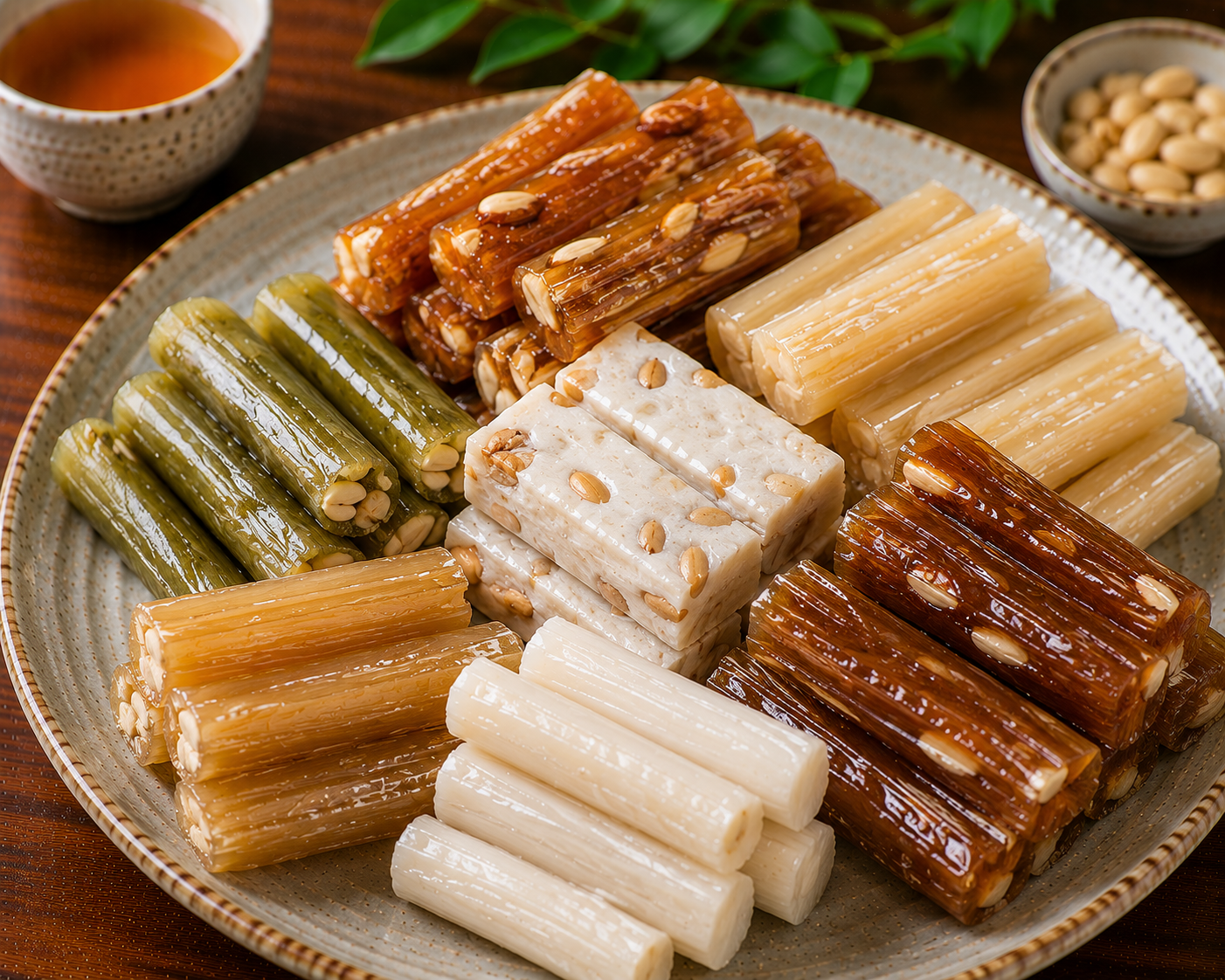
Yeot
엿 · yeot
A traditional Korean sweet snack made by fermenting rice, glutinous rice or corn with malt. It is characterized by its sticky and chewy texture and is commonly enjoyed during holidays or celebrations.
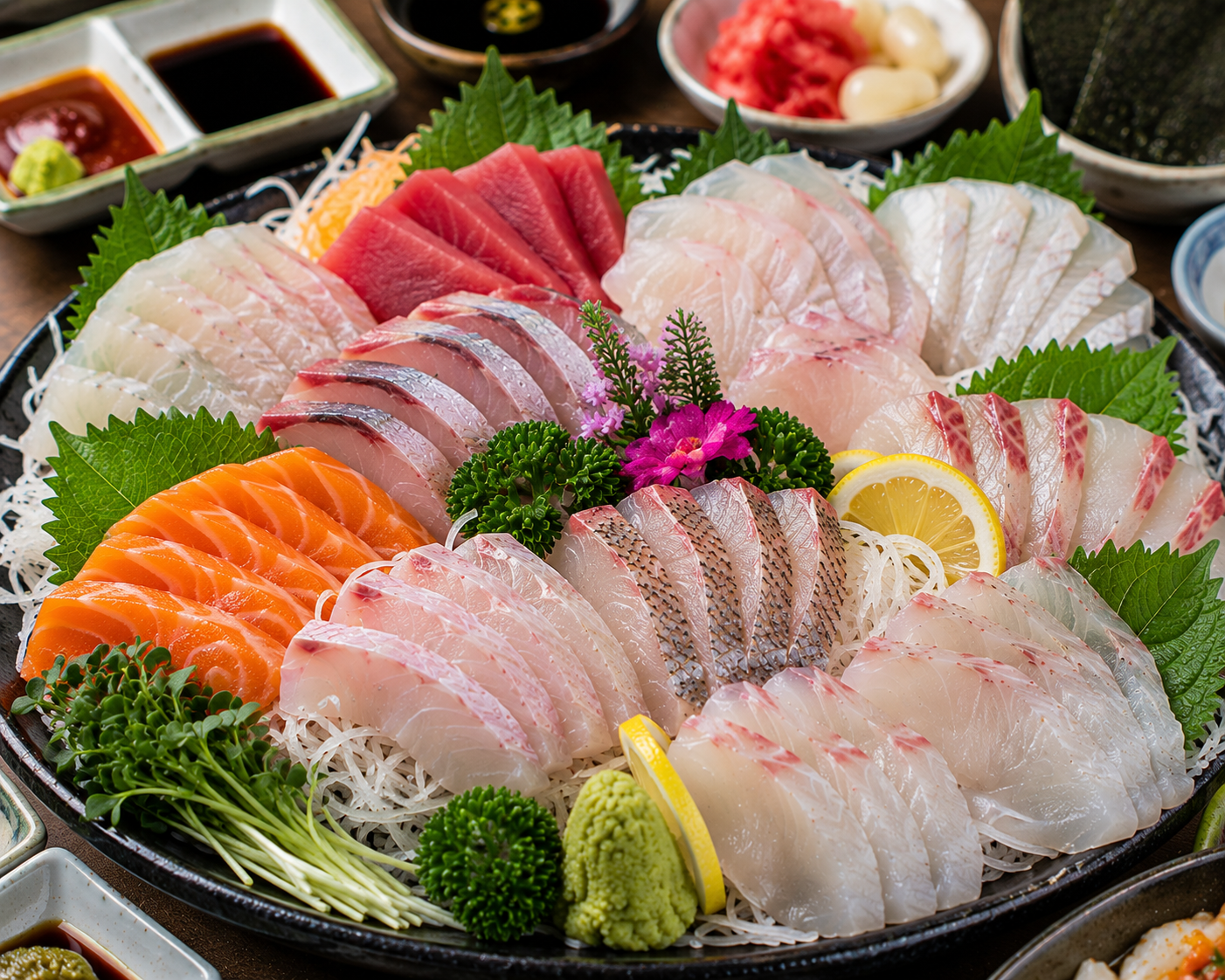
Hoe (Sliced Raw Fish)
회 · hoe
A Korean sashimi dish where fresh fish is sliced thinly and eaten with dipping sauces like cho-gochujang or soy sauce. It is characterized by a chewy and bouncy texture, and is sometimes wrapped in lettuce or perilla leaves.
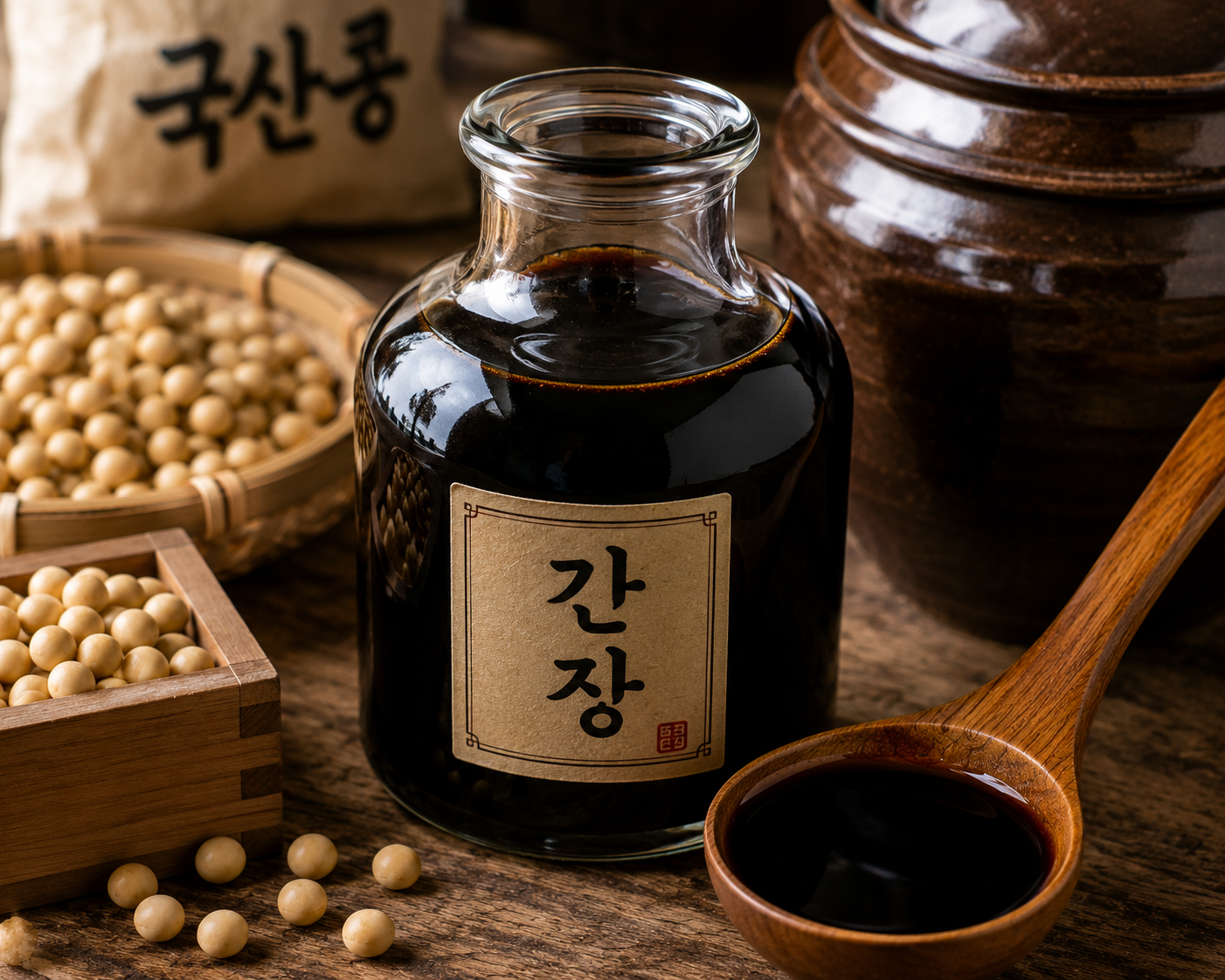
Soy Sauce
간장 · ganjang
Soy sauce is a traditional Korean condiment made by fermenting soybeans, used to enhance the umami flavor in various dishes.
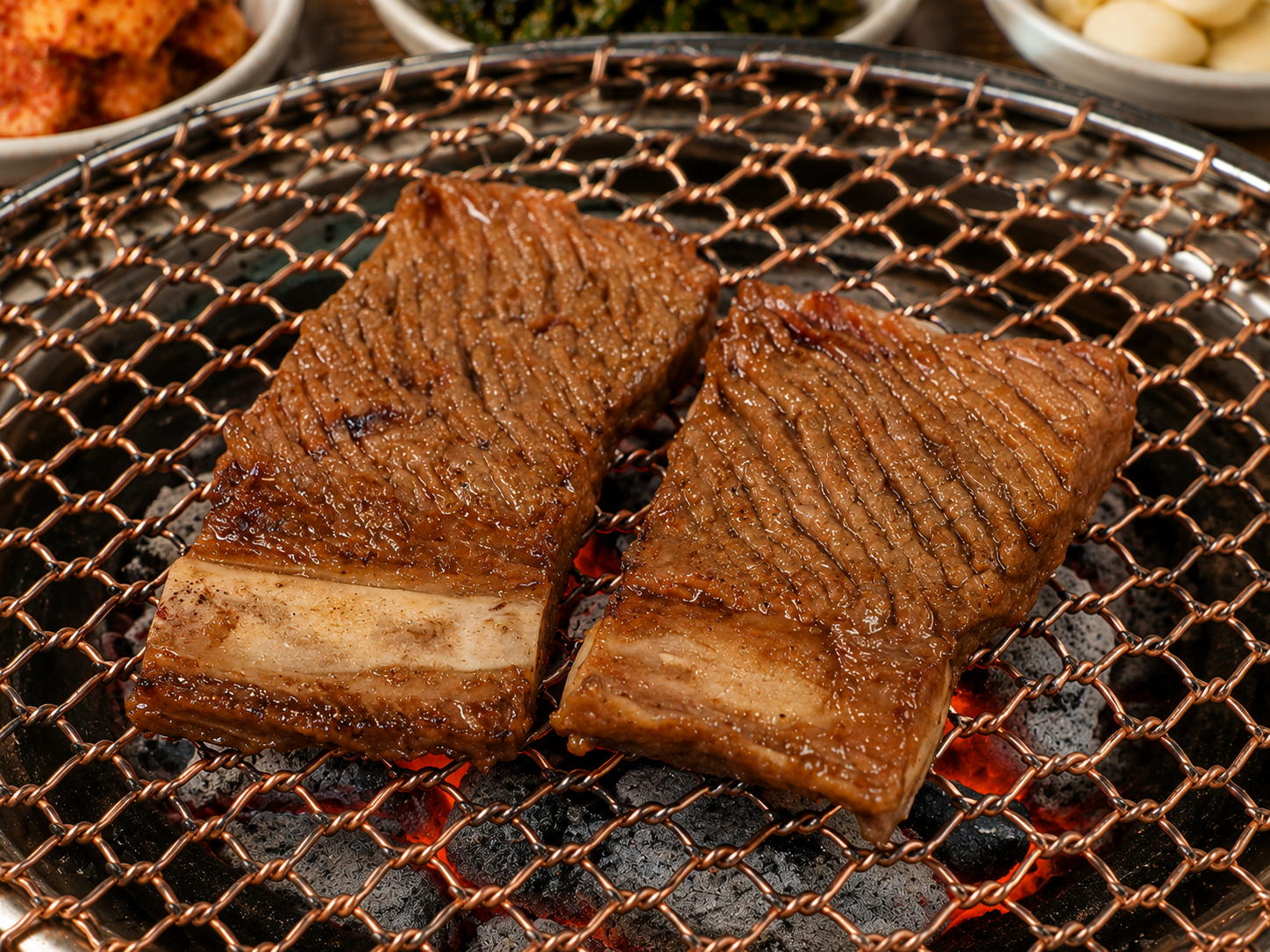
Galbi
갈비 · galbi
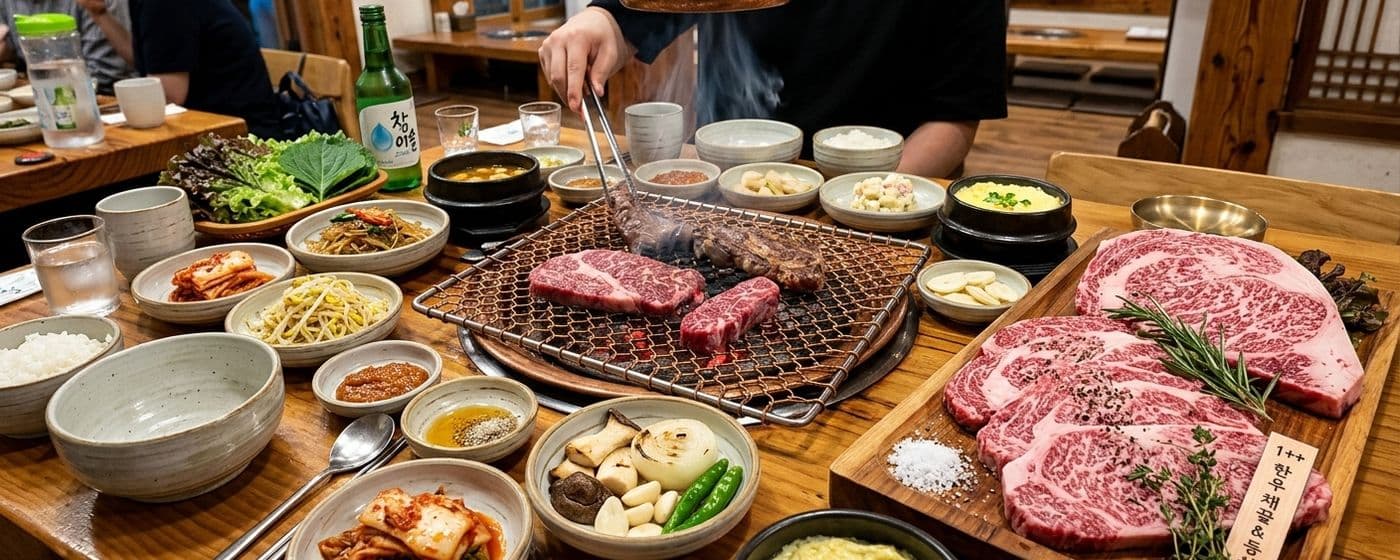
A dish made by marinating beef short ribs in a sauce of soy sauce, pear, sugar, and garlic, then grilling them on a grill, resulting in a caramelized seasoning with a sweet flavor and a contrast between the smoky exterior and tender meat inside. It is usually grilled directly on the table's grill and eaten at the moment it is perfectly cooked, wrapped in lettuce or perilla leaves with grilled meat, garlic, and ssamjang.
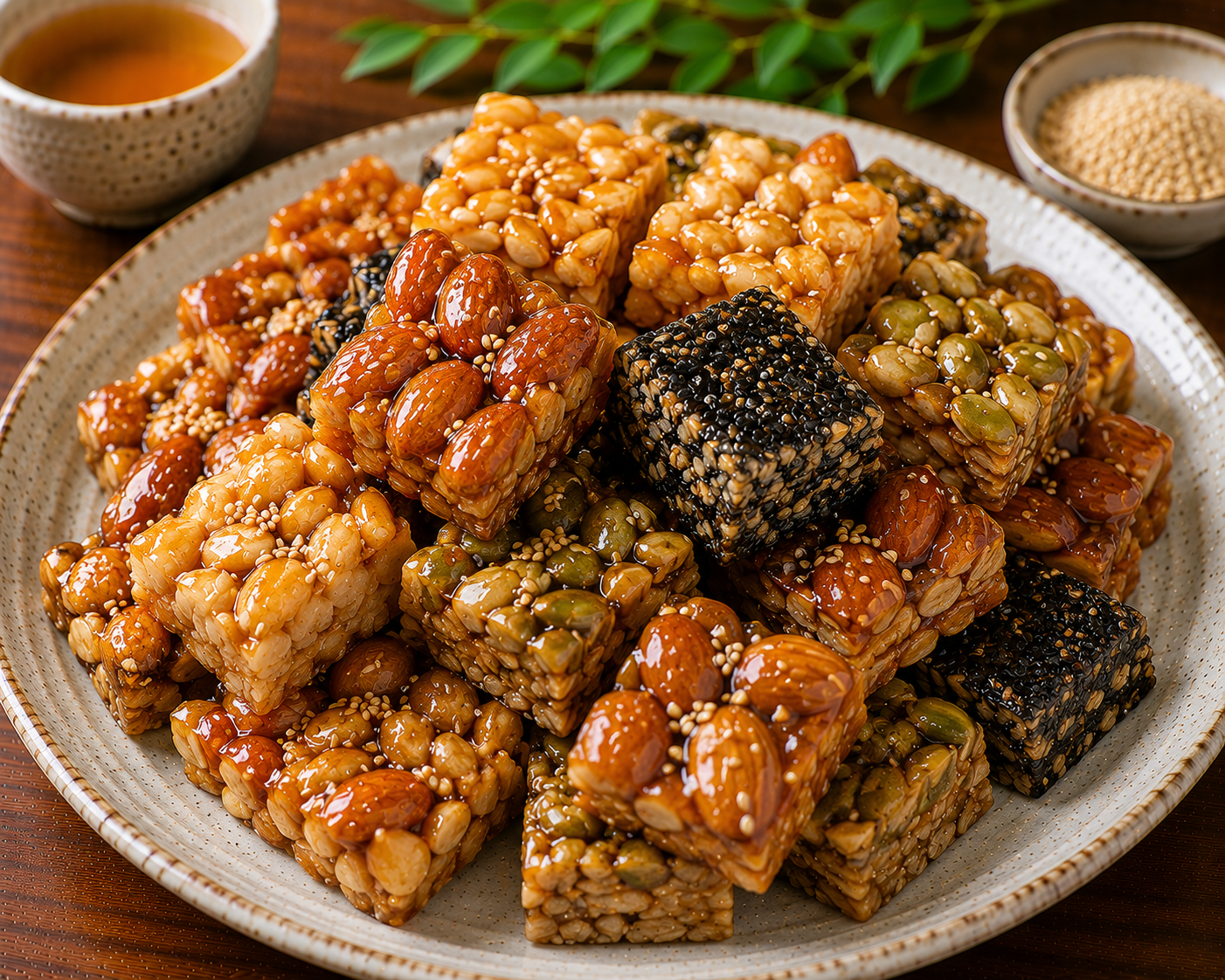
Gangjeong
강정 · gangjeong
A traditional snack made by kneading glutinous rice flour, frying it, and coating it with honey or syrup. It is characterized by a crispy and sweet taste, making it great to enjoy with tea.
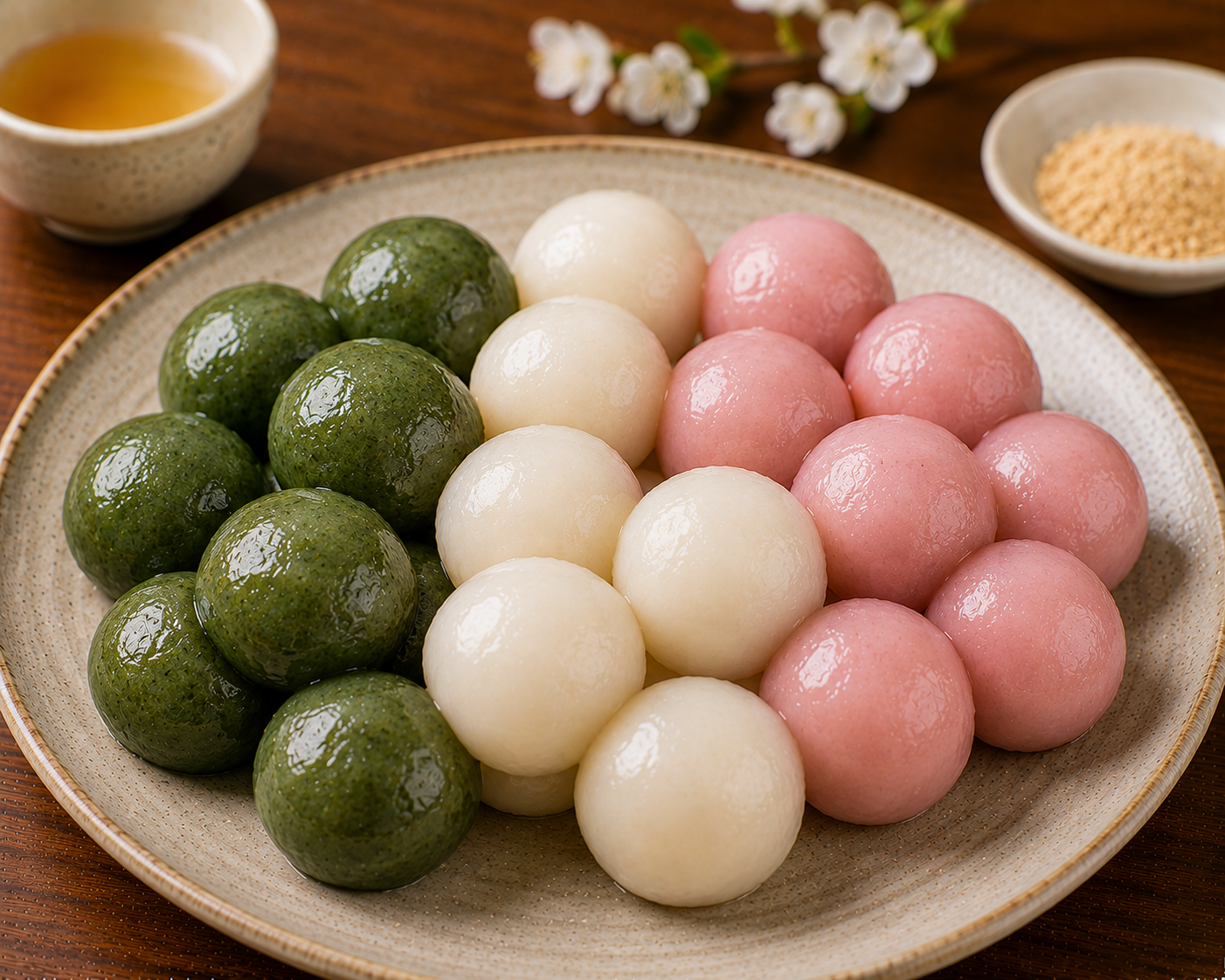
Gyeongdan
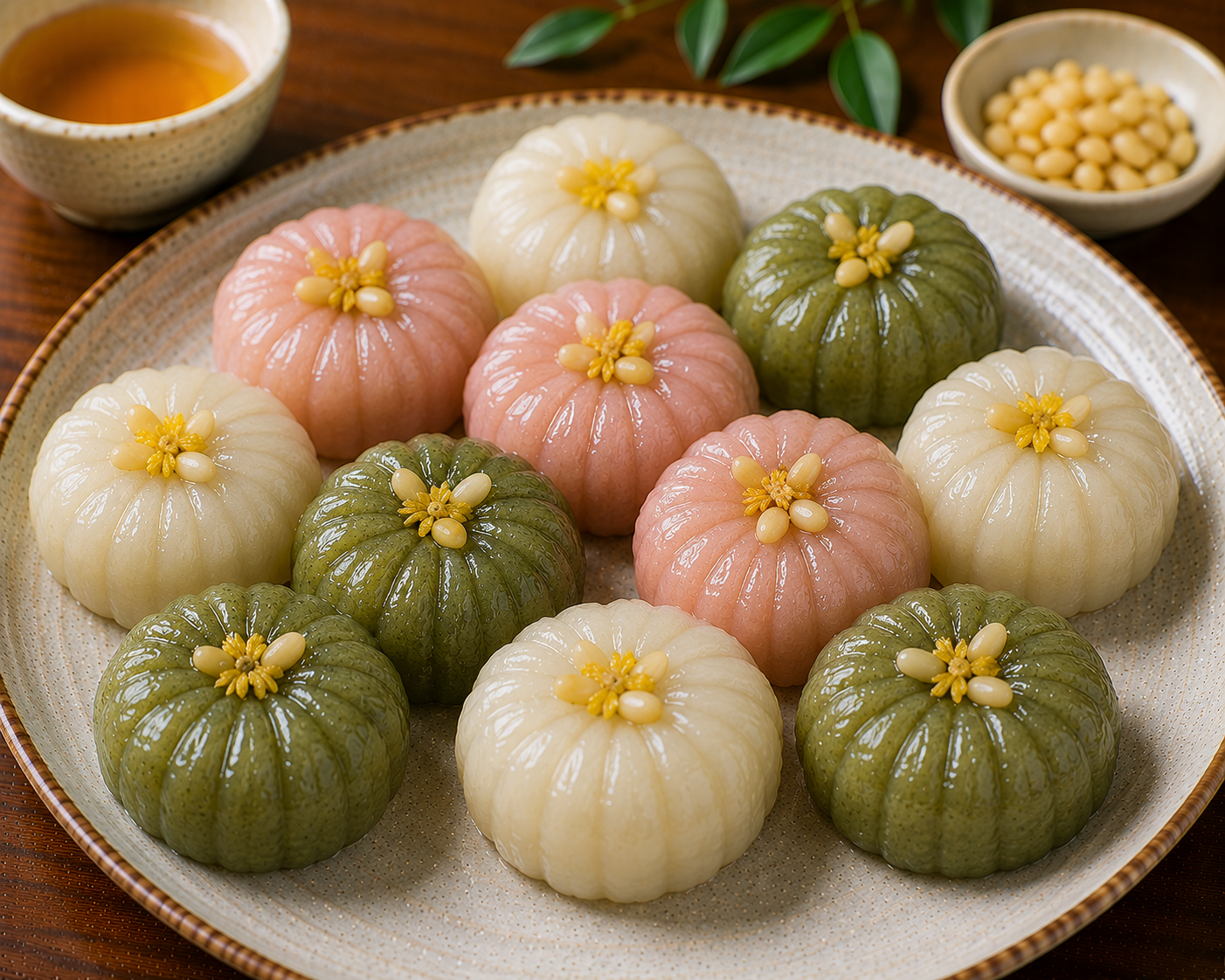
경단 · gyeongdan
A chewy and savory rice cake made by kneading glutinous rice flour into small balls, boiled, and then coated with soybean flour or red bean flour.
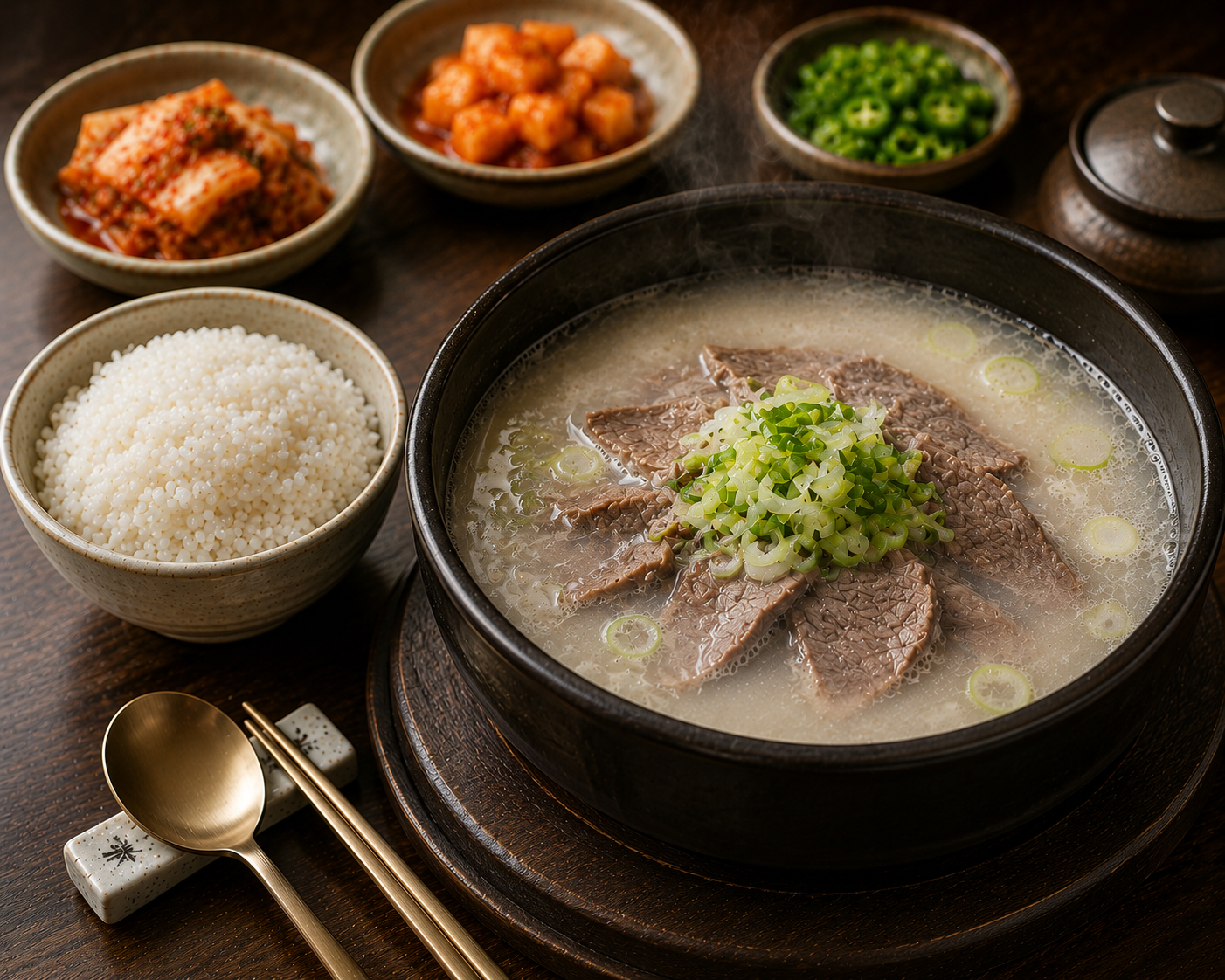
Gomtang
곰탕 · gom-tang
Gomtang is a type of soup that is made by simmering beef bones and brisket for a long time to create a milky and mild broth, served with thinly sliced boiled meat, noodles, and rice. The broth itself is lightly seasoned, so it's best to add salt and chopped green onions to taste, and adding a bit of cubed radish kimchi broth enhances the flavor. It is served piping hot in an earthenware pot, so it's advisable to be careful with the first sip.
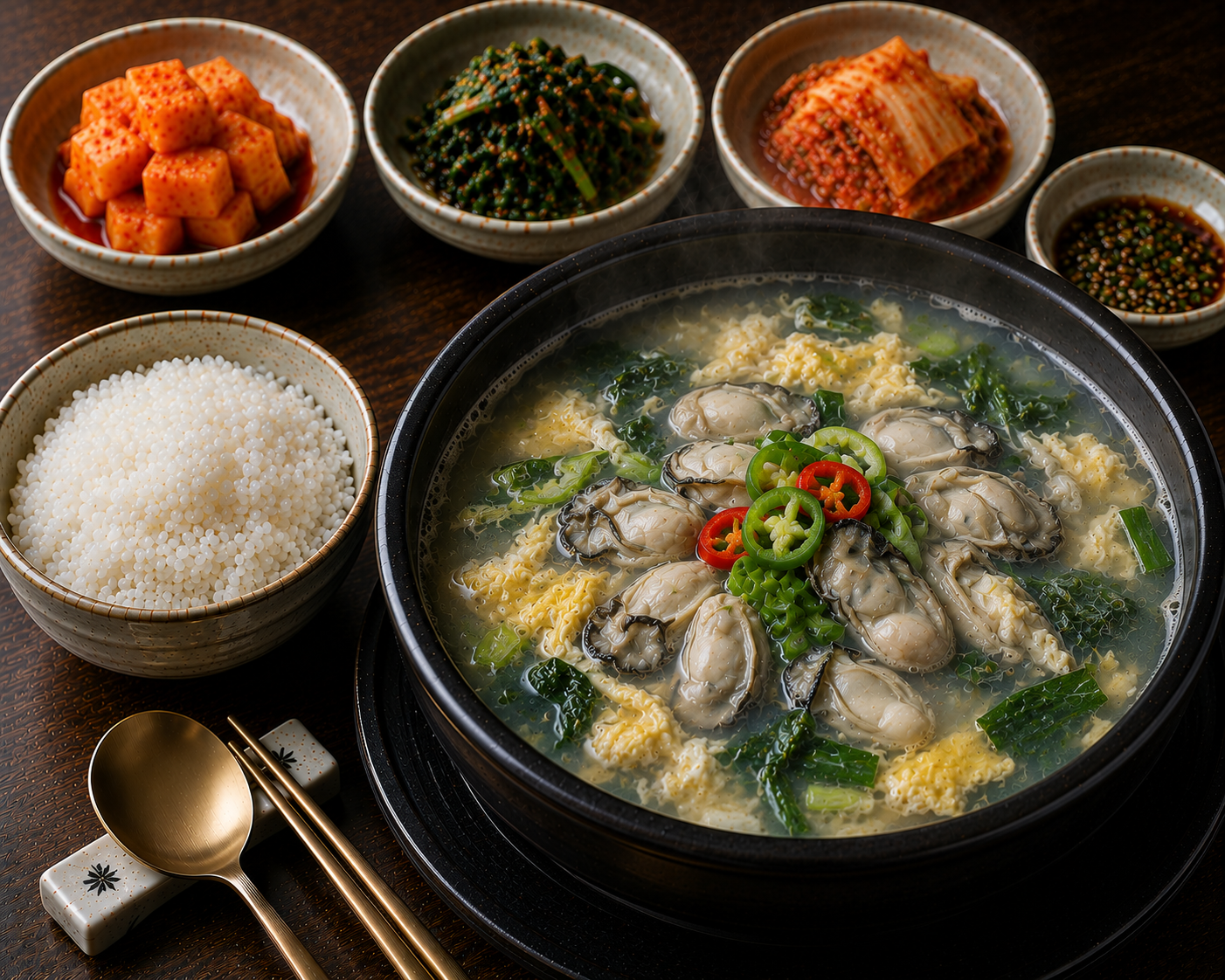
Oyster Soup
굴국 · gul-guk
A clear and light soup dish made by adding fresh oysters to anchovy stock. The soft and salty taste of the oysters blends into the broth, providing a refreshing umami flavor.
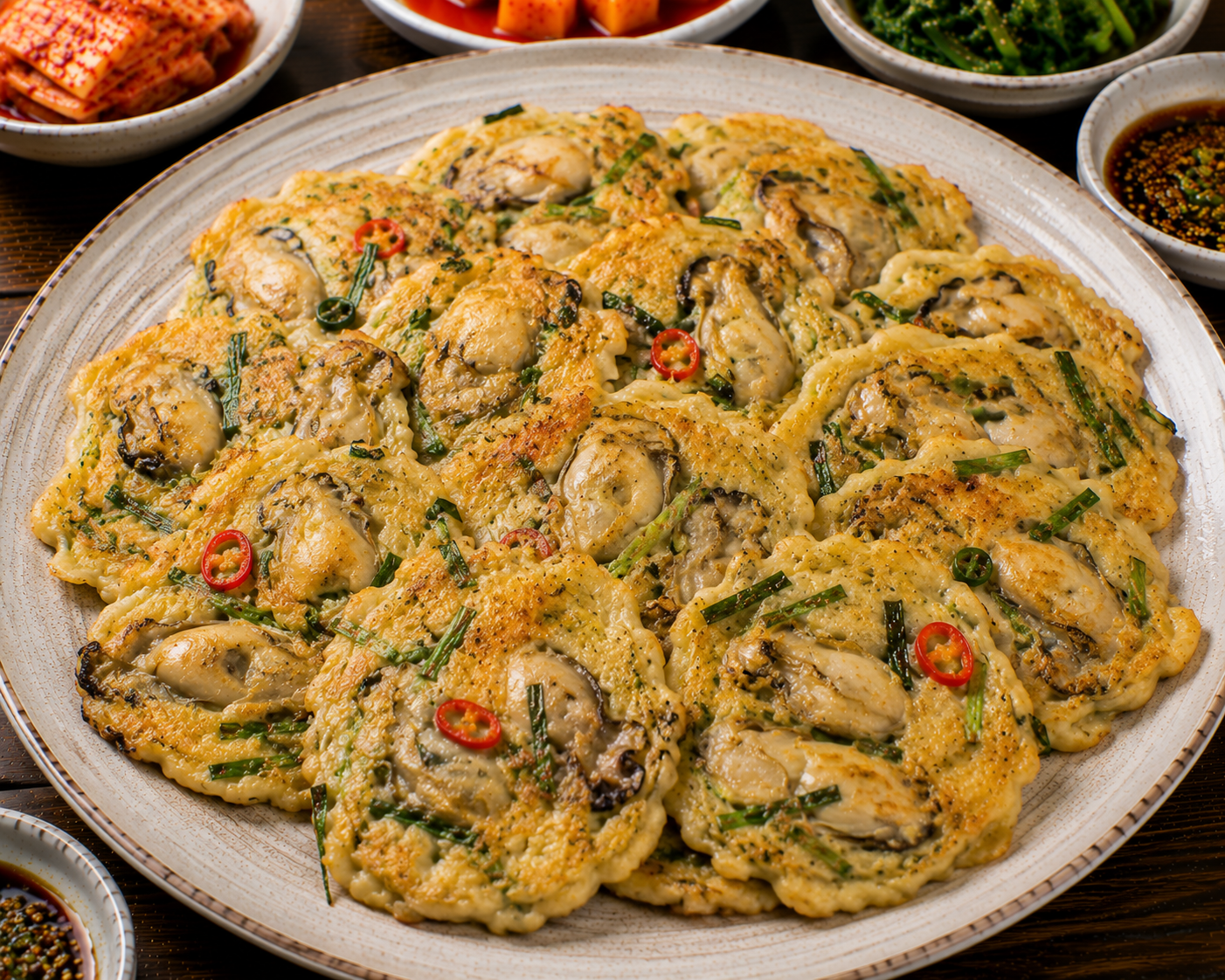
Oyster Jeon
굴전 · gul-jeon
A savory pancake dish made by coating fresh oysters with flour and egg and pan-frying until golden brown. It features a crispy exterior and moist interior, typically enjoyed with soy dipping sauce.
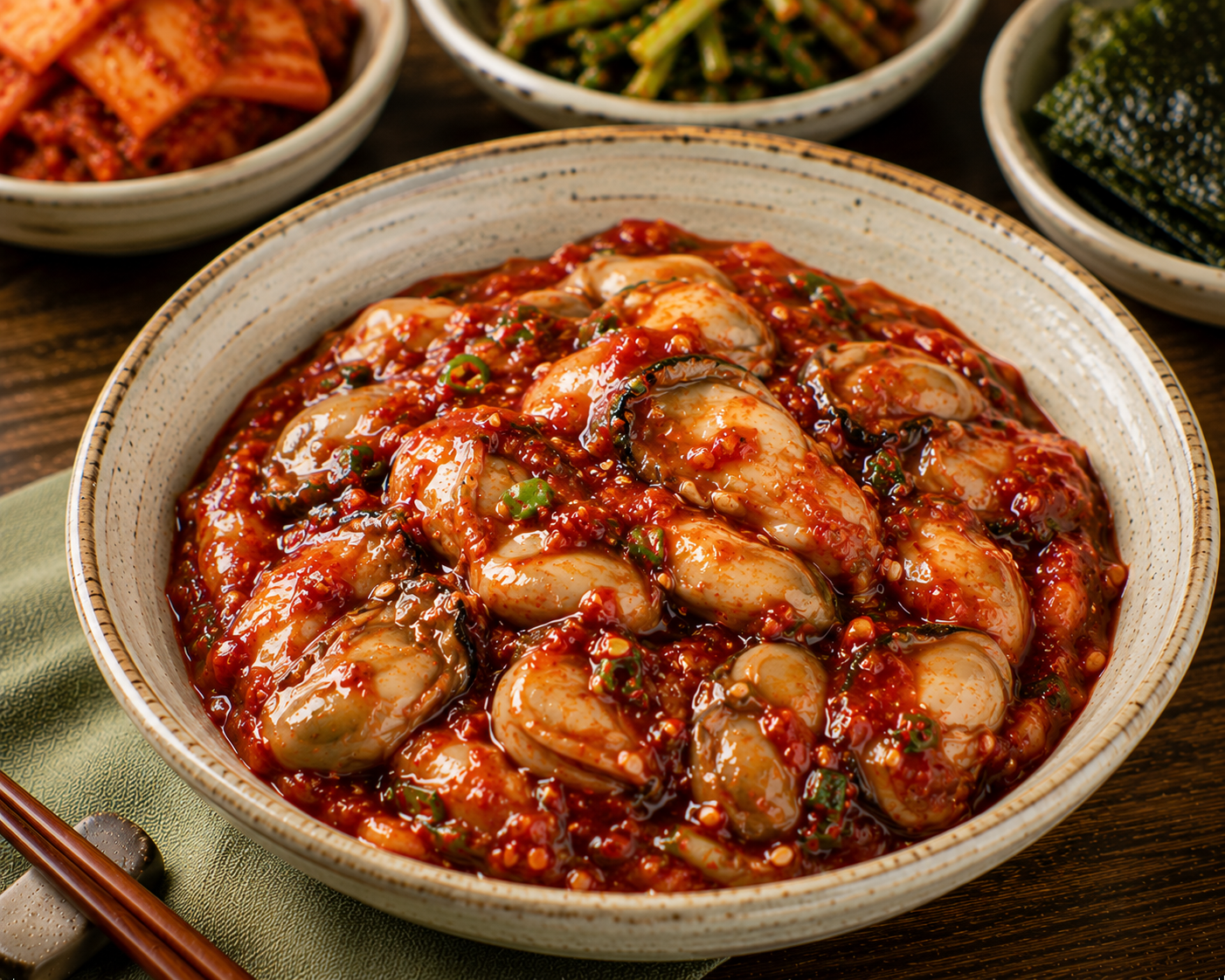
Geuljeot
굴젓 · gul-jeot
A savory and umami-rich side dish made by salting and fermenting oysters. It’s a preserved side dish that is eaten in small amounts with rice.
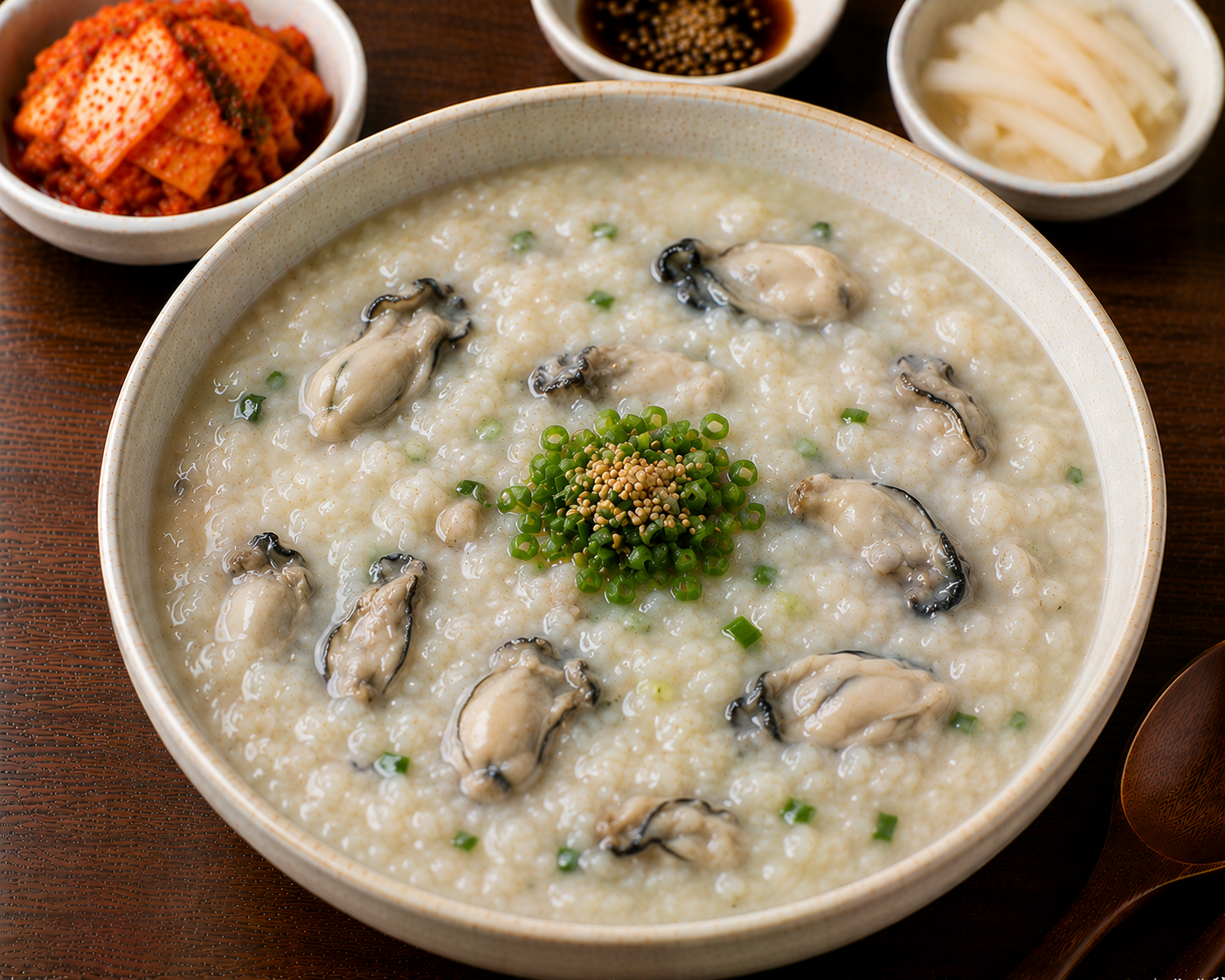
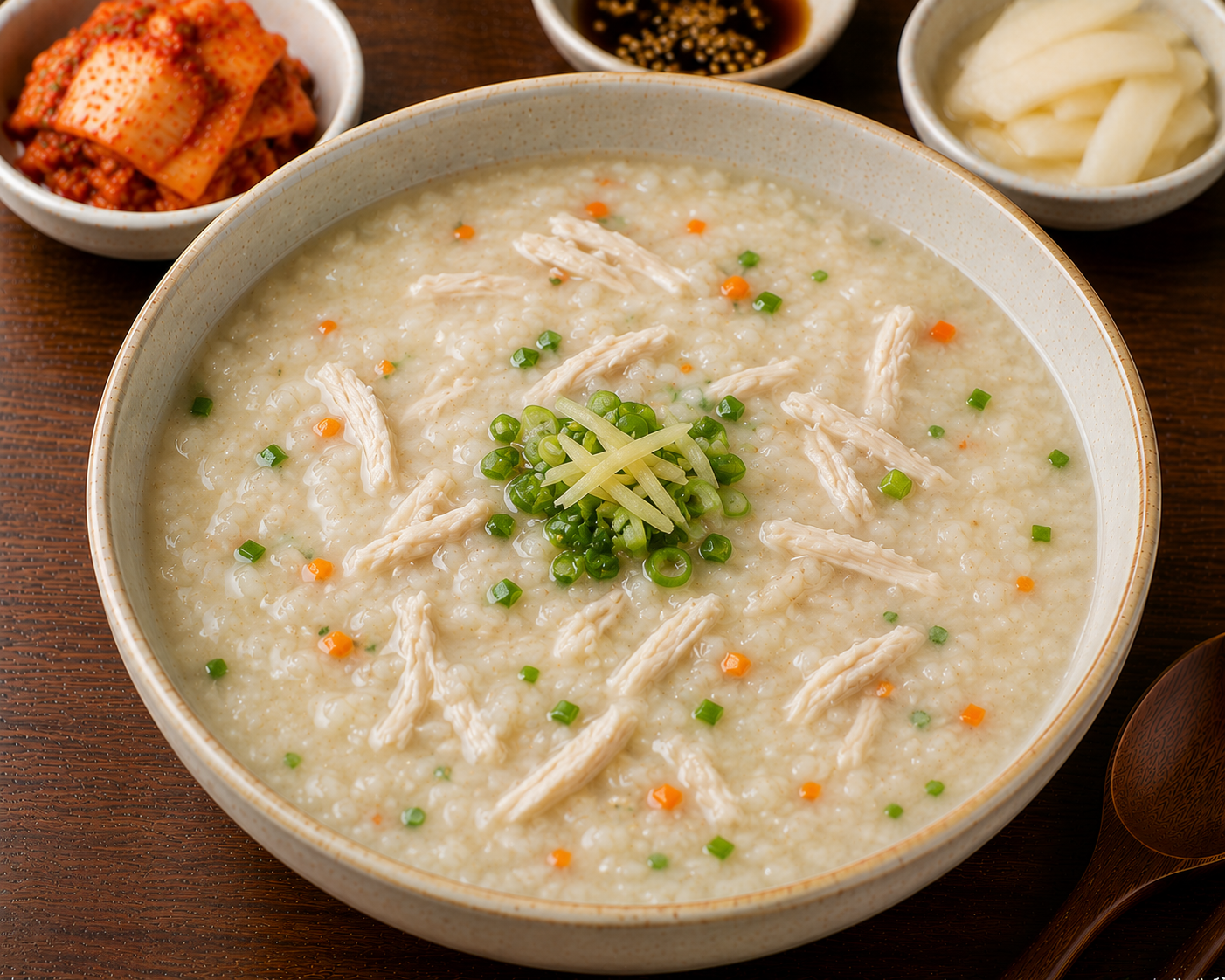
Oyster Porridge
굴죽 · gul-juk
A soft and thick porridge made by boiling oysters and rice together, filled with the scent of the sea. It is eaten with salty side dishes like kimchi or jangjorim to enhance the flavor.
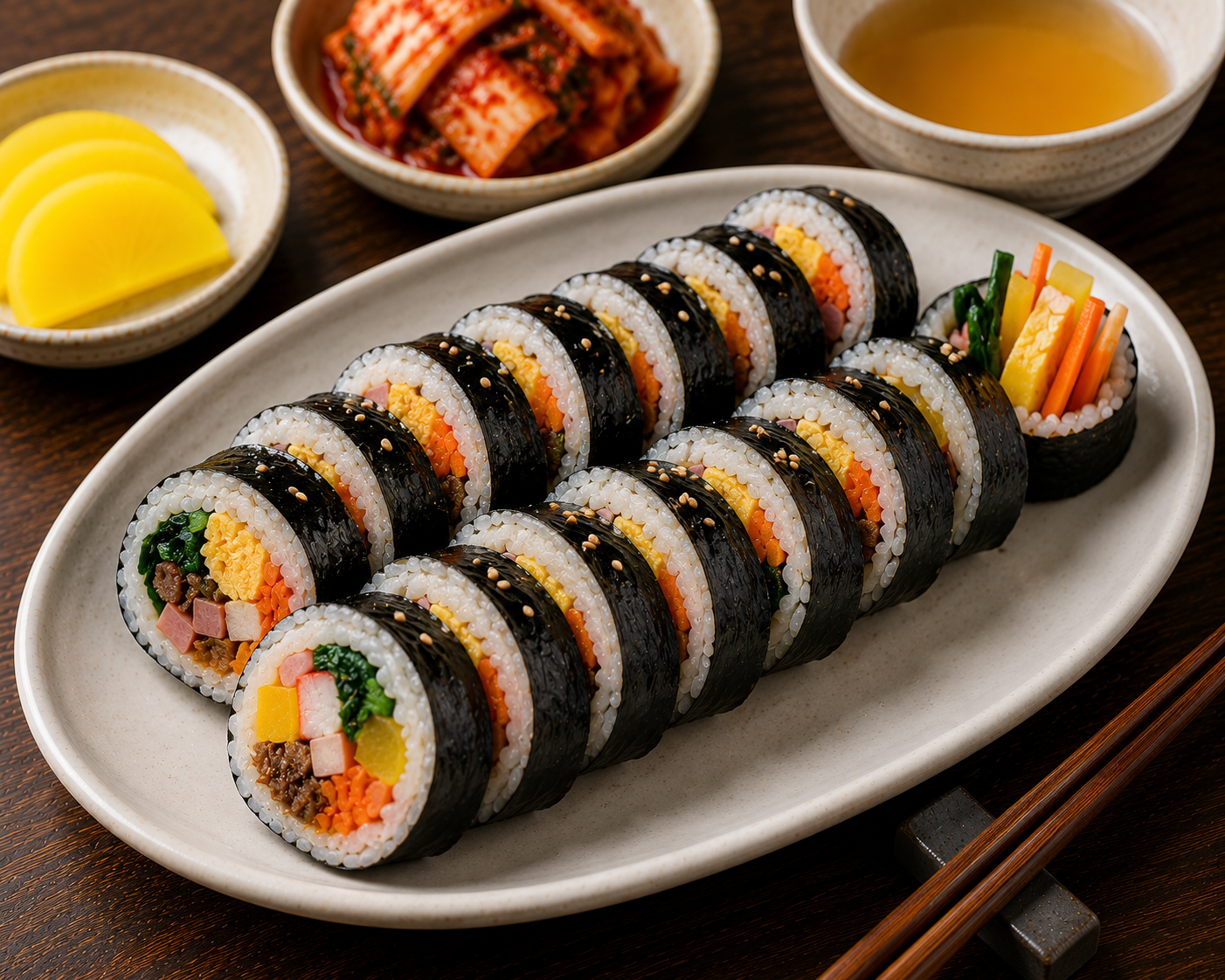
Gimbap
김밥 · gimbap
A convenient meal made by rolling rice, vegetables, pickled radish, eggs, and ham in seaweed, seasoned with sesame oil and salt. It is enjoyed for picnics or quick meals, and unlike sushi, it is seasoned with sesame oil instead of vinegar.
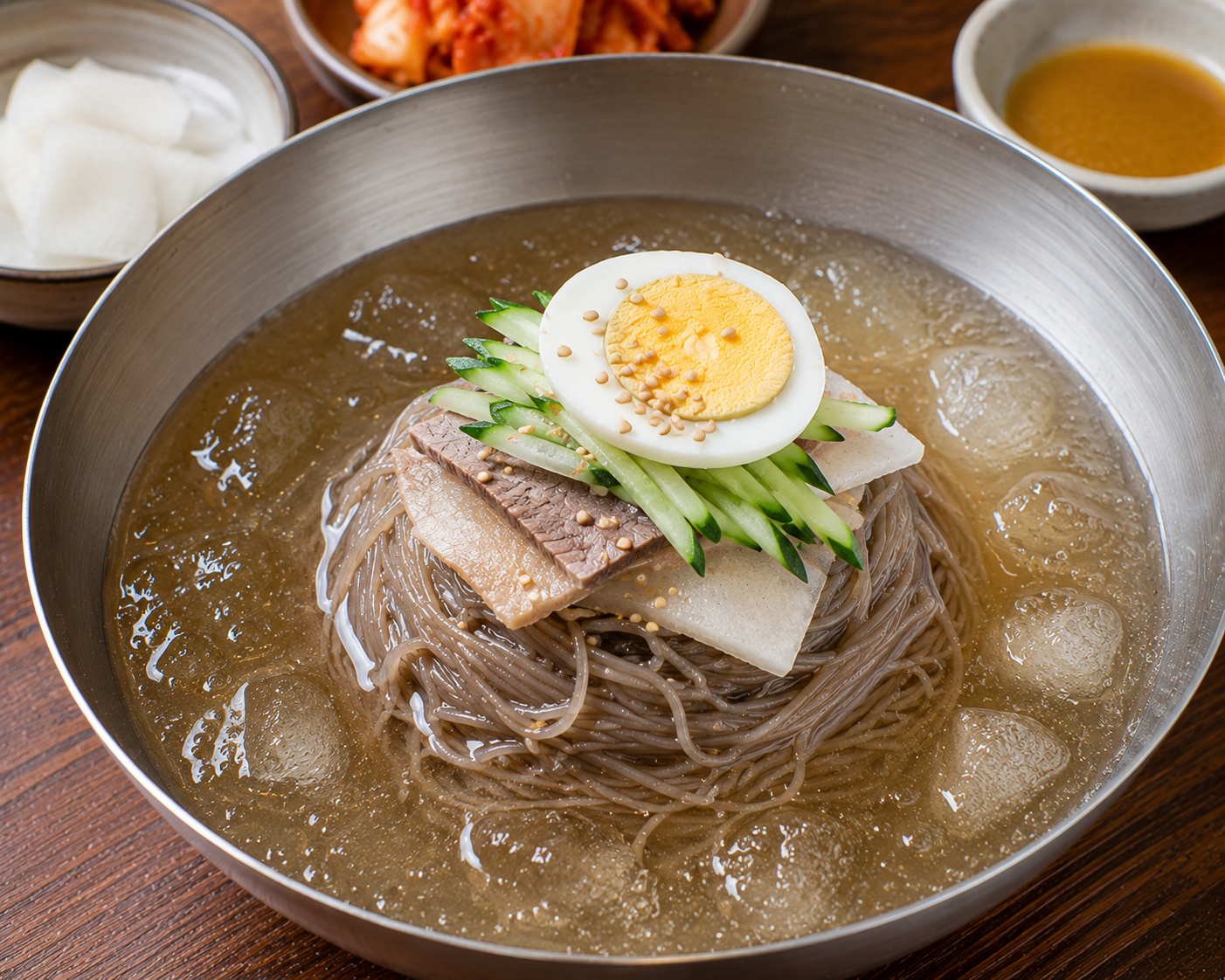
Naengmyeon
냉면 · naengmyeon
A dish made with chewy noodles made from buckwheat, served in chilled broth with floating ice, enjoyed by mixing the noodles with Dongchimi (radish water kimchi) and meat broth (mul-naengmyeon). Adjust the flavor with mustard and vinegar to your liking, perfect for hot summer days and often enjoyed as a meal finish at a barbecue restaurant.
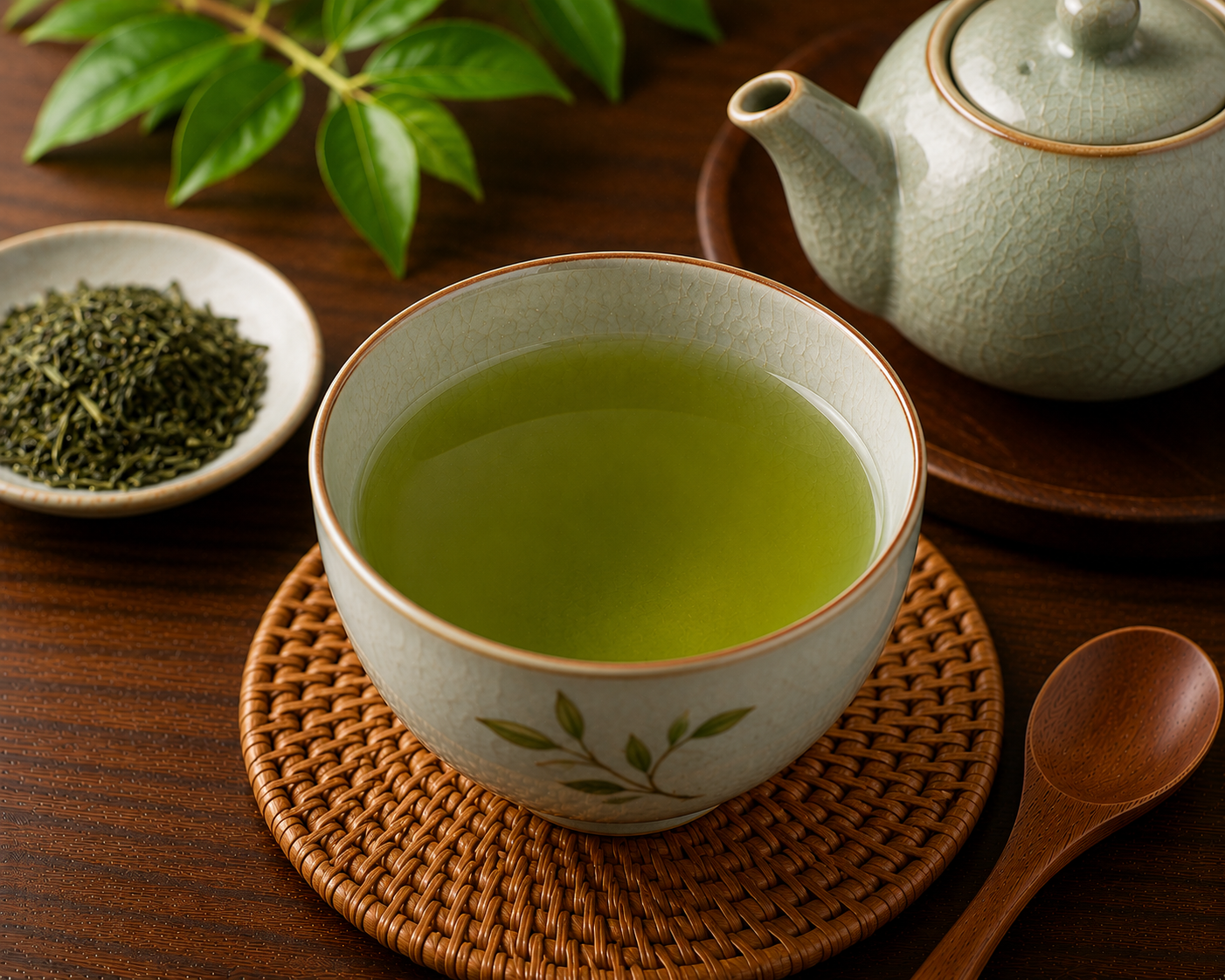
Green Tea
녹차 · nok-cha
A tea brewed from green tea leaves in hot water, characterized by its clean and refreshing taste. It is mainly consumed warm after meals or during breaks, and contains caffeine which is good for a mood lift.
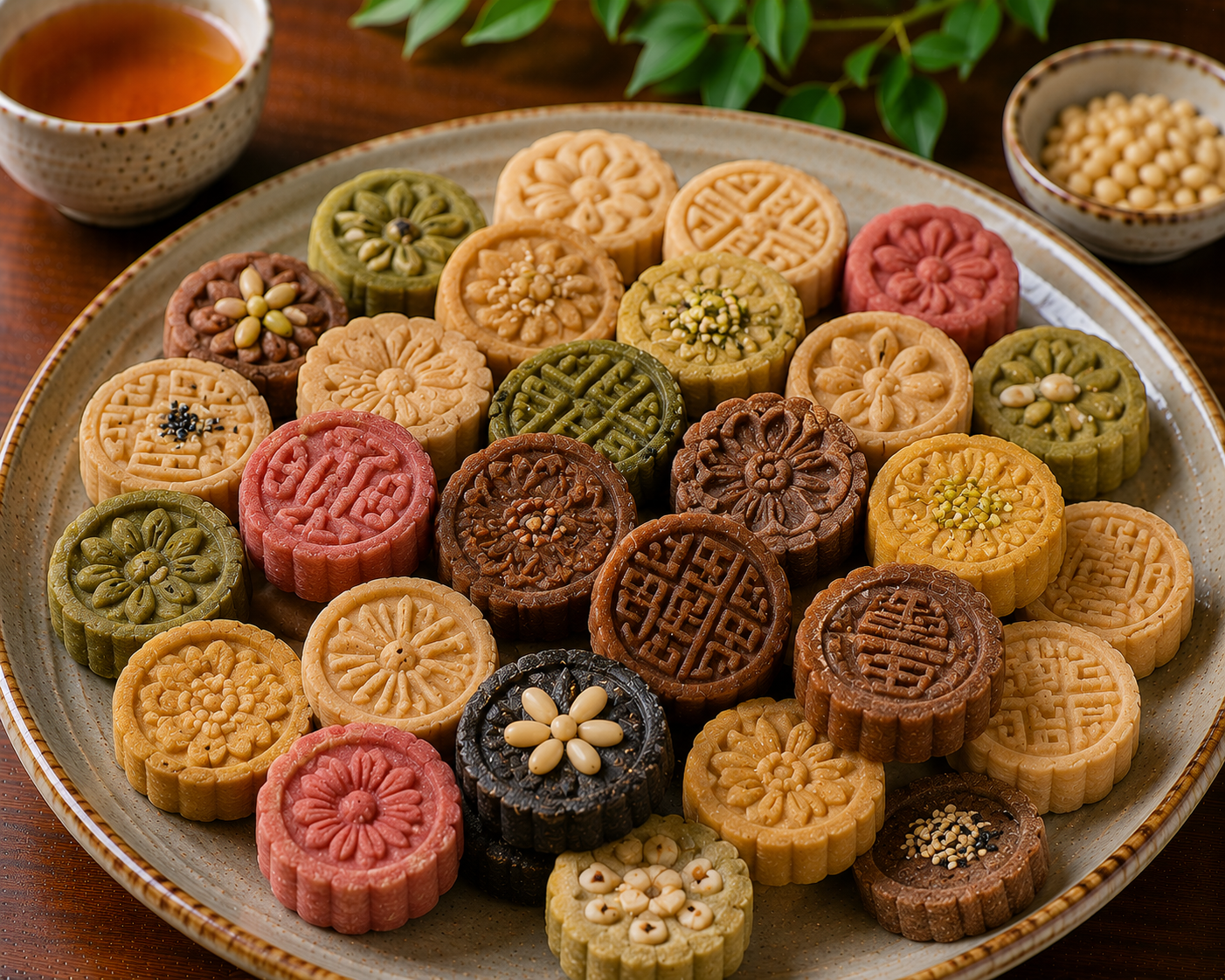
Dasi
다식 · dasik
A traditional Korean sweet made by kneading rice flour, soybean flour, and starch with honey or grain syrup (jocheong) and molding them into shapes. It is mainly enjoyed with tea and made in various colors and shapes.
History & Culture
5 immersive stories exploring the history, traditions, and cultural meaning behind Korean food.
Explore the Stories →